 Druk Asia
Preparing your journey…
8D 7N Highlights of Western Bhutan
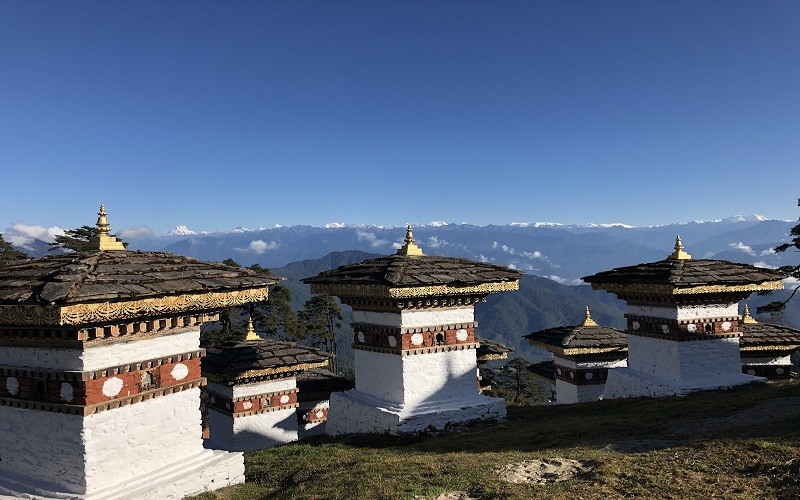
In this 8-day itinerary, enjoy the highlights of Bhutan’s capital, Thimphu, before heading out for an exhilarating descent from the Dochula Pass along the Trans Bhutan Trail towards the pretty town of Punakha. Stay in the scenic Phobjika Valley, a hotspot for birdwatching, before returning to hike a section of the Trail near Paro and visiting the world famous Tiger’s Nest Monastery.


All our tours are fully customisable — the itineraries you see are simply a starting point. We'll work closely with you to tailor every detail.
8D 7N Highlights of Western Bhutan Itinerary
1
On arrival at Paro International Airport today, you will be met by your guide and transferred to your hotel in Thimphu. With elevations ranging between 2,248 metres (7,375 feet) and 2,648 metres (8,688 feet) above sea level, Thimphu is the fifth highest capital city in the world by altitude; and it is also the only capital city in the world without any traffic lights. The city offers a unique blend of the modern world alongside striking Bhutanese tradition.
Head out for a brief acclimatization walk in the late afternoon, during which you will visit the Memorial Chorten, a Tibetan-style stupa built in 1974 and one of Thimphu’s busiest religious sites.
Enjoy dinner this evening with your guide in one of the capital’s excellent restaurants.
Meals: D
2
After breakfast at your hotel, head out to take in some more of Thimphu’s numerous attractions. First, head to the scenic Kabisa Valley, just north of Thimphu, to the Choki Traditional Art School. Choki is Bhutan’s only private institution providing free education to underprivileged youths who have a keen interest in learning the traditional arts and crafts. During your visit to the school you will see students engaged in a number of traditional art forms, including painting, carving, and tapestry.
Before heading back into Thimphu, drop in at the Pangrizampa Monastery, where you will have the chance of a private reading with a monk astrologer. Astrology in Bhutan is an ancient and highly respected science and locals will often consult the stars before making major life decisions such as getting married, changing jobs, or buying a car.
Once back in Thimphu, visit the Thimphu Dzong (fortress). The Dzong was rebuilt by His Majesty the Third King of Bhutan, King Jigme Dorji Wangchuck, in 1962, when the capital of Bhutan was moved from Punakha to Thimphu. Since that time it has been the seat of the Government of Bhutan. Undoubtedly Thimphu’s most imposing building, you will have time to enjoy its quiet courtyards, the small Lhakhang Sarp chapel and the Dzong’s imposing utse (tower).
After lunch, drop in at the Thimphu Craft Bazaar, a fine place to pick up souvenirs of your visit to Bhutan, before visiting the Capital’s interesting Folk Heritage Museum. Housed in a 19th century traditional rammed mud and timber building, the exhibitions depict Bhutanese culture and way of life.
Lastly, pass by Thimphu’s archery ground. Archery is the national sport of Bhutan and your visit to the archery ground will allow you to marvel at both the skill of the archers and the important place that the sport occupies within Bhutan’s cultural heritage.
Meals: B,L,D
3
After breakfast at your hotel, you will be transferred to the Dochula Pass, east of the capital city. At 3,100 metres (10,200 feet) above sea level, you will be able to enjoy excellent views from Dochula at clearer times of the year. Mountain passes are some of the most sacred places in Bhutan and so it is customary to burn incense as an offering in places such as this. You may also wish to join locals in hanging colourful prayer flags as a sign of respect to the Gods.
While at Dochula you may visit the Druk Wangyal Lhakhang (temple), built in honour of His Majesty the Fourth King Gyalpo Jigme Singye Wangchuck and to commemorate the 100th anniversary of the Bhutanese Monarchy. The paintings in this temple are unique insofar as they combine modern flourishes with century-old techniques. The Temple hosts a yearly tshechu (festival) which pays tribute to the wise leadership of His Majesty the King and the ongoing efforts of the Royal Bhutanese Army in protecting Bhutan’s sovereignty. You should also visit the Druk Wangyal Chorten (stupa), also known as the ‘108 Chortens’, and its nearby meditation caves.
From Dochula, head down into the adjacent valley and join a section of the Trail known as the ‘Divine Madman Trail’. You are now following in the footsteps of the Divine Madman himself, Drukpa Kuenley, when he first came to Bhutan from Tibet in the 16th century to fulfil his destiny of suppressing evil energies.
On arrival at Thinleygang, enjoy a visit to the Thinleygang Lhakhang (temple), which is where the central monastic body overnights on their two day journey from the summer residence in Thimphu to the winter residence in Punakha. A traditional Bhutanese lunch will be served in a local farmhouse.
After lunch, you will be transferred to the beautiful town of Punakha. Check in at your hotel, where you will have time to relax or to explore at your own pace, before heading out for dinner with your guide at a local restaurant.
Meals: B,L,D
Trek Distance: 10.5 kilometres (6.52 miles)
Estimated Trek Duration: 5 hours
Elevation Gain: 50 metres (164 feet)
Starting Elevation: 3,114 metres (10,217 feet)
Ending Elevation: 1,811 metres (5,942 feet)
Maximum Elevation: 3,114 metres (10,217 feet)
4
After breakfast this morning, enjoy a tour of Punakha Dzong (fortress), which was built by Zhabdrung Ngawang Namgyal in around 1637 at the confluence of the Pho Chhu (male river) and the Mo Chhu (female river). Arguably, it is the most beautiful Dzong in the country. The Dzong guards Bhutan’s most treasured relic, the Rangjung Kharsapani, an image of Chenresig kept away from the public in the utse (tower). It has survived Tibetan invasions, numerous fires, floods and a glacial lake burst. The Dzong served as the capital and seat of the Bhutanese Government until the early 1950s; and the coronation of His Majesty the First Druk, Gyalpo Ugyen Wangchuck, took place here. The building currently serves as the winter residence for the monastic body.
Afterwards, you will be transferred south towards the beautiful Phobjika Valley, one of the best places in Bhutan to spot the distinctive black-necked crane. On arrival, visit the 17th century Gangtey Gonpa (monastery), an important monastery in the Nyingmapa school of Buddhism and the main seat of the Pema Lingpa tradition.
A traditional Bhutanese lunch will be served in a local farmhouse, where you will also have the chance to learn about potato farming in the Phobjika Valley and help the farmer out with some of the farm chores.
Dinner this evening will be served in your hotel.
Meals: B,L,D
5
After breakfast at your hotel, you will be transferred westwards past Thimphu and towards Paro.
On arrival in Paro, visit Ta Dzong or the ‘watchtower’, originally built in 1649 to protect Paro Dzong from the Tibetan military. In 1968, Ta Dzong became Bhutan’s National Museum, and is now home to a number of exhibitions including sculpture, painting and artifacts depicting Bhutan’s magical past. Afterwards, continue to the stunning Paro Rinpung Dzong (fortress), meaning ‘Fortress on a Heap of Jewels’. The original construction of this dzong is believed to have been completed in 1458 and it was restored to its present glory by His Majesty the Third of Bhutan, King Jigme Dorji Wangchuck, to mark his royal wedding in 1951.
This evening, you will enjoy dinner with your guide at a local restaurant.
Meals: B,L,D
6
After breakfast at your hotel, you will be transferred to Upper Dopshari, located high on the opposite side of the Paro Valley. Here, you will rejoin the Trans Bhutan Trail for a pleasant morning walk down the valley side.
Stop at the village of Dopshari, where you will have the opportunity to try your hand at Bhutan’s national sport, archery, using traditional wooden bows, and to have a quick game of traditional ‘khuru’ (darts). You will also be able to enjoy a cookery demonstration and a traditional Bhutanese lunch at a local farmhouse.
After lunch, continue to skirt around the northern ridge of the Paro Valley, enjoying fantastic views all the way, before descending through rice paddies to Lamgong Village. From Lamgong, the Trail continues down into Paro, passing the Kichu Lhakhang (temple) en route. Said to date from the 7th century and built by Songtsen Gampo, it is one of Bhutan’s oldest religious sites. Kichu Lhakhang is home to an original statue of Jowo Jamba which is one of the most sacred sculptures in the region; and the two orange trees inside the monastery courtyard are said to bear fruit year round.
This evening, join your guide for dinner at a local restaurant in Paro.
Meals: B,L,D
Trek Distance: 10.5 kilometres (6.52 miles)
Estimated Trek Duration: 5 hours
Elevation Gain: 400 metres (1,312 feet)
Starting Elevation: 3,114 metres (10,217 feet)
Ending Elevation: 1,811 metres (5,942 feet)
Maximum Elevation: 3,114 metres (10,217 feet)
7
After breakfast this morning, head northwest out of Paro by private vehicle for a visit to the iconic Taktshang Goemba, more commonly known as the ‘Tiger’s Nest Monastery’. Precariously perched on a sheer cliff face 900 metres (2,950 feet) above the Paro Valley floor, the Tiger’s Nest is undoubtedly Bhutan’s most famous religious building. It is built on the site where Guru Rinpoche is said to have arrived on the back of a tigress when he came to subdue the local demon, Singye Samdrup. After subduing the demon, Guru Rinpoche is said to have meditated in a cave here for three whole months.
The Monastery is only accessible by foot via an hour and a half to two hour hike up the valley side. The trek offers spectacular views from the ridge and passes a small chorten, a basic monastery, and a waterfall on its way.
Once you have reached the Tiger’s Nest, you will have a chance to visit the cave where Guru Rinpoche meditated, as well as the extensive network of Lhakhangs (chapels) which house images, murals, chortens, and a holy spring. You may also wish to make a diversion to the attractive Machig-phu Lhakhang (temple) on the way back down to the access road.
After the visit, you will head back to your hotel in Paro, where you will be able to relax for the remainder of the day or do some last-minute shopping for souvenirs.
In the evening, enjoy a farewell dinner with your guide at a nearby restaurant.
Meals: B,L,D
8
After breakfast this morning, you will be transferred to the airport for your international departure flight.
Meals: B
Route Map




per person · SDF included
Plan This Journey →



Community Partners
Your journey contributes directly to local communities. Complete a feedback form after your tour and Druk Asia will donate to your chosen cause.
 Gyalyum Trust
 VAST Bhutan
 Museums of Bhutan
Let's Customise Your Dream Bhutan Adventure
Join over 22,940+ happy travellers who've trusted our Bhutan experts to craft journeys that are anything but ordinary.
- Visa guaranteed — or your money back
- Pick your perfect stay — charming farmstay or luxe hotel
- Design your day — change activities even while you're in Bhutan
- Add a vibrant festival — timing around Bhutanese celebrations is pure magic
- Hike more, or hike less — totally your pace
- Experience Bhutan like a local — hot stone bath, cooking session, astrology reading
