 Druk Asia
Preparing your journey…
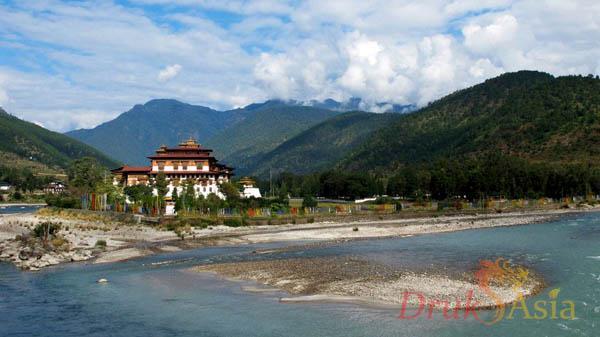
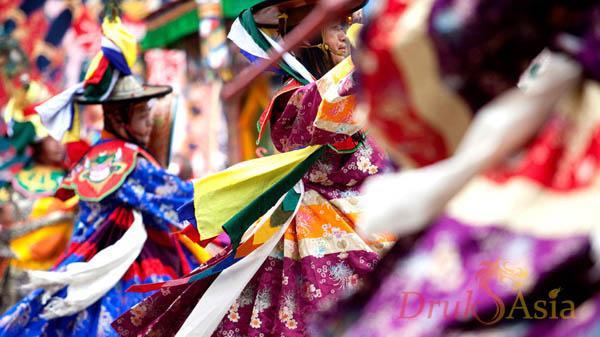
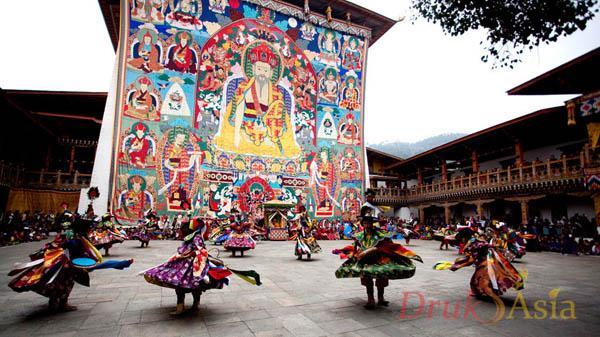
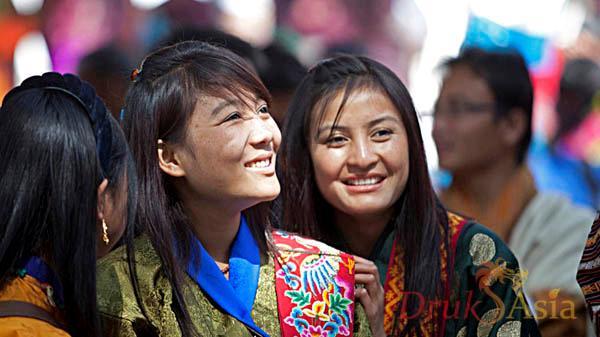
Punakha Tshechu, as all Tshechu festivals, honors Padmasambhawa, also known as Guru Rimpoche, the precious yogi and saint who is credited with having introduced Tantric Buddhism throughout the Himalayas. The festival’s masked dances are performed by monks clad in colorful brocade attire and permeated by chants and reading of Buddhist scripts. The culmination of festival constitutes the unfolding of a huge cloth thangka, a sacred scroll, depicting Padmasmabhawa and imagery from Buddhist pantheon.
Festival video
All our tours are fully customisable — the itineraries you see are simply a starting point. We'll work closely with you to tailor every detail.
7 Day Punakha Tshechu Itinerary
1 Arrival in Paro, Bhutan
Welcome to Bhutan, the Land of the Thunder Dragon.Touching down at Paro International Airport, you will be greeted by your guide upon exiting the arrival hall. Today, we will take it easy to acclimatise to the altitude. Drive to Thimphu, check in to the hotel and lets have your first taste of Bhutanese cuisine and some light sight-seeing, like the weekend market, in Thimphu.
Heritage Museum - Dedicated to connecting people to the Bhutanese rural past though exhibition of artefacts used in rural households.
Textile Museum - witnesses the art of traditional weaving.
Simtokha Dzong - Five miles from Thimphu, on a lofty ridge, stands Semtokha Dzong the oldest fortress in the Kingdom.
2 Tour of Thimphu
National Memorial Chorten - Which was built in honor of the late King Jigme Dorji Wangchuk.
Papermaking Factory - Witnesses the art of papermaking.
Day Trek to Tango Goemba and picnic/lunch by river In the afternoon. The Tango Goemba site has had religious significance since the 12th century when it was the home of the Lama who brought the Drukpa Kagyupa school of Buddhism to Bhutan. The monastery was built there in the 15th century by Drukpa Kunley ("The Divine Madman"). Tango is the highest center of Buddhist learning in the country; almost every Je Khenpo (religious head of Bhutan) completed the 9-year program there. After completing that program, monks traditionally spend 3 years, 3 months and 3 days in mediation at the nearby Cheri Goemba retreat, built in 1619 by Shabdrung Ngawang Namgyal, the founder or first unifier of Bhutan. It is currently the home of an 11-year-old boy believed to be the seventh reincarnation of the fourth desi, or ruler, of Bhutan.
Centenary Farmers’ Market - Every Saturday and Sunday most of the Thimphu population congregate on the banks of the river where the weekend market is held. Here villagers from the valley and other nearby places come to sell their agriculture products.
3 Punakha Tshechu
Punakha Dzong - Built in 1637, the dzong continues to be the winter home for the clergy, headed by the Chief Abbott, the Je Khenpo. It is a stunning example of Bhutanese architecture, sitting at the fork of two rivers, portraying the image of a medieval city from a distance. The dzong was destroyed by fire and glacial floods over the years but has been carefully restored and is, today, a fine example of Bhutanese craftsmanship.
The Punakha Tshechu, as all Tshechu festivals, honors Padma Sambhawa, also known as Guru Rimpoche, the precious yogi and saint who is credited with having introduced Tantric Buddhism throughout the Himalayas. The festival’s masked dances are performed by monks clad in colorful brocade attire and permeated by chants and reading of Buddhist scripts. The culmination of festival constitutes the unfolding of a huge cloth thangka, a sacred scroll, depicting Padma Smabhawa and imagery from Buddhist pantheon.
Khamsum Yulley Namgyal Chorten - Built by the third Queen Mother Ashi Tshering Yangdon wangchuck this Chorten is a splendid example of of the Bhutanese architecture and art and is the only one of its kind in the world. It has been built over eight and a half years and its details have been drawn from religious scripture.
4 Punakha
Punakha Dzong - Built in 1637, the dzong continues to be the winter home for the clergy, headed by the Chief Abbott, the Je Khenpo. It is a stunning example of Bhutanese architecture, sitting at the fork of two rivers, portraying the image of a medieval city from a distance. The dzong was destroyed by fire and glacial floods over the years but has been carefully restored and is, today, a fine example of Bhutanese craftsmanship.
The Punakha Tshechu, as all Tshechu festivals, honors Padma Sambhawa, also known as Guru Rimpoche, the precious yogi and saint who is credited with having introduced Tantric Buddhism throughout the Himalayas. The festival’s masked dances are performed by monks clad in colorful brocade attire and permeated by chants and reading of Buddhist scripts. The culmination of festival constitutes the unfolding of a huge cloth thangka, a sacred scroll, depicting Padma Smabhawa and imagery from Buddhist pantheon.
Khamsum Yulley Namgyal Chorten - Built by the third Queen Mother Ashi Tshering Yangdon wangchuck this Chorten is a splendid example of of the Bhutanese architecture and art and is the only one of its kind in the world. It has been built over eight and a half years and its details have been drawn from religious scripture.
5 Punakha to Paro
Chhimi Lhakhang - A 20 minutes walk across terraced fields through the village of Sopsokha from the roadside to the small temple located on a hillock in the centre of the valley below Metshina. Ngawang Chogyel built the temple in 15th century after the ’divine Madman’ Drukpa Kuenlay built a small chorten there. It is a pilgrim site for barren women. Paro Valley - The beautiful valley is home to many of Bhutan’s old monasteries and temples. The country’s only Airport is in Paro. The valley is also home to mount Chomolhari (7,300 meters) situated at the northern end of the valley whose glacier water forms the Pachu flowing through the valley. The following are some of the prominent places to visit in Paro. Paro Dzong also known as Rinpung Dzong, this 15th century massive fortress/monastery, is also the administrative center of the dzonkhag. A morning drive, north of Paro valley brings us to the ruins of Drukgyal Dzong. Built in 1647 by the great Shabdrung Ngawang Namgyal, father and unifier of medieval Bhutan, the Dzong was destroyed by an accidental fire and left in ruins as an evocative reminder of the great victories it was built to commemorate.Explore the ramparts and relive the memories of a glorious past.
6 Paro
Drukgyal Dzong - A morning drive, north of Paro valley brings us to the ruins of Drukgyal Dzong. Built in 1647 by the great Shabdrung Ngawang Namgyal, father and unifier of medieval Bhutan, the Dzong was destroyed by an accidental fire and left in ruins as an evocative reminder of the great victories it was built to commemorate.Explore the ramparts and relive the memories of a glorious past.
Taktsang Monastery - A one hour hike to the cafeteria is also a vantage view whereby you can enjoy the stunning view of the monastery. Prayer flags adorn the cliffs and this is also where Guru Padmasambhava landed on the back of a tigress in the 8th century.
Kyichu Lhakhang - After a sumptuous local lunch, we will retrace our steps to visit Kyichu Lhakhang, one of the oldest temples in Bhutan.
7 Depart Paro
After breakfast, we will transfer to Paro airport for our flight and we bid a fond farewell to the Kingdom of Bhutan. Til then, we'll see you on other Bhutan Festival Tours!








Community Partners
Your journey contributes directly to local communities. Complete a feedback form after your tour and Druk Asia will donate to your chosen cause.
 Gyalyum Trust
 VAST Bhutan
 Museums of Bhutan
Let's Customise Your Dream Bhutan Adventure
Join over 22,940+ happy travellers who've trusted our Bhutan experts to craft journeys that are anything but ordinary.
- Visa guaranteed — or your money back
- Pick your perfect stay — charming farmstay or luxe hotel
- Design your day — change activities even while you're in Bhutan
- Add a vibrant festival — timing around Bhutanese celebrations is pure magic
- Hike more, or hike less — totally your pace
- Experience Bhutan like a local — hot stone bath, cooking session, astrology reading
What Our Travellers Say
Druk Asia has strong networks with DrukAir and local tour agencies, making logistics a total breeze. The itinerary was well-planned yet flexible enough to accommodate different needs. We could decide when we wanted to get up, which places to visit or simply recuperate in solitude. Will go with Druk Asia again if I were to go back for spring or autumn. Won’t have it any other way!
My trip to Bhutan was pleasant and well organized by Druk Asia. I was very happy and comfortable with my tour guide, Tshering, and had absolute confidence in my driver, Chimmi. Tshering kept me entertained throughout the trip with histories and stories about Bhutan while Chimmi was an excellent driver. Bhutan is a very beautiful country with its unique Buddhist culture and a nation of very warm people. The sceneries were spectacular and its culture charming. I will definitely visit Bhutan again and recommend Druk Asia to my friends.
I knew this Druk Asia through my friend who initially asked me to go to Bhutan. I have to say this travel is excellent. We went to Bhutan through Thailand and the next day we missed the flight. Bhutan’s flight is a bit strange in a sense that we need to be at Thai’s airport 2 hours before departure. The gate closed quite early. Druk Asia helped us a lot to arrange our next day flight. During our time in Bhutan, this travel agent frequently asked our condition there whether we were alright or not. This sense of caring is simply excellent, particularly for the country like Bhutan which is in the Himalayan continent. I really grateful to go to this country with Druk Asia. Excellent!
Just wanted to let both of you know that we had a great time in Bhutan. Thanks for looking into the details. Both our guide and driver were great. Thanks again!
Back from Bhutan, I wanted to let you know that this has probably been the best holiday I ever had. Bhutan is really a wonderful place, the people are so friendly and the landscape gorgeous. We also had the best weather one could ask for, and that helped. We have been very happy the whole tour. One suggestion I would give you is to propose your future clients to spend 1 night in a farmhouse. We did, and we loved it. The host was absolutely nice and the experience of sharing dinner, breakfast and the ordinary life of a Bhutanese family was absolutely fantastic.
An unique experience! We had wonderful time in Bhutan. Though it was a short trip, we enjoyed natural beauty, spectacular view and warm friendly people. We have been many countries but this trip was something different, ...memorable and nostalgic.
