 Druk Asia
Preparing your journey…
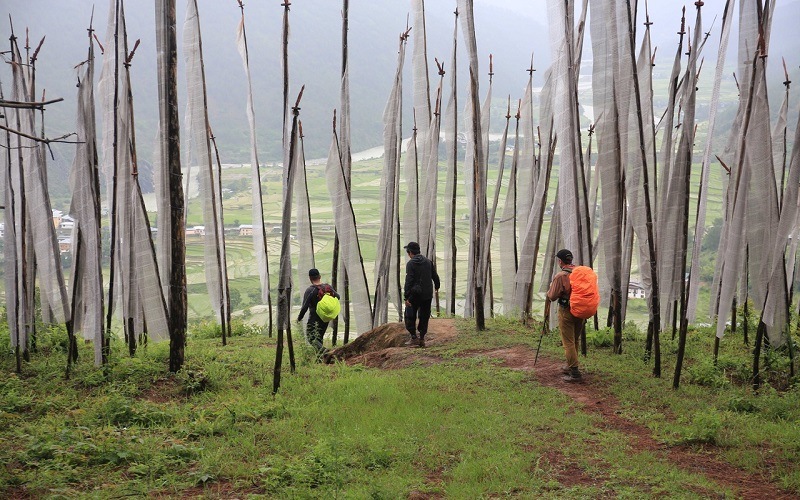
Lace up your running shoes, fill your water bottles, and prepare yourself for an unforgettable 15 days in Bhutan, including 10 spent running along selected sections of the Trans Bhutan Trail. Enjoy running through virgin forests, beautiful meadows, and along ridges with spectacular mountain vistas, taking in Bhutan’s major spiritual and cultural landmarks on your way. Round off your expedition with a two-day run from Paro to the incredible Tiger’s Nest Monastery.


All our tours are fully customisable — the itineraries you see are simply a starting point. We'll work closely with you to tailor every detail.
15D 14N Trail Running Challenge Itinerary
1
On arrival at Paro International Airport today, you will be met by your guide. You will be driven by private vehicle to the town of Haa, with a brief stop en route to take in some breathtaking Himalayan vistas at Chelela which, at 3,810 metres (12,500 feet) above sea level is the highest paved road in Bhutan. As you arrive at Chelela, you may wish to join with your guide and driver in a hearty cry of ‘lha-geh lu!’ (‘May the Gods be victorious’).
You will be given time to settle into your hotel in Haa and to rest before joining your guide for an afternoon acclimatization walk around the town. Your orientation walk will include a visit to the Lhakhang Karpo or ‘White Chapel’ complex, just south of Haa’s Dzong (fortress). The Lhakhang has an atmospheric central chapel which houses statues of the Tse-la-nam Sum trinity. During your visit to the Lhakhang Karpo, you will have the option of a traditional pre-expedition blessing in preparation for your upcoming journey along the Trans Bhutan Trail.
Your guide will select a local restaurant in Haa for dinner this evening, which will be your first chance to learn about and sample Bhutanese cuisine.
Accommodation: Soednam Zingkha Heritage Lodge or similar (3*)
Meals: D
2
After breakfast at your hotel, you will be transferred to Katsho, where you will begin your first day of trail running on the ancient Trans Bhutan Trail. For generations, the people of Haa followed the route you will walk today to trade with the Parops in the neighbouring valley. There, they would barter 20 drey (approximately 30 kilograms or 66 pounds) of Shakam (dried meat) for 20 drey of rice at Paro Tshongdu (market) because the harsher climatic conditions in Haa are unsuitable for rice cultivation.
The age-old Trail follows the beautiful Haa river as it gently rises out of the Katsho Valley, passing through yak pastures before heading into forests of pine and rhododendron. As you traverse the Katsho Valley, look out for cliff-edge Bjungneydra Taktsang (monastery), also known as “The Mini Taktsang”, and the sky burial site of Kungkarpo. The trail continues to climb until it reaches the pass at Kaleyla, where it crosses the ridge trail between Chelela and Sagala. At Kaleyla, you will enjoy stunning views of the Himalayan range to the north, including on the clearest days vistas of Mount Jomolhari (7,314 metre/23,996 feet), Mount Jichudrakegang (6,794 metre/22,290 feet) and Mount Tsherimgang (6,789 metre/22,273 feet). You will be provided with a picnic lunch during this stop.
From Kaleyla, run down through rhododendron and bamboo forest into the Paro Valley. The last few kilometres to Paro will then be on tracks which meander through traditional Bhutanese farming villages.
On arrival in the Ngopa gewog of Paro you will have the chance to visit Kichu Lhakhang (temple). Said to date from the 7th century and built by Songtsen Gampo, it is one of Bhutan’s oldest religious sites. Kichu Lhakhang is home to an original statue of Jowo Jamba which is one of the most sacred sculptures in the region; and the two orange trees inside the monastery courtyard are said to bear fruit year round.
Your guide will arrange for dinner either at your hotel or in a local restaurant.
Accommodation: The Village Lodge or similar (3*)
Meals: B,L,D
Trek Distance: 17 kilometres (10.57 miles)
Elevation Gain: 1,169 metres (3,835 feet)
Starting Elevation: 2,801 metres (9,190 feet)
Ending Elevation: 2,380 metres (7,809 feet)
Maximum Elevation: 3,790 metres (12,435 feet)
3
After breakfast this morning, rejoin the Trans Bhutan Trail running east. The Trail rises gently from Lamgong Village as it traverses the sprawling rice paddies of the Paro Valley, before carving around the northern ridge and descending into the traditional village of Dopshari.
At Dopshari, enjoy a cookery demonstration and a traditional Bhutanese lunch at a local farmhouse. After lunch, you will also have the opportunity to try your hand at Bhutan’s national sport, archery, and have a quick game of traditional ‘khuru’ (darts).
After lunch, head out onto the trail for one last time for the run up to Upper Dopshari, where you will enjoy stunning views out over the Paro Valley.
You will be collected from Upper Dopshari and transferred back towards Paro. En route, visit Ta Dzong or the ‘watchtower’, originally built in 1649 to protect Paro Dzong from the Tibetan military. In 1968, Ta Dzong became Bhutan’s National Museum, and is now home to a number of exhibitions including sculpture, painting and artifacts depicting Bhutan’s magical past. Afterwards, continue to the stunning Paro Rinpung Dzong (fortress), meaning ‘Fortress on a Heap of Jewels’. The original construction of this Dzong is believed to have been completed in 1458 and it was restored to its present glory by His Majesty the Third of Bhutan, King Jigme Dorji Wangchuck, to mark his royal wedding in 1951.
After your visits, head to your hotel, where we recommend you relax and unwind after your trek in a traditional Bhutanese hot stone bath before enjoying dinner with your guide at a nearby restaurant.
Accommodation: Tushita Eco Lodge or similar (3*)
Meals: B,L,D
Trek Distance: 16 kilometres (9.94 miles)
Elevation Gain: 943 metres (3,049 feet)
Starting Elevation: 2,380 metres (7,809 feet)
Ending Elevation: 2,826 metres (9,272 feet)
Maximum Elevation: 2,826 metres (9,272 feet)
4
After breakfast today, rejoin the Trans Bhutan Trail heading east towards Tsalunang. Today’s run begins with a climb from Upper Dopshari through community reforestation projects, small farming villages, into deep forest and along pristine rivers. You may well find the perfect spot to hoist some lungdhar (prayer flags) on your way.
After a picnic lunch at Jelila, you may wish to make the small detour to visit Jela Dzong (fortress). Built on the site where Zhabdrung Ngawang Namgyel is said to have encountered the protective deity Pal Yeshey Goenpo on his pilgrimage to Paro, its main relics are the statues of Du Sum Sangye (Buddha of the Past, Present and the Future). It is believed that the Buddha once faced northwards but then miraculously turned itself to face southwest towards Paro.
From Jelila, the Trail drops gently down into the Tsalunang Valley, passing through forests of blue pine and rhododendron on its way. Bird enthusiasts will want to keep an eye out for some of Bhutan’s beautiful species as you run down this section.
Enjoy a hot shower and a relaxing hot stone bath on arrival at your campsite. A dinner prepared from organic, locally-sourced produce will be provided at camp.
Accommodation: Signature TBT Camping
Meals: B,L,D
Trek Distance: 14.2 kilometres (8.82 miles)
Elevation Gain: 886 metres (2,907 feet)
Starting Elevation: 2,826 metres (9,272 feet)
Ending Elevation: 2,774 metres (9,101 feet)
Maximum Elevation: 3,546 metres (11,634 feet)
5
After breakfast at camp, continue your trail run east towards Bhutan’s Capital city, Thimphu. With elevations ranging between 2,248 metres (7,375 feet) and 2,648 metres (8,688 feet) above sea level, Thimphu is the fifth highest capital city in the world by altitude. It is also the only capital city in the world without any traffic lights. The city offers a unique blend of the modern world with Bhutanese tradition.
From Tsalunang, the Trail climbs through forests of fir, blue pine, dwarf rhododendron and through yak pastures before it reaches the pass at Pumola. Herders from Punakha would once bring their cattle here over the summer to escape the heat of the lower-lying Punakha valley.
After enjoying a picnic lunch and excellent mountain views at Pumola, rejoin the Trail as it meanders down through picturesque meadows, offering stunning views of the Thimphu valley from the long ridge thereafter. From here, you will be able to make out your route for the next few days in the distance beyond Thimphu.
Towards the end of the day, you will arrive at Buddha Point, home to Thimphu’s most recognized landmark, the Buddha Dordenma. Guarding the entry to the Thimphu valley, this 51-metre (167 feet) gilded bronze statue is filled with 125,000 miniature statues and sits atop a three-storey base housing a chapel and thousands of donated statuettes. The statue was commissioned to mark His Majesty the Fourth King of Bhutan, Jigme Singye Wangchuck’s 60th birthday and was originally made in China before being transported to Thimphu in pieces.
Check in to your hotel before heading out for dinner with your guide at one of the many excellent restaurants in the capital.
Accommodation: Tara Phendheling Hotel or similar (3*)
Meals: B,L,D
Trek Distance: 19.2 kilometres (11.93 miles)
Elevation Gain: 1,285 metres (4,216 feet)
Starting Elevation: 2,774 metres (9,101 feet)
Ending Elevation: 2,659 metres (8,724 feet)
Maximum Elevation: 3,934 metres (12,907 feet)
6
Today, enjoy a rest day spent taking in the best of Thimphu’s numerous attractions. First, head to the scenic Kabisa Valley, just north of Thimphu, to the Choki Traditional Art School. Choki is Bhutan’s only private institution providing free education to underprivileged youths who have a keen interest in learning the traditional arts and crafts. During your visit to the school you will see students engaged in a number of traditional art forms, including painting, carving, and tapestry.
Before heading back into Thimphu, drop in at the Pangri Zampa Monastery, where you will have the chance of a private reading with a monk astrologer. Astrology in Bhutan is an ancient and highly respected science and locals will often consult the stars before making major life decisions such as getting married, changing jobs, or buying a car.
Also visit Thimphu Dzong (fortress). The Dzong was rebuilt by His Majesty the Third King of Bhutan, King Jigme Dorji Wangchuck, in 1962, when the capital of Bhutan was moved from Punakha to Thimphu. Since that time it has been the seat of the Government of Bhutan. Undoubtedly Thimphu’s most imposing building, you will have time to enjoy its quiet courtyards, the small Lhakhang Sarp chapel and the Dzong’s imposing utse (tower).
After lunch in a local restaurant, head to Buddha Point, home to Thimphu’s most recognized landmark, the Buddha Dordenma. Guarding the entry to the Thimphu valley, this 51-metre (167 feet) gilded bronze statue is filled with 125,000 miniature statues and sits atop a three-storey base housing a chapel and thousands of donated statuettes. The statue was commissioned to mark His Majesty the Fourth King of Bhutan, Jigme Singye Wangchuck’s 60th birthday and was originally made in China before being transported to Thimphu in pieces. Your final stop for the day will then be at the Memorial Chorten, a Tibetan-style stupa built in 1974 and one of Thimphu’s busiest religious sites.
Dinner will be with your guide at a local restaurant this evening.
Accommodation: Tara Phendheling Hotel or similar (3*)
Meals: B,L,D
7
After breakfast at your hotel, you will be transferred east to the Dochula pass to begin today’s run, stopping briefly at Simtokha Dzong (fortress) on the way. Built in 1629 by Zhabdrung Ngawang Namgyal, the fortress is said to sit on the site where a demon once vanished into a rocky outcrop. Simtokha Dzong is said to be the first dzong in Bhutan built to house both administrative and monastic residents, and it is also the oldest dzong to have survived as a complete structure. The Dzong boasts many fine murals, carvings and tapestries, a three-storey utse (tower), and a number of chapels.
After the visit, continue to the Dochula Pass, which stands at 3,100 metres (10,200 feet) above sea level. Mountain passes are some of the most sacred places in Bhutan and so it is customary to burn incense as an offering in places such as this. You may also wish to join locals in hanging colourful prayer flags as a sign of respect to the Gods.
While at Dochula you may visit the Druk Wangyal Lhakhang (temple), built in honour of His Majesty the Fourth King Gyalpo Jigme Singye Wangchuck and to commemorate the 100th anniversary of the Bhutanese Monarchy. The paintings in this temple are unique insofar as they combine modern flourishes with century-old techniques. The Temple hosts a yearly tshechu (festival) which pays tribute to the wise leadership of His Majesty the King and the ongoing efforts of the Royal Bhutanese Army in protecting Bhutan’s sovereignty. You should also visit the Druk Wangyal Chorten (stupa), also known as the ‘108 Chortens’, and its nearby meditation caves.
After your visits, run down into the adjacent valley and join a section of the Trail known as the ‘Divine Madman Trail’. You are now following in the footsteps of the Divine Madman himself, Drukpa Kuenley, when he came to Bhutan from Tibet in the 16th century to fulfil his destiny of suppressing evil energies. Over the coming days, you will come across a number of important cultural sites and extraordinary stories related to the life of Drukpa Kuenley.
You will make a stop for a picnic lunch at Thinleygang Lhakhang (temple) before continuing down towards Toeb Chandana. On arrival, visit the Toeb Chandana Lhakhang (temple), also known as the Chandana Lhakhang, meaning ‘where the arrow landed’. Legend has it that when Drukpa Kuenley fired an arrow from Tibet to determine his course, it landed here in Toeb Chandana. The temple itself was built in the 15th century to ward off the evil energy of a demoness and then served as the religious seat of Ngawang Chogyal. The two hills at each end of the temple resemble knees and are said to be the knees of Ngawang Chogyal herself.
Next door to the Temple is the house of Toeb Tshewang, which Drukpa Kuenley’s arrow is said to have struck when it landed. Legend has it that, dressed as a hunting beggar, Kuenley courted Tshewang’s wife and that, in a fit of jealous rage, Tshewang drew a sword which Drukpa Kuenley miraculously knotted. Thus Realizing Kuenley’s divine power, Tshewang offered him his wife as a gift to aid him in fulfilling his prophecies. The building still houses the eleven-stepped wooden ladder that Kuenley’s arrow is said to have struck; and the descendants of Tshewang have preserved the house as a monument for fifteen generations.
Accommodation: Signature Trans Bhutan Trail Camping
Meals: B,L,D
Trek Distance: 13.5 kilometres (8.39 miles)
Elevation Gain: 50 metres (164 feet)
Starting Elevation: 3,114 metres (10,217 feet)
Ending Elevation: 1,560 metres (5,118 feet)
Maximum Elevation: 3,114 metres (10,217 feet)
8
After breakfast this morning, bid farewell to Toeb Chandana as you commence the ascent towards Sew Drangsa. In recent years, the central monastic body occasionally uses this route to reach its winter residence in Punakha and to return to Thimphu in the summer. At Sew Drangsa, you will find a clearing marked with prayer flags, which is where the monks stop for lunch en route. From Sew Drangsa, the trail descends towards Punakha Dzong (fortress), offering spectacular views of the Punakha Valley on the way.
On arrival in Punakha, enjoy a live cooking demonstration followed by an outdoor lunch. Then, in the afternoon, enjoy a gentle rafting expedition down the Mochhu River. Head to the put-in spot, around 6 kilometres (3.7 miles) north of Punakha Dzong and enjoy a leisurely float down the wide river valley past Her Majesty the Queen’s winter residences and His Majesty the King’s weekend retreat.
Dinner will be with your guide at a local restaurant.
Accommodation: Zhingkham Resort or similar (3*)
Meals: B,L,D
Trek Distance: 13.5 kilometres (8.39 miles)
Elevation Gain: 195 metres (640 feet)
Starting Elevation: 1,560 metres (5,118 feet)
Ending Elevation: 1,225 metres (4,019 feet)
Maximum Elevation: 1,778 metres (5,834 feet)
9
Today, enjoy a full day of sightseeing in the beautiful town of Punakha. Start off at the Bazam (bridge) across the river from Punakha Dzong (fortress), where you will need to be wearing formal Bhutanese dress, including a gho for men and a kora for women, in order to cross on foot. Once on the other side, enjoy a tour of the Dzong (fortress), which was built by Zhabdrung Ngawang Namgyal in around 1637 at the confluence of the Phochhu (male river) and the Mochhu (female river). Arguably, it is the most beautiful Dzong in the country. The Dzong guards Bhutan’s most treasured relic, the Rangjung Kharsapani, an image of Chenresig kept away from the public in the utse (tower). It has survived Tibetan invasions, numerous fires, floods and a glacial lake burst. The Dzong served as the capital and seat of the Bhutanese Government until the early 1950s; and the coronation of His Majesty the First Druk, Gyalpo Ugyen Wangchuck, took place here. The building currently serves as the winter residence for the monastic body.
Also visit the imposing Khamsum Yulley Namgyal Choeten (stupa), which was built in 2004 to protect Bhutan from evil forces and bring peace to the world. The stupa is accessible via a one hour trek up a pleasant trail to the north of Punakha. Afterwards, head to the Chimi Lhakhang (temple), built in 1499 by the 14th Drukpa hierarch, Ngawang Choegyel. It is said that the site was originally founded when the Divine Madman, Drukpa Kuenley, built a chorten here after having tamed a demon with a magic thunderbolt of wisdom, trapping it in a rock
Accommodation: Zhingkham Resort or similar (3*)
Meals: B,L,D
10
After breakfast at your hotel, rejoin the Trail for a run eastwards towards Lingmukha. Initially, the trail winds through paddy fields and then climbs relatively steeply until reaching a chorten (stupa) which marks the highest point on today’s run. Enjoy a picnic lunch and scenic views of the valleys to the north from here.
After lunch, the Trail descends down into the pretty Lingmukha Valley, with the last hour or so of today’s run being along the feeder road. This Valley is commonly referred to as Lingmup Sher gi Zhom, which translates as “the golden bowl”, on account of the many rice fields which lie beneath ridges to either side. Here, you will visit the Lingmukha Lhakhang (temple), built by the great discoverer of treasure Terton Dorjee Lingpa. Oral tradition has it that Dorjee Lingpa arrived in Lingmukha in the 14th century, built the Lhakhang and then settled there along with his disciples. The Great Master is said to have discovered many ters (treasures) in the village.
After your visit to the temple, head to your campsite where you will be able to enjoy a hot shower and a relaxing hot stone bath. A dinner prepared from organic, locally-sourced produce will be provided at camp.
Accommodation: Signature TBT Camping
Meals: B,L,D
Trek Distance: 12.25 kilometres (7.61 miles)
Elevation Gain: 1,123 metres (3,685 feet)
Starting Elevation: 1,225 metres (4,019 feet)
Ending Elevation: 2,144 metres (7,034 feet)
Maximum Elevation: 2,190 metres (7,185 feet)
11
After breakfast at camp, rejoin the Trail running east towards Samtengang. Historically, this section of the Trail would have often been used by natives of Lingmukha and the people of Phangyul in the adjacent valley. Although the two villages are separated by a steep ridge, they strongly believe themselves to be close blood relatives sharing the same cultural roots.
The Trail rises from deep in the Lingmukha Valley, climbing steeply through dense forest until it reaches a rest stop built at a pass. From the pass, you will descend sharply, enjoying panoramic views of the Shar Valleys. Stop on the way to visit the Chungse Azhe Gyalzom Lhakhang (temple), which is built on the place where a Chan-do (a small, disc-like stone), thrown by the Divine Madman, Lam Drukpa Kuenley from Sha Kuenzangling on the other side of the valley, is said to have landed. Nearby, in the small village of Chungseykha, you will enjoy a hot lunch served in a local restaurant.
After lunch, the Trail will pass by small farming villages perched on steep slopes as it climbs towards Samtengang, where you will find your campsite set up for overnight.
At the campsite, enjoy a hot shower and a relaxing hot stone bath. A dinner prepared from organic, locally-sourced produce will be provided.
Accommodation: Signature TBT Camping
Meals: B,L,D
Trek Distance: 17.2 kilometres (10.69 miles)
Elevation Gain: 1,286 metres (4,219 feet)
Starting Elevation: 2,144 metres (7,034 feet)
Ending Elevation: 1,952 metres (6,405 feet)
Maximum Elevation: 2,535 metres (8,317 feet)
12
After breakfast at camp, you may wish to pay a brief visit to the nearby Lhakhang Thangkha Temple. This Temple is thought to be one of the eight lings (meditation and teaching locations) of Kunkhyen Longchen Rabjam.
Afterwards, rejoin your vehicle for a transfer west to the town of Paro. On arrival, check in at your hotel and enjoy the remainder of the day at leisure to relax or explore the town.
Dinner will be with your guide at a local restaurant.
Accommodation: Tushita Eco Lodge or similar (3*)
Meals: B,L,D
13
After breakfast at your hotel, enjoy a spectacular drive to Sangchen Choekhor Shedra (monastery), perched high above the Paro Valley. This Buddhist college, which is home to about 150 monks, studying for six years before they move on to Tango Monastery upon graduation. After a brief visit, commence an exhilarating run along the Bumdrak Trail. From the Sangchen Choekhor Shedra (monastery), the Trail climbs through a forest of blue pine before leveling off as it passes through oak and rhododendron forest. From here, climb towards Choechotse Lhakhang (temple), from which you will enjoy excellent views down over the Paro Valley. From the temple, your run will take you through forests of larch, silver fir and juniper, before heading across meadows from which you will be able to see the Bumdrak Lhakhang (temple) in the distance. After visiting the temple, continue the short distance to your campsite for dinner and overnight.
Accommodation: Camping
Meals: B,L,D
Trek Distance: 7 kilometres (4.35 miles)
Elevation Gain: 960 metres (3,150 feet)
Starting Elevation: 2,900 metres (9,514 feet)
Ending Elevation: 3,860 metres (12,664 feet)
Maximum Elevation: 3,900 metres (12,795 feet)
14
After breakfast at camp, start the long descent from Bumdra towards the Taktshang Goemba, more commonly known as the ‘Tiger’s Nest Monastery’. The first section of the Trail descends through forests of larch and silver pine towards Yoselgang, where the assembly hall has a fine woodblock print depicting Guru Rinpoche’s eight manifestations. The trail then passes by Ugyen Tshemo Lhakhang before, shortly after, you will join a steep shortcut path to the Tiger’s Nest via the Machig-phu Lhakhang (temple).
Precariously perched on a sheer cliff face 900 metres (2,950 feet) above the Paro Valley floor, the Tiger’s Nest is undoubtedly Bhutan’s most famous religious building. It is built on the site where Guru Rinpoche is said to have arrived on the back of a tigress when he came to subdue the local demon, Singye Samdrup. After subduing the demon, Guru Rinpoche is said to have meditated in a cave here for three whole months.
Once you have reached the Tiger’s Nest, you will have a chance to visit the cave where Guru Rinpoche meditated, as well as the extensive network of Lhakhangs (chapels) which house images, murals, chortens, and a holy spring.
After your visit, walk some 90 minutes back down to the main access road, where your vehicle will be waiting to transfer you back to Paro.
This evening, enjoy a farewell dinner with your guide at a local restaurant.
Accommodation: Tushita Eco Lodge or similar (3*)
Meals: B,L,D
Trek Distance: 7 kilometres (4.35 miles)
Elevation Gain: 100 metres (328 feet)
Starting Elevation: 3,860 metres (12,664 feet)
Ending Elevation: 3,000 metres (9,843 feet)
Maximum Elevation: 3,860 metres (12,664 feet)
15
After breakfast at your hotel, you will be transferred to the airport for your departure flight.
Meals: B




per person · SDF included
Plan This Journey →



Community Partners
Your journey contributes directly to local communities. Complete a feedback form after your tour and Druk Asia will donate to your chosen cause.
 Gyalyum Trust
 VAST Bhutan
 Museums of Bhutan
Let's Customise Your Dream Bhutan Adventure
Join over 22,940+ happy travellers who've trusted our Bhutan experts to craft journeys that are anything but ordinary.
- Visa guaranteed — or your money back
- Pick your perfect stay — charming farmstay or luxe hotel
- Design your day — change activities even while you're in Bhutan
- Add a vibrant festival — timing around Bhutanese celebrations is pure magic
- Hike more, or hike less — totally your pace
- Experience Bhutan like a local — hot stone bath, cooking session, astrology reading
What Our Travellers Say
Druk Asia has strong networks with DrukAir and local tour agencies, making logistics a total breeze. The itinerary was well-planned yet flexible enough to accommodate different needs. We could decide when we wanted to get up, which places to visit or simply recuperate in solitude. Will go with Druk Asia again if I were to go back for spring or autumn. Won’t have it any other way!
My trip to Bhutan was pleasant and well organized by Druk Asia. I was very happy and comfortable with my tour guide, Tshering, and had absolute confidence in my driver, Chimmi. Tshering kept me entertained throughout the trip with histories and stories about Bhutan while Chimmi was an excellent driver. Bhutan is a very beautiful country with its unique Buddhist culture and a nation of very warm people. The sceneries were spectacular and its culture charming. I will definitely visit Bhutan again and recommend Druk Asia to my friends.
I knew this Druk Asia through my friend who initially asked me to go to Bhutan. I have to say this travel is excellent. We went to Bhutan through Thailand and the next day we missed the flight. Bhutan’s flight is a bit strange in a sense that we need to be at Thai’s airport 2 hours before departure. The gate closed quite early. Druk Asia helped us a lot to arrange our next day flight. During our time in Bhutan, this travel agent frequently asked our condition there whether we were alright or not. This sense of caring is simply excellent, particularly for the country like Bhutan which is in the Himalayan continent. I really grateful to go to this country with Druk Asia. Excellent!
Just wanted to let both of you know that we had a great time in Bhutan. Thanks for looking into the details. Both our guide and driver were great. Thanks again!
Back from Bhutan, I wanted to let you know that this has probably been the best holiday I ever had. Bhutan is really a wonderful place, the people are so friendly and the landscape gorgeous. We also had the best weather one could ask for, and that helped. We have been very happy the whole tour. One suggestion I would give you is to propose your future clients to spend 1 night in a farmhouse. We did, and we loved it. The host was absolutely nice and the experience of sharing dinner, breakfast and the ordinary life of a Bhutanese family was absolutely fantastic.
An unique experience! We had wonderful time in Bhutan. Though it was a short trip, we enjoyed natural beauty, spectacular view and warm friendly people. We have been many countries but this trip was something different, ...memorable and nostalgic.
