
Punakha Suspension Bridge

Punakha Suspension Bridge
Suspended high above the Pho Chhu, Punakha Suspension Bridge is one of Bhutan's most recognisable river crossings. Long rows of prayer flags line its sides, the green Punakha Valley opens in every direction and the river moves below as the bridge gently responds to each footstep.
It is also more than a scenic attraction. The bridge remains part of the local landscape, connecting the Punakha side of the river with communities and walking routes on the opposite bank. You may share the crossing with residents going about their day, which gives the visit a sense of place that a purpose built viewpoint cannot offer.
The bridge is commonly known as both Punakha Suspension Bridge and Pho Chhu Suspension Bridge. The river name is also written as Po Chhu in some sources and is commonly translated as the Male River.
Punakha Suspension Bridge at a Glance
| Detail | Information |
| Location | Punakha Valley, Western Bhutan |
| River | Pho Chhu, also written as Po Chhu |
| Approximate length | 230 metres according to Punakha Dzongkhag Administration |
| Approximate width | 1.2 metres |
| Bridge type | Pedestrian suspension bridge |
| Suggested visit time | 30 to 45 minutes |
| Best for | Valley scenery, photography and a gentle sense of adventure |
| Often combined with | Punakha Dzong and other attractions in Punakha Valley |
The bridge is frequently described as Bhutan's longest suspension bridge. As published measurements and national rankings vary, it is more accurate to describe it as one of the country's longest and best known pedestrian suspension bridges.
Why Visit Punakha Suspension Bridge?
The appeal lies in the simplicity of the experience. There is no enclosed viewing deck and no elaborate visitor centre. You walk towards the river, step onto the bridge and watch the valley unfold around you.
The steel cables and narrow walkway frame views of the Pho Chhu, terraced fields and forested hills. Colourful prayer flags add movement across the entire span. In Bhutanese Buddhist tradition, the wind is understood to carry the prayers and blessings printed on the flags into the surrounding landscape.
The bridge moves gently as people cross. For many visitors, that slight sway adds just enough excitement without turning the experience into an extreme activity. Those who are uncomfortable with heights can pause near the entrance, take in the scenery and decide how far they wish to continue.
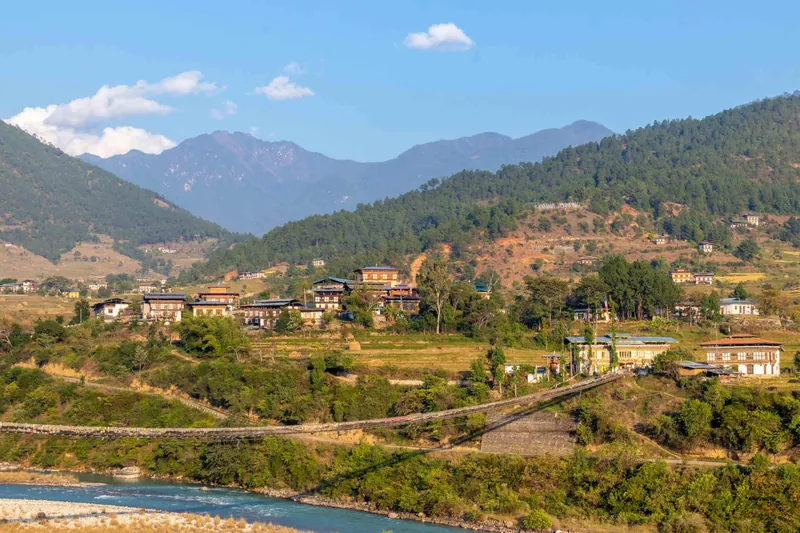
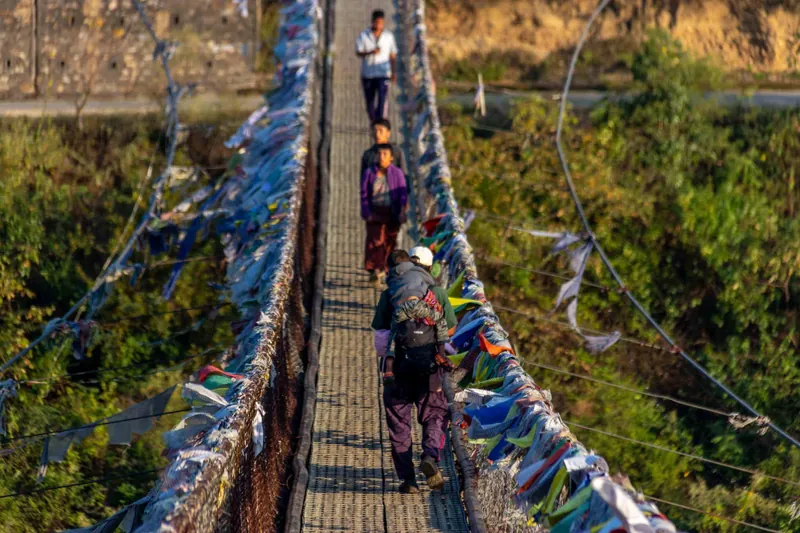
Photography is another reason the bridge has become such a popular stop. The structure creates strong leading lines, while the prayer flags, river and surrounding greenery add colour and depth. The scenery changes noticeably with the season, from lush summer fields to clearer winter views.
A Working Bridge, Not Just a Tourist Attraction
Punakha Suspension Bridge forms part of the connection between the valley and communities across the Pho Chhu. Villagers have long depended on bridges to reach homes, farms, temples and neighbouring settlements without making lengthy diversions along the river.
This everyday role is worth remembering during your visit. Avoid blocking the entire walkway for photographs and give way to residents who are using the crossing. Taking a moment to notice how the bridge fits into local life makes the experience more meaningful than simply walking across and returning.
Two Punakha Bridges That Are Often Confused
Online descriptions often mix up Punakha Suspension Bridge with the covered wooden bridge at the entrance to Punakha Dzong. They are separate bridges across different rivers.
Punakha Suspension Bridge
This is the long steel cable pedestrian bridge decorated with prayer flags. It crosses the Pho Chhu and connects the main Punakha side with communities and trails on the opposite bank.
Punakha Dzong Bazam
The Bazam is the covered wooden cantilever bridge leading directly into Punakha Dzong. It crosses the Mo Chhu. The original bridge was built in the seventeenth century alongside the dzong, while the present reconstruction was completed in 2008.
The 1637 date found in many online descriptions relates to Punakha Dzong and its original cantilever bridge. It should not be presented as the confirmed construction date of the present suspension bridge across the Pho Chhu.
Bhutan is closely associated with Thangtong Gyalpo, the great Buddhist master remembered for pioneering iron chain bridges across the Himalayas. However, reliable documentation directly connecting him to the present Punakha Suspension Bridge is unclear. It is better to appreciate the bridge as part of Bhutan's wider tradition of linking remote communities than to repeat an uncertain attribution.
What Does Crossing the Bridge Feel Like?
The first few steps can feel unusual as the walkway responds to movement. The sway becomes more noticeable when several people are crossing or when the wind strengthens, but most visitors quickly settle into a comfortable pace.
You do not need to hurry. Hold the side rail if you feel uncertain, keep walking steadily and allow faster local users to pass. Avoid jumping or deliberately making the bridge move, especially when children or nervous visitors are nearby.
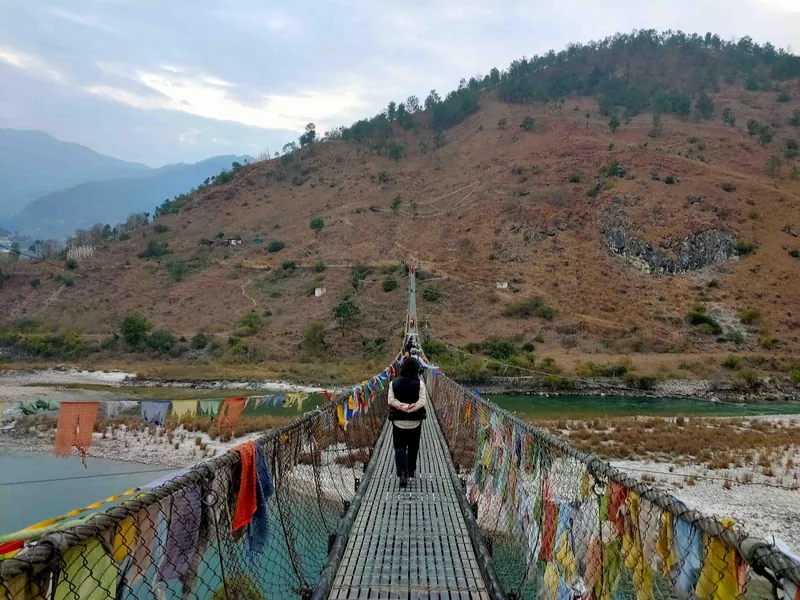
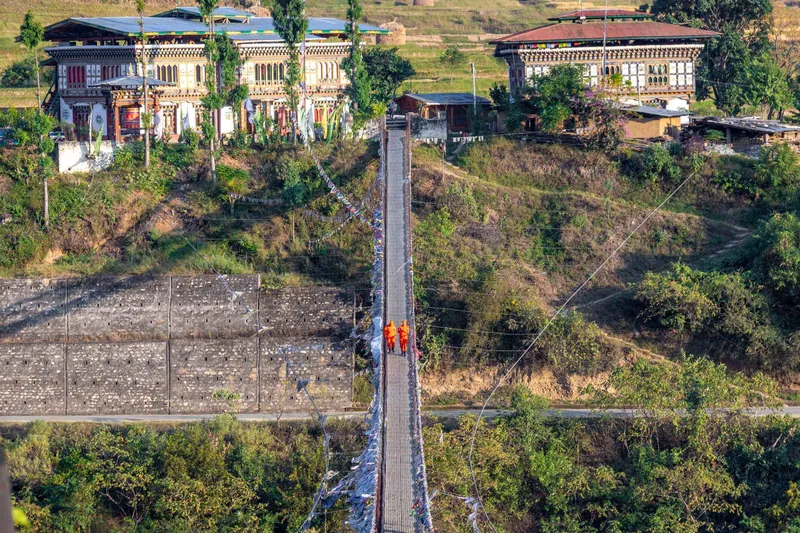
The middle of the bridge offers the widest views along the river. It is tempting to stop for a long photo session, but remain aware of people approaching from both directions. Secure your phone, camera strap, hat and other loose belongings before stepping onto the bridge.
How to Reach Punakha Suspension Bridge
The bridge is located near Punakha Dzong and the two attractions are commonly visited on the same day. Your guide and driver can take you to the most convenient access point, followed by a short walk to the bridge.
The exact approach may vary with parking arrangements, road conditions and local access. Some sections can be uneven, so comfortable walking shoes are useful even though this is not a demanding hike.
Most visitors allow 30 to 45 minutes for the approach, crossing and photographs. Allow closer to an hour if you plan to walk across the full span, spend time on the opposite bank or photograph the bridge from several angles.
Explore our Punakha travel guide to see how the bridge fits into a longer stay in the valley.
Best Time to Visit Punakha Suspension Bridge
The bridge can be included in a Punakha itinerary throughout the year, although conditions change with the seasons.
Spring
Spring brings warm days and fresh greenery to the valley. This is a comfortable period for walking and combining the bridge with Punakha's monasteries and countryside.
Summer
The surrounding fields are especially lush during the summer monsoon. Rain can make the approach slippery, while strong wind and poor weather may make crossing less comfortable. Check conditions with your guide before visiting.
Autumn
Autumn generally offers pleasant walking conditions and good visibility. It is also a popular travel season, so the bridge may be busier at the most convenient times of day.
Winter
Winter often brings clearer skies and crisp views across the valley. Mornings can feel cool, especially on an exposed bridge, so bring an extra layer.
Early morning and later afternoon usually provide softer light for photography. Daylight visits are preferable, particularly for travellers unfamiliar with the approach. Read our guide to the best time to visit Bhutan when choosing your travel month.
Practical Tips for Your Visit
- Wear comfortable shoes with a secure grip.
- Keep both hands available if you are nervous about the movement.
- Secure phones, cameras, hats and scarves before crossing.
- Supervise young children closely and ask them not to run or jump.
- Give way to local residents and avoid blocking the walkway for photographs.
- Check the weather before visiting, especially during rain or strong winds.
- Follow any instructions from your guide or local officials.
- Take your time. Crossing is optional, and the scenery can still be enjoyed from the approach.
Is the Bridge Suitable for Older Travellers?
There is no long hike required for a standard visit, but the approach can include uneven ground and the bridge moves underfoot. Travellers with vertigo, significant balance difficulties or limited mobility may find the crossing uncomfortable.
An older traveller who walks confidently may still enjoy the bridge at a quiet time and at a slower pace. A private guide can assess the current approach, avoid crowded periods and shorten the visit if needed. Anyone who prefers not to cross can remain near the entrance and enjoy the river and valley views.
The narrow moving walkway may not be suitable for wheelchairs. Access conditions can change, so discuss mobility requirements with your travel specialist before the trip.
Photography Tips
Begin with a wide photograph from the approach to show the full scale of the bridge within the valley. Once on the bridge, use its cables and walkway as leading lines towards the opposite bank.
The prayer flags create attractive foreground detail, particularly when a gentle breeze gives them movement. A person walking ahead can also provide scale, but ask before taking a recognisable close portrait of a local resident.
Avoid occupying the centre of the walkway for too long. If you use a tripod, confirm that conditions are quiet and that it will not obstruct others. Drone use in Bhutan is regulated and should never be assumed to be permitted. Ask your guide before bringing or operating one.
What to Visit Near Punakha Suspension Bridge
Punakha Dzong
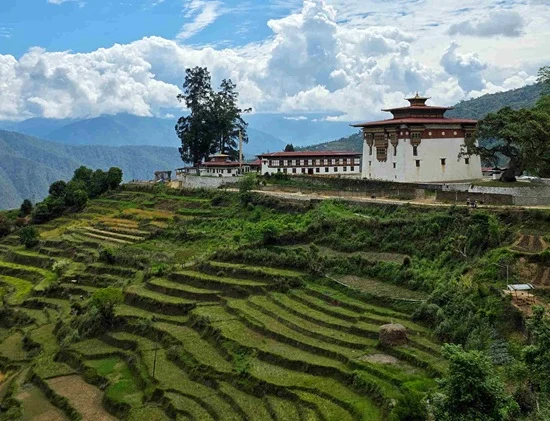
Set at the meeting point of the Pho Chhu and Mo Chhu, Punakha Dzong is one of Bhutan's most important fortresses and the natural companion to a bridge visit. Allow time to appreciate its courtyards, religious significance and riverside setting.
White Water Rafting
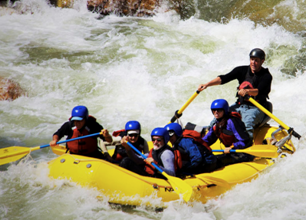
The rivers that shape Punakha Valley also create one of Bhutan's best known adventure experiences. A white water rafting experience in Punakha offers a different perspective of the landscape and can be arranged according to experience and river conditions.
Chimi Lhakhang
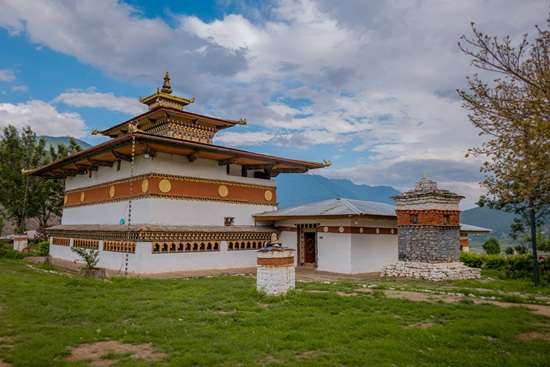
Chimi Lhakhang is associated with Drukpa Kunley, the unconventional Buddhist master known as the Divine Madman. Reaching the temple involves an easy walk through fields and a traditional village.
Sangchhen Dorji Lhuendrup Nunnery
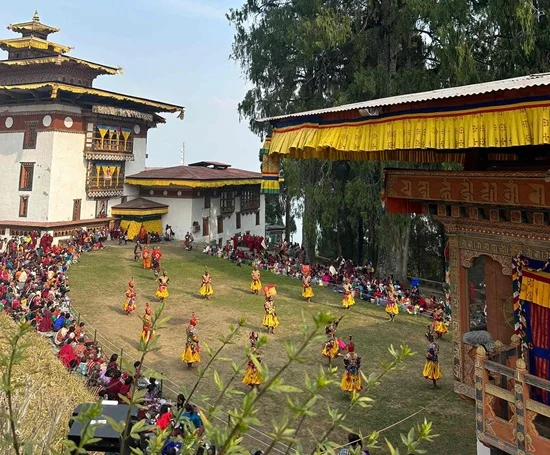
Located above the valley, Sangchhen Dorji Lhuendrup Nunnery combines a peaceful spiritual setting with broad views across Punakha and Wangdue.
Include Punakha Suspension Bridge in Your Bhutan Journey
Punakha Suspension Bridge fits naturally into a cultural itinerary through Paro, Thimphu and Punakha. Our 7 Day Essential Bhutan Journey provides a balanced introduction to western Bhutan, while the 10 Day Discover Bhutan Journey continues into Gangtey and Bumthang for a deeper experience.
Every Druk Asia itinerary can be adjusted to your preferred pace. We can include the bridge alongside Punakha Dzong, village walks, temples, rafting or a longer stay in the valley.
Speak with a Druk Asia Travel Specialist to start planning your journey.
Frequently Asked Questions About Punakha Suspension Bridge
What Is Punakha Suspension Bridge Also Called?
It is also known as Pho Chhu Suspension Bridge or Po Chhu Suspension Bridge, named after the river it crosses.
How Long Is Punakha Suspension Bridge?
Punakha Dzongkhag Administration describes the bridge as approximately 230 metres long and about 1.2 metres wide. Older travel sources commonly give figures of 160 or 180 metres, which explains the conflicting measurements found online.
Is It the Longest Suspension Bridge in Bhutan?
It is widely described as Bhutan's longest suspension bridge. Published measurements and rankings are inconsistent, so describing it as one of Bhutan's longest pedestrian suspension bridges is more accurate.
Does the Bridge Cross the Pho Chhu or Mo Chhu?
Punakha Suspension Bridge crosses the Pho Chhu, also written as Po Chhu. The covered wooden bridge leading into Punakha Dzong crosses the Mo Chhu.
Was Punakha Suspension Bridge Built in 1637?
The date is commonly repeated online, but it appears to come from confusion with Punakha Dzong and its original covered cantilever bridge. Reliable documentation does not clearly confirm 1637 as the construction date of the present Pho Chhu suspension bridge.
Is the Bridge Safe to Cross?
The bridge is used by pedestrians and naturally moves as people walk across it. Cross steadily, use the side rail when needed and follow local instructions. Avoid crossing during severe weather or when access has been restricted.
Is There an Entrance Fee?
A separate attraction ticket is not normally required simply to walk across the bridge. Local access arrangements can change, so your guide will confirm the latest information during your visit.
How Much Time Should I Allow?
Allow 30 to 45 minutes for a standard visit. An hour gives you more time to cross completely, enjoy the views and take photographs without rushing.
Can Children Cross the Bridge?
Children can cross under close adult supervision. They should walk calmly, remain away from the edges and avoid running or making the bridge sway.
Can I Visit Punakha Dzong and the Suspension Bridge Together?
Yes. The two attractions are close enough to include on the same sightseeing day, and this is how most guided Punakha itineraries are arranged.
More To See In Punakha

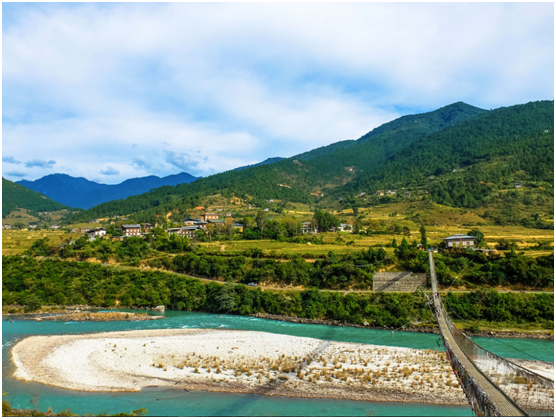
Popular Bhutan Tour Packages
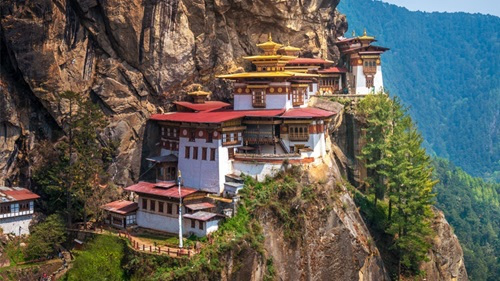
Top attractions, cultural experiences, and adventure activities.
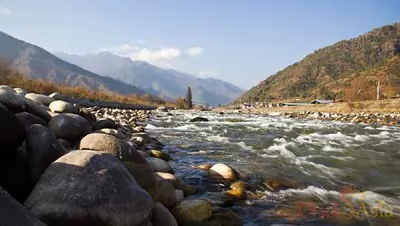
Thimphu to Paro — with Punakha, Bumthang, and Gangtey.
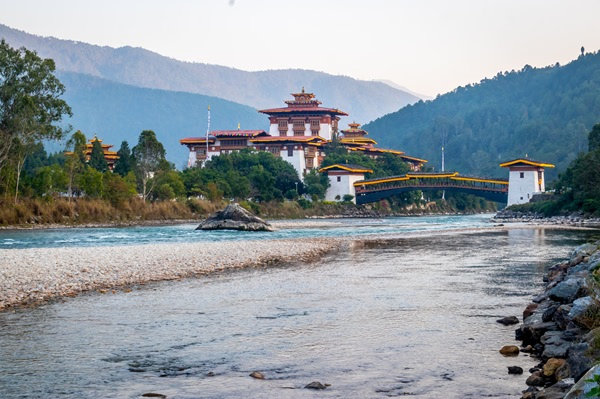
Breathtaking landscapes, indulgent stays, and wellness.
Popular Bhutan Trekking Packages
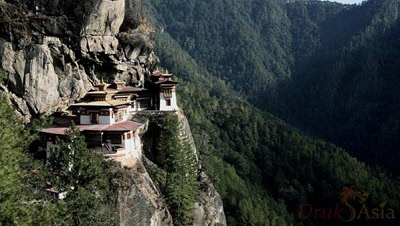
Views of Taktsang Monastery from above on a short trek.
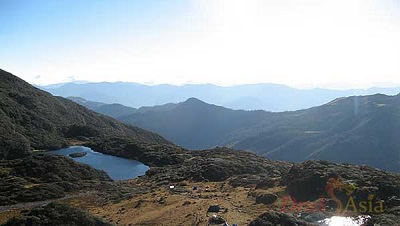
From Ta Dzong, Paro to the Takin Sanctuary, Thimphu.
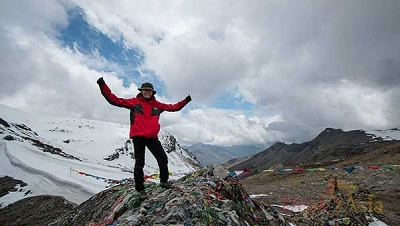
Bhutan's most beloved trek and the majesty of Mount Jomolhari.
Bhutan is calling — our Travel Specialists are ready to help you plan the perfect adventure.
Send an Enquiry