 Druk Asia
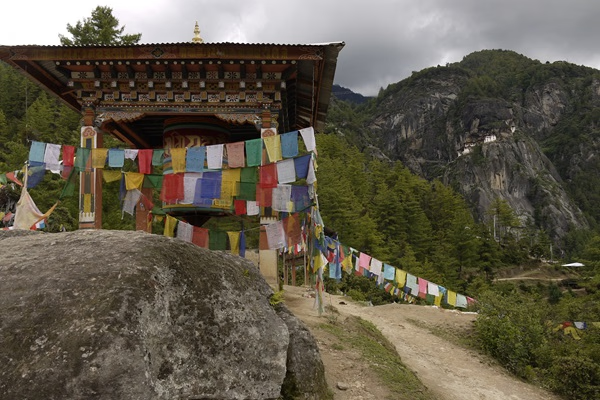
Bhutan, a land full of mysticism and tradition, is renowned for its enchanting temples. These Bhutan temples, each with unique history and spiritual significance, provide a glimpse into the country's rich cultural heritage.
These sacred sites are not just places of worship but also showcases of Bhutanese history, art, and tradition. Visiting these temples will take you on a journey through Bhutan’s spiritual and cultural heritage. Here are 20 temples in Bhutan that you absolutely must visit.
1. Tiger's Nest Monastery (Paro Taktsang)
Perched on a cliffside, the Tiger's Nest Monastery is one of the most iconic temples in Bhutan. The journey to this sacred site involves a challenging hike, but the breathtaking views and serene atmosphere make it worth every step.
The monastery, built in 1692, surrounds the Taktsang Senge Samdup cave, where Guru Rinpoche meditated in the 8th century. Visitors must leave their belongings with security and remove their shoes before entering the monastery, adorned with vivid frescoes and Thangka paintings narrating Buddhist tales.
2. Kyichu Lhakhang
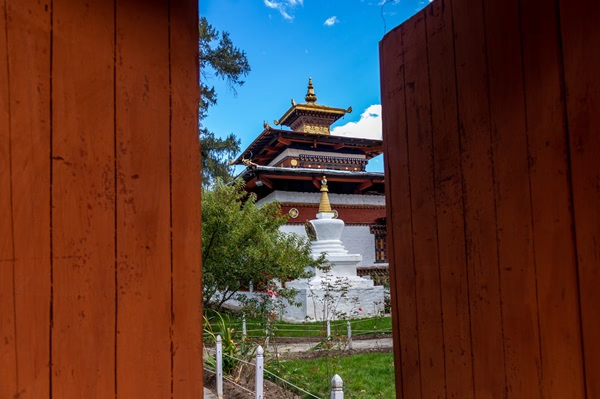
One of the oldest temples in Bhutan, Kyichu Lhakhang, is believed to have been built in the 7th century by Tibetan King Songtsen Gampo. Kyichu Lhakhang temple is a must-visit for its historical significance and spiritual ambience.
It houses two orange trees that are said to bear fruit throughout the year, symbolising eternal youth. Kyichu Lhakhang has undergone several renovations and additions over the centuries.
The latest additions were commissioned by the Royal Grandmother, Ashi Kesang Choden Wangchuck. The temple also features a statue of Guru Rinpoche and various other deities, making it a significant site for pilgrims.
3. Punakha Dzong
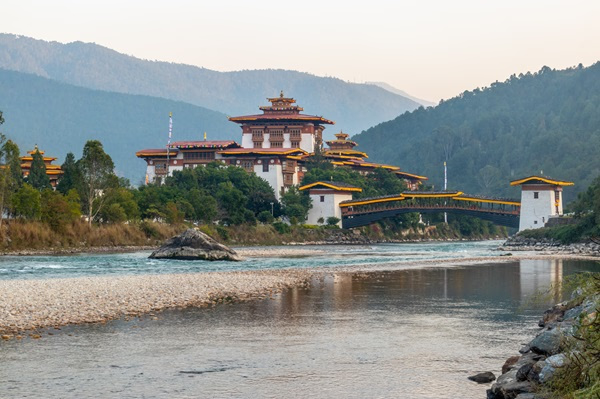
Punakha Dzong is a stunning fortress and temple complex, popularly known as the Palace of Great Happiness. It's the winter residence of the Central Monastic Body and offers spectacular views of the surrounding landscape.
The dzong is strategically located at the confluence of the Pho Chhu and Mo Chhu rivers, making it a picturesque and historically significant site. Built-in 1637-38 by the unifier of Bhutan, Zhabdrung Ngawang Namgyel, the dzong is known for its elaborate and intricate architecture.
In this Dzong, you can find sacred artefacts of the southern Drukpa Lineage of the Kagyu school of Tibetan Buddhism, like the embalmed body of Zhabdrung himself.
4. Rinpung Dzong
Rinpung Dzong, also known as the Paro Dzong, is a magnificent fortress that houses monastic and administrative offices. The annual Paro Tshechu festival is a vibrant celebration of Bhutanese culture.
The dzong's architecture features intricate woodwork and commanding views of the Paro Valley. Built in 1646, it was crucial in defending the Paro Valley from invasions. The dzong is also notable for its collection of ancient masks and costumes used in the Paro Tshechu festival.
5. Chimi Lhakhang
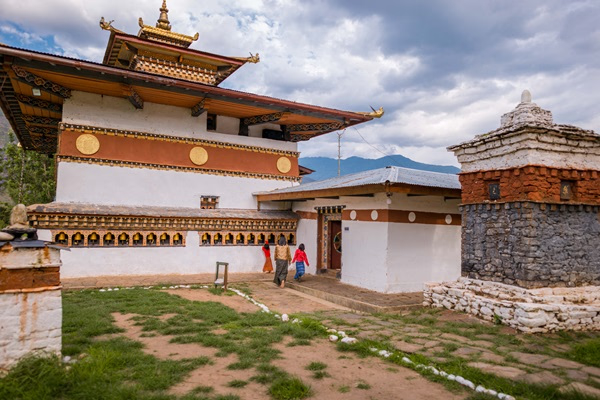
Chimi Lhakhang, often called the Fertility Temple, is dedicated to Lama Drukpa Kunley, also known as the Divine Madman. The Chimi Lhakhang temple is known for its fertility blessings and unique phallic imagery.
Pilgrims visit Chimi Lhakhang, seeking blessings for fertility and protection. The temple, built in 1499, features a prayer hall with ancient murals and a central statue of Drukpa Kunley. It is also surrounded by prayer wheels and a row of wooden phalluses, believed to ward off evil spirits.
6. Jambay Lhakhang
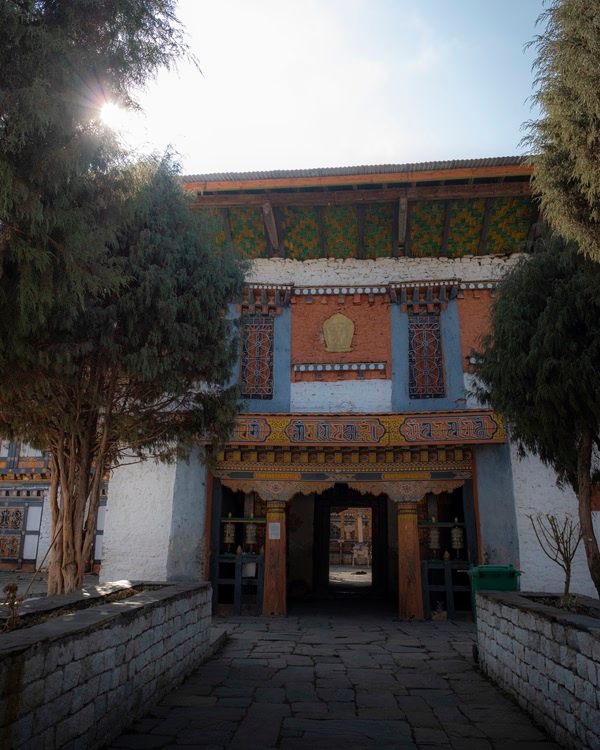
Located in Bumthang, Jambay Lhakhang is only one of the 108 temples that King Songtsen Gampo built. The temple is renowned for its annual Jambay Lhakhang Drup festival, which features traditional Bhutanese dances and rituals.
The festival is an excellent opportunity to experience Bhutanese culture and spirituality. The temple was constructed in 659 AD to subdue a demoness obstructing the spread of Buddhism. It houses a collection of ancient sculptures and paintings as well.
7. Gangtey Monastery
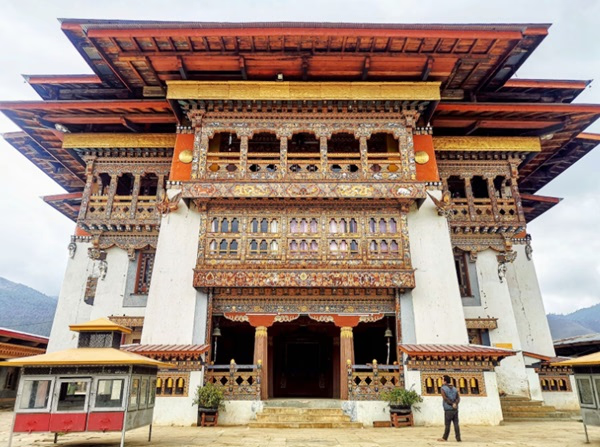
Gangtey Monastery, or Gangtey Goenpa, is an important Nyingma Buddhist monastery located in the picturesque Phobjikha Valley. The monastery is an important centre of Nyingma Buddhism and offers stunning views of the valley.
The monastery is a type that promotes the conservation of the almost extinct black-necked cranes that migrate to the valley each winter. Founded in 1613 by Pema Thinley, the reincarnation of Pema Lingpa, Gangtey Monastery is the main temple for the Pema Lingpa tradition.
8. Tashichho Dzong
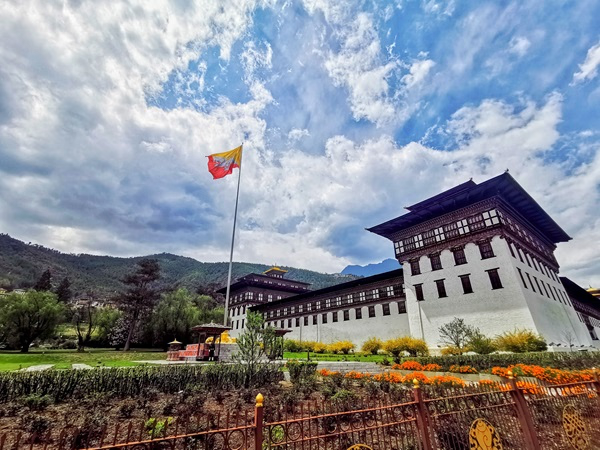
Tashichho Dzong is the Bhutanese government’s seat and the monastic body’s summer residence, which is located in the capital city of Thimphu. Initially constructed in 1216 by Lama Gyalwa Lhanangpa, it was later rebuilt and expanded by Shabdrung Ngawang Namgyal in 1641.
The dzong has endured several fires and was reconstructed multiple times, with the most significant renovation in the 1960s under King Jigme Dorji Wangchuck.
The dzong is an architectural marvel featuring white walls, red roofs, and golden spires, reflecting traditional Bhutanese design. It hosts the annual Thimphu Tshechu festival, a significant cultural event where monks perform masked dances to commemorate Guru Rinpoche.
9. Tamshing Lhakhang
Tamshing Lhakhang, founded by the revered saint Pema Lingpa in 1501, is a significant Nyingma monastery located in Bumthang, Bhutan. It was established by Pema Lingpa, one of Bhutan’s most important tertons (treasure discoverers), who is said to have uncovered many hidden spiritual treasures.
Pema Lingpa himself painted the murals that adorn the walls of Tamshing Lhakhang. These paintings depict various deities and scenes from Buddhist mythology, showcasing the rich spiritual heritage of Bhutan.
10. Drukgyel Dzong
Drukgyel Dzong, now in ruins, once served as a formidable defensive fortress against Tibetan invasions. Constructed in 1649 by Tenzin Drukdra under the command of Zhabdrung Ngawang Namgyal, this historic site was built to commemorate Bhutan's victory over Tibetan forces.
It served as one of the principal defense fortresses (Taa Dzong) in Bhutan, alongside Gasa Trashi Thongmon Dzong, Haa Damthang Dzong, and Lingzhi Dzong. Unlike other dzongs, Drukgyel was purely a military stronghold with no administrative or religious functions.
11. Kurjey Lhakhang
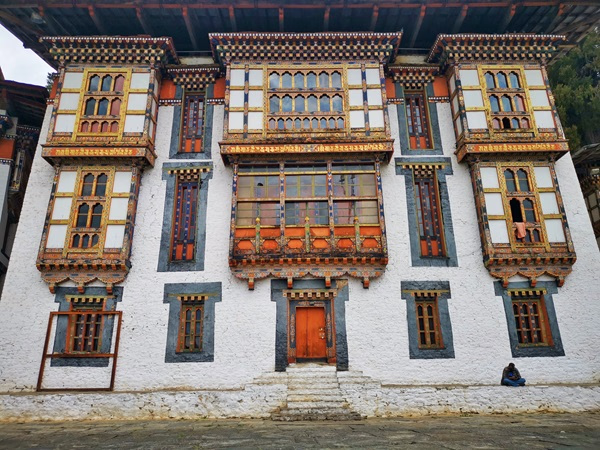
Kurjey Lhakhang, located in the serene Bumthang Valley, is one of Bhutan's most sacred and significant religious sites. The complex consists of three temples, each with a rich history and spiritual importance.
The name "Kurjey" means "body imprint," referring to the sacred body print of Guru Rinpoche (Padmasambhava) left on a rock inside the oldest temple.
Guru Rinpoche visited Bumthang in the 8th century to aid King Sindhu Raja, who had fallen ill due to a curse by a local deity. After subduing the demon, Guru Rinpoche meditated in a cave, leaving his body imprint, which became a central feature of the temple complex.
12. Tango Monastery
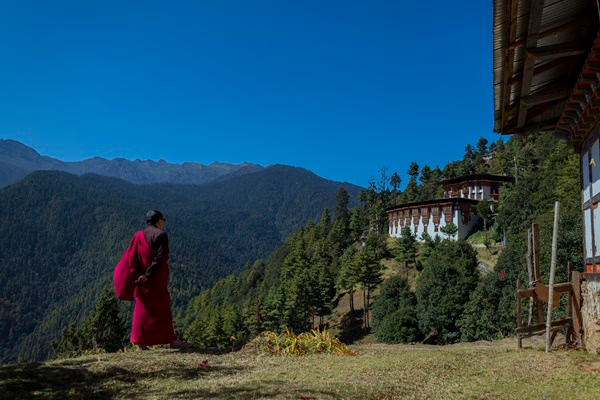
Tango Monastery, situated just a short drive from Thimphu, is a prominent centre for Buddhist studies and a place of deep spiritual significance.
Founded in the 12th century by Lama Gyalwa Lhanampa and expanded by Shabdrung Ngawang Namgyal in the 17th century, this monastery is set in a serene forested area, providing a peaceful ambiance for both tourists and monks.
Tango Monastery, also known as Tango Goemba, was established by Lama Gyalwa Lhanampa, a revered Buddhist saint.
In 1688, Shabdrung Ngawang Namgyal rebuilt the monastery in its present form. The site is known for its role in consolidating the Drukpa Kagyu school of Buddhism and has been a vital centre for monastic education and meditation for centuries.
13. Cheri Monastery
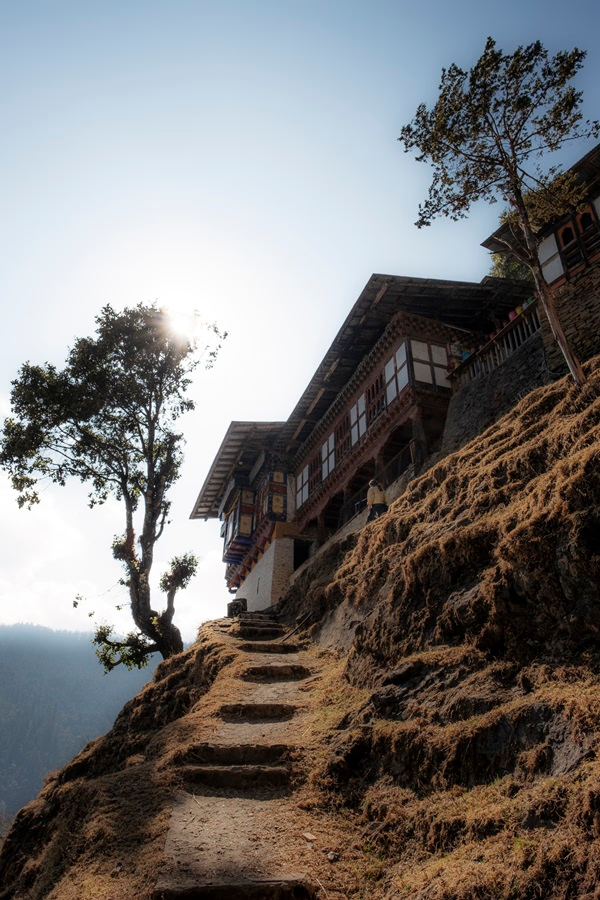
Cheri Monastery, also known as Chagri Dorjeden Monastery, is located near Thimphu and holds significant historical and spiritual importance. Established in 1620 by Shabdrung Ngawang Namgyal, the founder of Bhutan, this monastery marks the establishment of the first monastic body in the country.
Shabdrung Ngawang Namgyal built Cheri Monastery when he was 27 years old, and he spent several periods of his life meditating and retreating here.
It was at Cheri Monastery in 1623 that he established the first Drukpa monastic order in Bhutan, introducing a community of 30 monks who were taught by Lhawang Lodoe.
14. Lhuentse Dzong
Lhuentse Dzong, located in the remote region of Lhuentse in eastern Bhutan, is a remarkable fortress known for its impressive architecture and stunning location. It is one of the lesser-visited temples, offering a tranquil experience for those who make the journey.
Lhuentse Dzong is the ancestral home of the royal family of Bhutan. The forefather of the Wangchuck dynasty, Jigme Namgyal, was born here in 1825.
The dzong, initially known as Kurtoe, was constructed in 1654 by the Trongsa Penlop Chogyal Minjur Tempa on the site of an older temple built by Nagi Wangchuk in 1552.
15. Trashigang Dzong
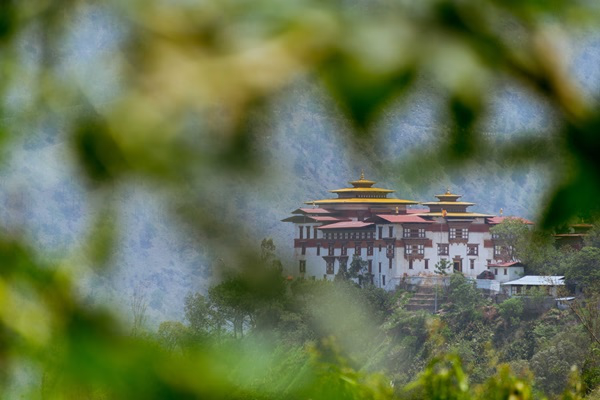
Trashigang Dzong, perched on a hill overlooking the Drangme Chhu river, serves as the administrative and religious centre of the Trashigang district. Built in 1659, this fortress was strategically constructed to defend against Tibetan invasions.
According to legend, upon seeing the dzong, Tibetan invaders remarked that it seemed “a sky dzong and not on the ground,” leading to their retreat. The dzong has played a crucial role in the political and religious life of eastern Bhutan for over 300 years.
It hosts the annual Trashigang Tsechu festival, which features traditional masked dances and cultural performances, attracting visitors and locals alike. The dzong also contains six temples, with one dedicated to Yama, the god of death and protector of the faith.
16. Sangchhen Dorji Lhuendrup Nunnery
The Sangchhen Dorji Luendrup Nunnery nunnery, located in Punakha, is a place of religious study and a centre for traditional arts and crafts. The nunnery’s serene environment and panoramic views of the Punakha and Wangdue valleys are genuinely captivating.
Established to provide education and empowerment opportunities for young Bhutanese women, it includes a higher learning institute for nuns, where they study Buddhist philosophy, meditation, and other traditional crafts like thangka painting and tailoring.
17. Simtokha Dzong
Simtokha Dzong, also known as Sangak Zabdhon Phodrang, is the oldest dzong in Bhutan, constructed in 1629 by Zhabdrung Ngawang Namgyel. It is located about 5 kilometres south of Thimphu on the road towards the Dochula Pass.
The name "Simtokha" is derived from the words "Simmo" (demoness) and "Do" (stone), referring to the legend that the dzong was built to subdue an evil spirit that was harassing travellers in the area.
Simtokha Dzong holds immense historical importance as the first dzong built by Zhabdrung Ngawang Namgyel, the unifier of Bhutan.
18. Zangto Pelri Lhakhang
Located in the heart of Phuentsholing, Zangto Pelri Lhakhang is a beautiful temple dedicated to Guru Rinpoche, also known as Padmasambhava. Designed to mirror the celestial paradise of Guru Rinpoche, this three-story structure features vibrant murals and intricate wood carvings.
The ground floor contains statues of Guru Rinpoche's eight manifestations, while the second floor showcases statues of the eight Bodhisattvas, Avalokiteshvara, and Zhabdrung Ngawang Namgyal. The top floor is dedicated to the main statue of Amitabha.
Surrounded by a well-maintained garden with miniature prayer wheels, the temple offers a serene environment ideal for meditation and spiritual reflection. Zangto Pelri Lhakhang is a significant spiritual site, attracting both locals and tourists who seek a place for reflection and prayer.
19. Phajoding Monastery
Phajoding Monastery, located beyond Thimphu, offers breathtaking views of the city and the surrounding mountains.
The serene monastery, perched at an elevation of about 3,600 meters (11,811 feet), is an excellent spot for meditation and reflection, providing a peaceful retreat away from the hustle and bustle of urban life.
Founded in the 13th century by Phajo Drugom Zhigpo, a Tibetan lama who spread the Drukpa Kagyu tradition of Buddhism in Bhutan, Phajoding Monastery holds significant historical and spiritual importance.
The monastery was established as a centre for meditation and spiritual practice, and it has played a crucial role in the propagation of Buddhism in Bhutan.
Conclusion About Bhutan Temples
Exploring Bhutan’s most famous temples is a journey through the heart and soul of this enchanting kingdom. With its unique history and spiritual significance, each temple offers a glimpse into Bhutan’s rich cultural tapestry.
Whether you’re seeking spiritual enlightenment, architectural marvels, or a tranquil retreat, these 20 must-visit temples in Bhutan will leave you spellbound.
Ready to embark on your spiritual and cultural journey through Bhutan? Contact Druk Asia to plan your visit and experience the magic of Bhutan’s temples firsthand. Let us help you create an unforgettable travel experience. Visit Druk Asia to start planning your trip today!
Frequently Asked Questions About Bhutan Temples
Are There Any Dress Codes For Visiting Bhutanese Temples?
Yes, visitors are expected to dress modestly when visiting Bhutanese temples. This means covering the shoulders and knees. Avoid wearing tight, revealing, or transparent clothing. This applies to both men and women.
It is also customary to remove shoes, sunglasses, and hats before entering temple premises. Respecting local customs and wearing traditional attire, such as the gho for men and Kira for women, can also be appreciated.
Can I Take Photographs Inside The Temples?
Photography is generally only allowed inside some sacred temples and monasteries in Bhutan. Visitors are encouraged to take photos of the exteriors and surrounding landscapes but should always check for specific rules and respect signs prohibiting photography inside sacred spaces.
Do I Need A Guide To Visit Temples In Bhutan?
While having a guide for temple visits is not mandatory, it is highly recommended. A knowledgeable guide can provide valuable insights into the temples’ history, architecture, and religious significance, particularly within the context of Buddhism, enhancing the overall experience.
Additionally, some temples may have restricted access and require special permits, which a guide can help arrange.
Are There Any Entry Fees For Visiting Famous Temples In Bhutan?
Most Buddhist temples in Bhutan do not charge an entry fee. However, famous tourist sites, like the Tiger’s Nest Monastery, have recently introduced entry fees. It’s advisable to check with your tour operator or guide for the latest information on any applicable fees to those sacred sites.
What Are Some Unique Customs Or Rituals Associated With Bhutanese Temples And Buddhism?
Traditional Bhutanese architecture is prominently showcased in Bhutanese temples, which are often sites of vibrant festivals and rituals. One familiar ritual is offering butter lamps, symbolising the dispelling of darkness and ignorance.
Another important custom is spinning prayer wheels, which is believed to release spiritual blessings and positive energy. Visitors can also observe traditional Cham dances during festivals, which depict moral stories and religious teachings through elaborate costumes and choreography.
