 Druk Asia
You do not need to speak Dzongkha to travel around Bhutan, but knowing a few simple phrases can make everyday interactions much more enjoyable.
A friendly Kuzuzangpo la when you meet someone or Kadrinchey la when someone helps you is often enough to bring a smile.
English is widely used within Bhutan's tourism industry, so think of this as a practical phrasebook rather than something you need to memorise before your trip.
Save this page on your phone and use it when you need it.
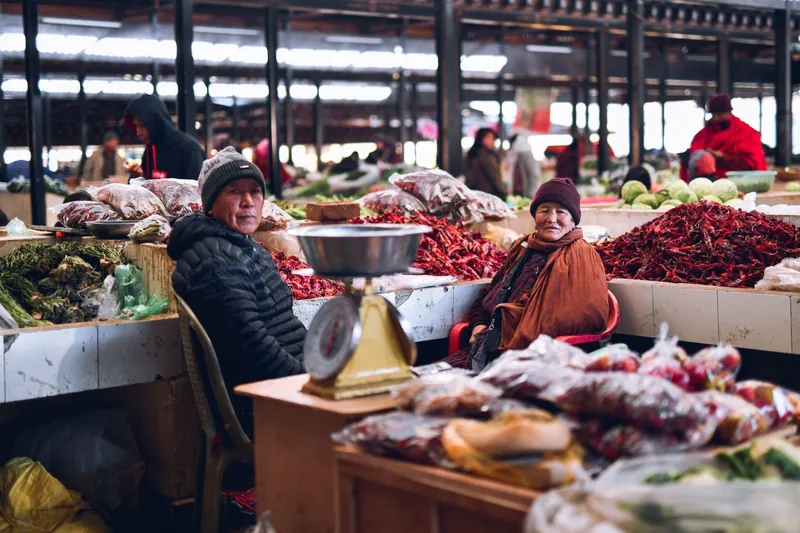
Table of Contents
1. Essential Dzongkha Phrases at a Glance
2. Greetings and Polite Expressions
5. Directions and Getting Around
Essential Dzongkha Phrases at a Glance
If you learn only a few phrases before travelling to Bhutan, start with these.
| English | Dzongkha | Simple pronunciation |
| Hello | Kuzuzangpo la | Koo zoo zang po la |
| Thank you | Kadrinchey la | Kah drin chey la |
| Yes / Okay | Laso | Lah so |
| No | Maso | Mah so |
| Where? | Ga tey? | Ga tay |
| How much is this? | Di ga demchi? | Dee ga dem chee |
| Water | Chu | Choo |
| Delicious | Zhimpo | Zhim po |
| I don't understand | Nga ma go | Nga ma go |
| Please help me | Nga lu ro nang | Nga loo ro nang |
You will hear slightly different pronunciations and Romanised spellings depending on the speaker, so do not worry about getting every sound perfect.
Greetings and Polite Expressions
These are the phrases you are most likely to use throughout your trip.
| English | Dzongkha | Pronunciation |
| Hello | Kuzuzangpo la | Koo zoo zang po la |
| Thank you | Kadrinchey la | Kah drin chey la |
| Yes / Certainly / Okay | Laso | Lah so |
| No | Maso | Mah so |
| Goodbye / See you again | Log jay gay | Log jay gay |
| Good wishes | Tashi Delek | Tah shee de lek |
Kuzuzangpo la is a useful greeting throughout the day.
Kadrinchey la is one of the easiest phrases to remember and one of the most useful.
You will also hear la frequently at the end of words and sentences. It is commonly used to make speech more respectful or polite.
Introducing Yourself
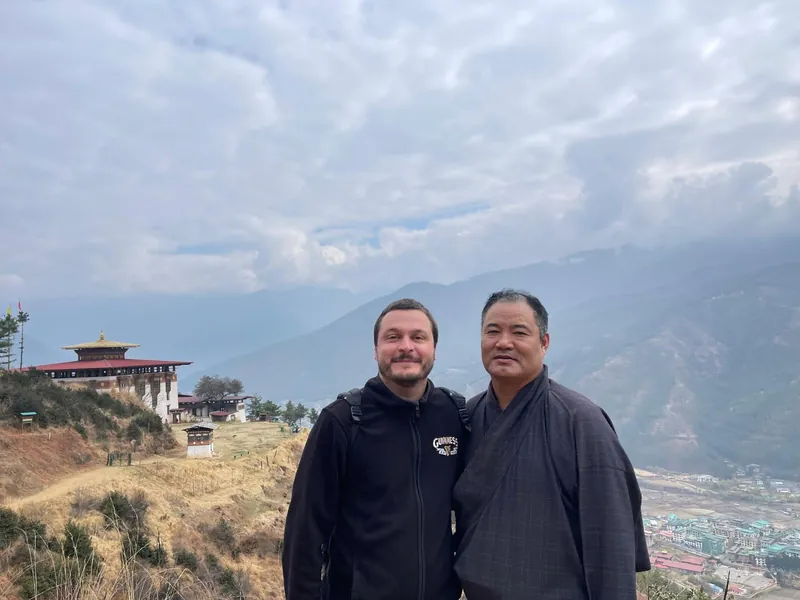
You probably will not need a long introduction in Dzongkha, but these can be fun to try when meeting local people.
| English | Dzongkha |
| What is your name? | Khyed gi ming ga chi mo? |
| My name is… | Nga gi ming… |
| I am from Singapore | Nga Singapore ley in |
| I am from Australia | Nga Australia ley in |
| I am from America | Nga America ley in |
Your guide can help you adjust the sentence for your own country.
Useful Travel Phrases
These are practical expressions you might actually use while travelling.
| English | Dzongkha | Pronunciation |
| Can you help me? | Nga lu ro nang gi ga? | Nga loo ro nang gi ga |
| I don't understand | Nga ma go | Nga ma go |
| Please speak slowly | Khebe ley lap na | Khe bay lay lap na |
| Where is…? | …ga te yoe? | …ga tay yo |
| How much does it cost? | Di ga demchi? | Dee ga dem chee |
| How long does it take? | Dus tsam ga demchi? | Du tsam ga dem chee |
| Please take me here | Di na nga lu thrin sho | Dee na nga loo trin sho |
| I have a reservation | Nga booking yoe | Nga booking yo |
You will rarely need to rely on these phrases when travelling with your guide, but they can be helpful during free time in towns or at cafés and shops.
Directions and Getting Around
A few location words are useful even if the rest of the conversation happens in English.
| English | Dzongkha |
| Where? | Ga tey? |
| Here | Na / Nalu |
| There | Pha / Phalu |
| In front | Dongkha |
| Next to | Bolokha |
| Behind | Japkha |
Useful questions
| English | Dzongkha |
| Where is the hotel? | Hotel ga te yoe? |
| Where is the restaurant? | Restaurant ga te yoe? |
| Where is the temple? | Lhakhang ga te yoe? |
| Where is the toilet? | Chabsa ga te yoe? |
| Where is the airport? | Airport ga te yoe? |
Hotel Phrases
English is widely spoken in Bhutanese hotels, but these phrases can still be useful.
| English | Dzongkha |
| I have a reservation | Nga booking yoe |
| Can you help me? | Nga lu ro nang gi ga? |
| Water | Chu |
| Where is the toilet? | Chabsa ga te yoe? |
| Please call my guide | Nga'i guide lu kha da nang gi ga? |
For anything complicated, speaking in English is usually much easier.
Food and Dining Phrases
Food is one of the easiest places to try a little Dzongkha.
| English | Dzongkha | Pronunciation |
| Water | Chu | Choo |
| Tea | Ja | Jah |
| Rice | Zau | Zow |
| Chilli | Ema | Eh ma |
| Cheese | Datshi | Dat shee |
| Delicious | Zhimpo | Zhim po |
| Very delicious | Shin tu zhimpo | Shin too zhim po |
| Less chilli, please | Ema nyung ku nang | Eh ma nyoong koo nang |
| No chilli, please | Ema mey nang | Eh ma may nang |
| No meat, please | Sha mey nang | Sha may nang |
| The bill, please | Bill nang | Bill nang |
If you enjoy your meal, simply saying Zhimpo can be a nice compliment.
If you are sensitive to spice, Ema nyung ku nang is particularly useful.
For more on what to eat during your trip, see our guide to Bhutanese food.
Shopping Phrases
Most shopping can easily be done in English, especially in Thimphu and Paro.
Still, these simple expressions can be fun to use.
| English | Dzongkha | Pronunciation |
| How much is this? | Di ga demchi? | Dee ga dem chee |
| Can I look? | Nga ta cho ga? | Nga ta cho ga |
| This is beautiful | Di legso | Dee lek so |
| Very beautiful | Shin tu legso | Shin too lek so |
| Money | Ngul | Ngool |
| Price | Gong | Gong |
| I'll take this | Di len | Dee len |
| Thank you | Kadrinchey la | Kah drin chey la |
Shopping in Bhutan is generally relaxed. Many established shops have fixed prices, so there is no need to bargain aggressively.
See our guide to what to buy in Bhutan for souvenir ideas.
Useful Dzongkha Food Words
Knowing a few food words makes Bhutanese menus much easier to understand.
| Dzongkha | Meaning |
| Ema | Chilli |
| Datshi | Cheese |
| Kewa | |
| Potato | |
| Shamu | Mushroom |
| Sha | Meat |
| Chu | Water |
| Ja | Tea |
| Zau | Rice |
This also helps explain the names of some famous Bhutanese dishes.
Ema datshi means chilli and cheese.
Kewa datshi combines potatoes and cheese.
Shamu datshi combines mushrooms and cheese.
Numbers in Dzongkha
You do not need to memorise numbers before your trip, but recognising the first ten can be useful.
| English | Dzongkha | Pronunciation |
| One | Chig | Chik |
| Two | Nyi | Nyee |
| Three | Sum | Soom |
| Four | Zhi | Zhee |
| Five | Nga | Ngah |
| Six | Dru | Droo |
| Seven | Dün | Dun |
| Eight | Gay | Gay |
| Nine | Gu | Goo |
| Ten | Chu | Choo |
Do not worry if you forget them. Prices, room numbers and travel details can easily be communicated in English.
Emergency Phrases
Your guide should always be your first point of contact if something goes wrong during an organised Bhutan journey.
These phrases are useful as a backup.
| English | Dzongkha |
| Please help me | Nga lu ro nang |
| I need a doctor | Nga lu doctor go |
| Where is the hospital? | Hospital ga te yoe? |
| I feel sick | Nga na gi |
| I need medicine | Nga lu men go |
| Where is the pharmacy? | Menkhang ga te yoe? |
| I need an ambulance | Nga lu ambulance go |
| Call the police | Police lu kha da nang |
Keep your guide's contact details saved on your phone and carry any essential medication with you during sightseeing and longer road journeys.
Common Words You Will Hear in Bhutan
You may start recognising these words after only a few days.
| Dzongkha | Meaning |
| La | A respectful or polite expression |
| Laso | Yes, certainly or okay |
| Kadrinchey | Thank you |
| Kuzuzangpo | Hello |
| Chu | Water |
| Ja | Tea |
| Ama | Mother |
| Apa | Father |
| Ashi | Respectful form of address for a woman |
| Dasho | An honorific title |
You do not need to use titles such as Ashi or Dasho unless you understand the context. Your guide can explain when they are appropriate.
Simple Pronunciation Tips
Dzongkha uses its own script, so the English spellings on this page are only approximations.
A few things will make speaking easier:
Say words slowly rather than rushing them.
Listen to how your guide pronounces a phrase and copy them.
Do not worry about having a perfect accent.
Add la when using common greetings such as Kuzuzangpo la and Kadrinchey la.
Remember that Romanised spellings can vary slightly between sources.
For example, the Dzongkha Development Commission's phrasebook Romanises the common greeting as kuzu zangpo, while travel oriented spellings often use Kuzuzangpo. Both point to the same familiar greeting.
How to Use This Phrasebook in Bhutan
You do not need to study this entire page before boarding your flight.
A better approach is to learn three phrases first:
Kuzuzangpo la
Hello.
Kadrinchey la
Thank you.
Laso
Yes, certainly or okay.
Then pick up more expressions from your guide as you travel.
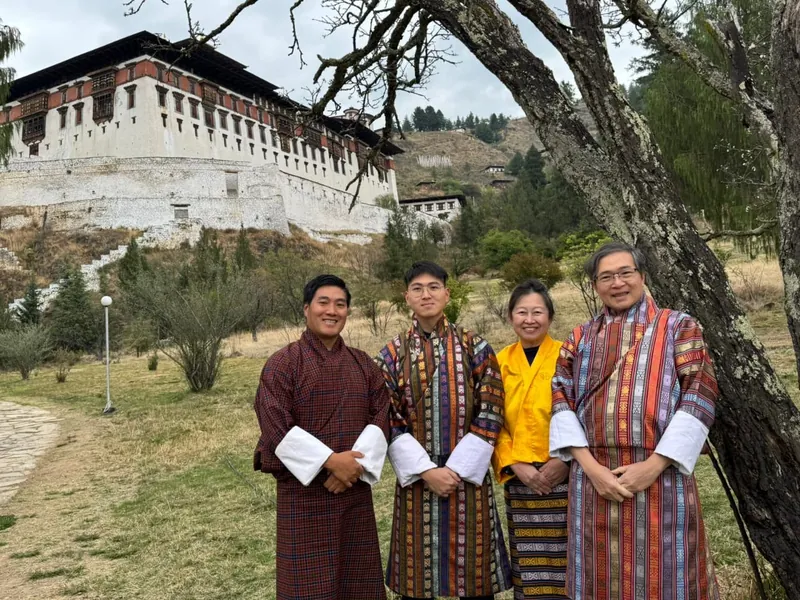
You may find yourself using food words in a farmhouse, learning local expressions during a long drive or practising greetings with hotel staff.
That is much more enjoyable than trying to memorise a long vocabulary list before arriving.
Frequently Asked Questions About Dzongkha Phrases
How do you say hello in Bhutan?
A common Dzongkha greeting is Kuzuzangpo la.
You can use it when meeting your guide, hotel staff, shopkeepers or local people.
How do you say thank you in Dzongkha?
Say Kadrinchey la.
It is one of the most useful phrases to learn before travelling to Bhutan.
What does “la” mean in Dzongkha?
La is commonly used to add politeness or respect to speech.
This is why you will often hear expressions such as Kuzuzangpo la and Kadrinchey la.
How do you say yes in Dzongkha?
Laso is commonly used to mean yes, certainly or okay.
You will hear it frequently during a Bhutan trip.
How do you ask “How much is this?” in Dzongkha?
You can say Di ga demchi?
It is a useful phrase when browsing shops or markets.
How do you say “less spicy” in Dzongkha?
Try Ema nyung ku nang, meaning less chilli, please.
This is particularly useful if you want to try Bhutanese food but have a lower tolerance for spice.
Do I need to speak Dzongkha when travelling in Bhutan?
No.
English is widely used in Bhutan's tourism industry, and your guide will be able to communicate with you throughout your trip.
A few Dzongkha phrases are useful mainly because they make interactions more personal and enjoyable.
Is Dzongkha difficult to pronounce?
Some sounds may initially feel unfamiliar, but travellers do not need perfect pronunciation.
Listen to your guide, speak slowly and focus on a small number of useful phrases.
Why are Dzongkha words sometimes spelt differently in English?
Dzongkha uses its own writing system, so English spellings are Romanised representations of the sounds.
Different transcription systems can therefore produce slightly different spellings.
What are the three most useful Dzongkha phrases for tourists?
Start with:
Kuzuzangpo la for hello.
Kadrinchey la for thank you.
Laso for yes, certainly or okay.
You can comfortably travel in Bhutan knowing just these three and using English for everything else.
A Few Words Go a Long Way
You do not need to become fluent in Dzongkha to connect with people during your trip.
Often, one greeting is enough.
Say Kuzuzangpo la when you meet someone, thank them with Kadrinchey la, and ask your guide to teach you a new word whenever the opportunity arises.
By the end of your journey, you may be surprised by how many expressions you have picked up naturally.
If you want to understand more about Dzongkha and the other languages spoken across the country, read our guide to the languages of Bhutan.
Planning your first visit? Explore our Bhutan tour packages and start building your journey.
