 Druk Asia
Formerly named Pungtang Dechen Photrang Dzong, ‘The Palace of Bliss or Great Happiness', Punakha Dzong was built in 1637.
The location of the majestic fortress is said to have been chosen by the founder of Bhutan, Zhabdrung Ngawang Namgyel. Punakha Dzong takes pride in being the second oldest and also the second largest dzong in Bhutan.
The dzong is part of the Drukpa Lineage of the Kagyu school of Buddhism in Bhutan. Its magnificent structure showcases the world-class architecture of Bhutan and finest Bhutanese craftsmanship.
In fact, Bhutanese architecture has inspired building designs from all over the world including the architecture of an entire university campus, UTEP in Texas, United States. Punakha Dzong is truly one of the most beautiful dzongs in Bhutan and one of the most visited places by tourists.
The Punakha Dzong Complex
Punakha Dzong is a six-storey structure with an utse (central tower) located at an elevation of 1200 m (3900 ft). Punakha Dzong's structures such as the doors and windows were built using rammed earth, stones and timber.
The dzong measures 180 m (590 ft) in length and 72m (236 ft) wide with three docheys (courtyards), unlike the other dzongs that usually have only two courtyards. The northern yard is where all the administrative functions take place. The courtyard consists of a large white stupa and a Bodhi tree.
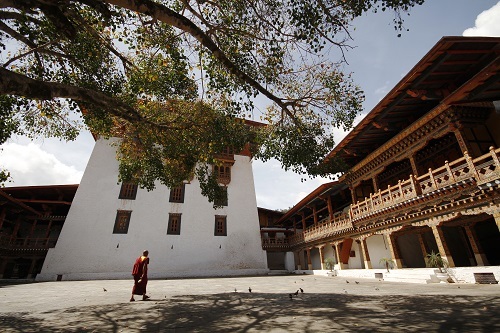
The third courtyard is the most important of all as it houses the main temple and national treasures. Unfortunately, you are not allowed to enter; only the two designated guardians, lama, the king and the chief abbot can access it. Aside from that, the Nag Yul Bum Temple houses the original volume of the Kanjur, which is the golden holy book of the Drupka School of Thought.
Served as the Government's Central Location until the Mid-1950s Punakha Dzong is deeply rooted in history and significance. For many years, Punakha Dzong served as the seat or the central location for the Government of Bhutan until the capital relocated to Thimphu in 1955.
The majestic fortress remains Punakha's District Administrative Center housing several religious relics. The fortress also served as the venue for the notable royal wedding of the fifth king, Jigme Khesar Namgyel Wangchuck and Queen Jetsun Pema.
Punakha Dzong Standing Strong
In 1939 and 1944, the Tibetan attacked Punakha Dzong but thanks to its defenders, the attack was averted, and the fortress survived to stand the test of time. A commemorative chapel was built to house the arms seized from the Tibetans who were defeated by the Bhutanese on this spot.
From 1744 to 1763, the dzong was enlarged substantially during the rule of the 13th desi, when Sherab Wangchuk was the chief abbot. The dzong suffered numerous fires between 1750 and 1849, and was severely destroyed by an earthquake in 1897. You can also embark on a thrilling white-water rafting experience in Punakha, Bhutan.
The History Of Punakha Dzong
The history of Punakha Dzong is intertwined with significant events in Bhutanese history. Serving as the capital of Bhutan until 1955, the dzong was the administrative and religious centre of the country. It played a pivotal role in the consolidation of Bhutan as a nation-state, hosting numerous key historical events.
Notably, the first king of Bhutan, Ugyen Wangchuck, was crowned in Punakha Dzong in 1907, marking the establishment of the Wangchuck dynasty.
In more recent history, the dzong was the site of the royal wedding of the current king, Jigme Khesar Namgyel Wangchuck, in 2011. These events highlight the enduring significance of Punakha Dzong in Bhutan's national identity and history.
When Was Punakha Dzong Built?
Punakha Dzong, also known as Pungtang Dewa Chhenbi Phodrang, which translates to "the palace of great happiness or bliss," was built in 1637 by Zhabdrung Ngawang Namgyal, the founder of Bhutan as a unified state. The construction of this majestic structure was inspired by a divine vision and was completed within just one year.
Why Was Punakha Dzong Built?
Punakha Dzong was constructed primarily as a spiritual and administrative centre, embodying Buddhist values. It was one of 16 dzongs built by Zhabdrung Ngawang Namgyal from 1594 to 1651 to unify Bhutan and establish a solid governance structure rooted in Buddhist principles.
The Punakha dzong's strategic location at the confluence of the Pho Chhu and Mo Chhu rivers also played a crucial role in its defensive strategy, providing natural barriers against invasions. Furthermore, Punakha Dzong’s architecture was inspired by a divine vision, believed to be a spiritual directive to build a fortress that would serve as a bastion of Buddhism and protect sacred relics.
What Makes Punakha Dzong Such a Unique Tourist Attraction?
Punakha Dzong sits at the confluence of the Mo Chhu (Female) and Pho Chhu (Male) rivers. To access the dzong, you'll need to cross the Bazam Bridge, rebuilt in 2008 after severe floods swept away the original bridge built in the 17th century.
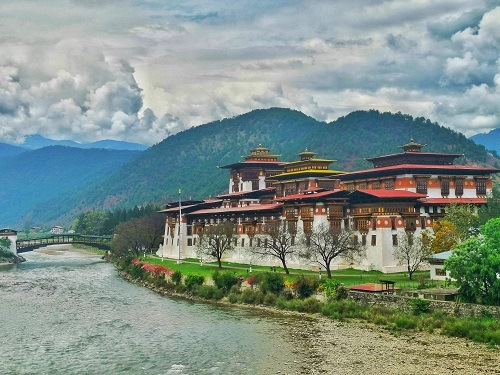
The ‘one hundred pillar hall', which has exquisite murals, is a fascinating sight for tourists to admire. Inside the dzong, there are beautifully carved woodwork and colourful paintings. The dzong is also very picturesque and a great spot for photography. Punakha Dzong was also the venue for the notable royal wedding of King Jigme Khesar Namgyal Wangchuck and Queen Jetsun Pema held on 13 October 2011.
When Is The Best Time to Visit Punakha Dzong?
For the best experience, visit the spectacular fortress in May. It's the season where gorgeous jacarandas blossom, beautifying the courtyard of Punakha Dzong. The popular annual Punakha Tshechu festival and Punakha Drubchen is also held in Punakha Dzong, in either February or March.
More Festivals In Punakha Dzong
Punakha Dzong is not only renowned for its historical and architectural significance but also for the vibrant festivals that take place within its majestic walls. These festivals, deeply rooted in Bhutanese culture and tradition, offer a unique insight into the spiritual and communal life of the Bhutanese people. Here are some of the noteworthy festivals celebrated at Punakha Dzong:
Punakha Tshechu Festival
The Punakha Tshechu is one of the most significant festivals celebrated at Punakha Dzong. Held annually in February or March, this festival commemorates the birth of Guru Rinpoche, who is revered as the second Buddha in Bhutan. The festival features colourful masked dances, traditional music, and religious rituals performed by monks and laypeople.
The highlight of the festival is the dramatic reenactment of the battle scenes from Bhutan's history, showcasing the triumph of good over evil. Visitors and locals alike gather to witness these sacred performances, seeking blessings and enjoying the festive atmosphere.
Drubchen Festival
Occurring just before the Punakha Tshechu, the Punakha Drubchen festival is a nine-day event that includes various religious rituals and ceremonies. It is dedicated to the protective deities of Bhutan and aims to invoke their blessings for peace and prosperity.
The Drubchen festival is characterised by intricate masked dances performed by monks in elaborate costumes, representing different deities and spiritual figures.
These dances are believed to purify the area and ward off evil spirits, ensuring the well-being of the community. The festival also includes offerings, prayers, and other traditional practices, making it a deeply spiritual experience for attendees.
Lhamoi Drubchen Festival
Lhamoi Drubchen is another important festival held at Punakha Dzong, dedicated to the goddess Mahakali, known as Palden Lhamo in Bhutan. Celebrated over several days, this festival involves elaborate rituals and ceremonies conducted by the monks.
The highlight of Lhamoi Drubchen is the series of sacred dances performed to appease the goddess and seek her protection.
These dances, accompanied by traditional music and chants, create a mystical atmosphere, drawing both locals and tourists to the dzong. The festival is an opportunity for the Bhutanese people to express their devotion and reinforce their cultural heritage.
Travel Packages
10 DAY BHUTAN WALKING DAY TOUR
Discover Bhutan's beauty on a 10-Day Walking Day Tour with Druk Asia. Enjoy a private, guided exploration of stunning landscapes and vibrant culture. Book this Bhutan trekking tour now!
13th Sep 2024 - 15th Sep 2024
10 DAY DISCOVER BHUTAN TRAVEL PLAN
Traverse from the spirited Thimphu to the serene Paro, with the hidden valleys of Punakha, mystical Bumthang, and tranquil Gangtey unfolding tales as old as the mountains themselves.
7 DAY ESSENTIAL BHUTAN TRAVEL PLAN
Experience the Bhutanese life, from the majestic fortress of Tashichho Dzong to the serene beauty of Paro Valley, all distilled into a compact journey. Book now and embark on a quick yet profound exploration of Bhutan's wonders!
6 DAY AMANKORA JOURNEY
Step into the heart of Bhutan with a 6-day Amankora journey. Be awed by snow-capped mountains and wild rivers. Wander in deep forests, feeling the magic of nature around you. Your once-in-a-lifetime Bhutan adventure is just a decision away.
7 DAY PUNAKHA TSHECHU
Every year, the Bhutanese hold the Punakha Tshechu Festival in honour of Padmasambhawa, the precious yogi and saint who introduced Tantric Buddhism to the people of the Himalayas. Get a first-hand experience of Bhutan's living history!
7-DAY PARO TSHECHU FESTIVAL EXPERIENCE
Experience Paro Tshechu in Bhutan with Druk Asia! Enjoy 7 days of celebration of culture and heritage in the heart of the Himalayas. Book a tour this spring!
Hotels in Punakha Dzong
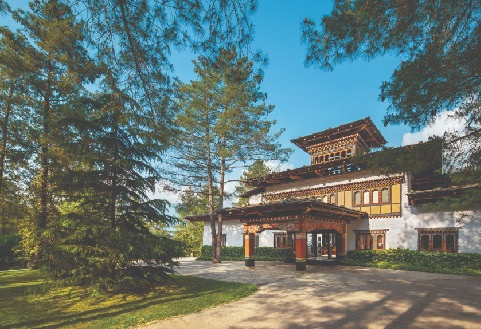
COMO UMA PUNAKHA
COMO Uma Punakha will feature 11 luxury accommodations, all with spectacular panoramic views of the Punakha Valley.
HOTEL LOBESA
Hotel Lobesa, a three star hotel situated in Punakha with a commanding view. Immerse yourself with a beautiful view over the surrounding countryside.
DHENSA BOUTIQUE RESORTS
Nestled in the heart of Punakha Valley, the resort celebrates the pristine beauty of nature at its finest. Walking and hiking trails surround the area, as well as lush pine trees and verdant fields.
RKPO GREEN RESORT
The Green Resort depicts peace and tranquillity of the resort away from hustle and bustles of city life and our passion for the environment and being Eco-Friendly in nature.
Conclusion About Punakha Dzong
Punakha Dzong, with its majestic architecture and rich history, stands as a testament to Bhutan's cultural and spiritual heritage. Nestled between the Pho Chhu and Mo Chhu rivers, this fortress is not only an architectural marvel but also a symbol of the nation's enduring traditions.
Its strategic significance and role as a religious centre underscore its importance in Bhutanese society. Visiting Punakha Dzong offers a glimpse into the profound beauty and historical depth of Bhutan, making it a must-see destination for anyone seeking to understand and appreciate the country's unique heritage.
To experience the enchantment of Punakha Dzong and other breathtaking sites in Bhutan, plan your journey with Druk Asia. Our expert team will ensure a memorable and seamless travel experience, guiding you through the wonders of this mystical land. Contact Druk Asia today to start your adventure!
Frequently Asked Questions About Punakha Dzong
Are There Any Guided Tours Available At Punakha Dzong?
Yes, guided tours are available, often provided by local tour operators. These tours offer in-depth information about the history, architecture, and cultural significance of the dzong.
What Architectural Features Make Punakha Dzong Unique?
Punakha Dzong is unique for its combination of rammed earth, stone, and timber construction, along with its intricate woodwork, murals, and the central utse (tower). It also has three courtyards, unlike other dzongs that typically have two.
Is Photography Allowed Inside Punakha Dzong?
Photography is generally allowed in the courtyards and exterior areas of the dzong, but it may be restricted in certain indoor areas, especially those housing sacred artefacts. It's best to check with your local guides.
What Are The Visiting Hours For Punakha Dzong?
Punakha Dzong is generally open to visitors from 9:00 AM to 5:00 PM. However, hours may vary during festivals or special events, so it's advisable to check ahead.
Are There Any Nearby Attractions To Visit When Touring Punakha Dzong?
Nearby attractions include the Punakha Suspension Bridge, Chimi Lhakhang (the fertility temple), and various scenic hiking trails. These sites offer additional insights into Bhutanese culture and natural beauty.
