 Druk Asia
Bhutan’s Highest Peak, Mountains and Best Treks
Bhutan sits in the Eastern Himalayas, where forested valleys rise towards snow covered peaks, glacial lakes and some of the most remote trekking landscapes in Asia.
At the heart of this mountain landscape is Gangkhar Puensum, Bhutan's highest peak, rising to approximately 7,570 metres above sea level.
It is also widely recognised as the highest unclimbed mountain in the world.
You cannot climb Bhutan's great Himalayan summits, but you can experience these mountains in another way: by trekking through the valleys, high passes and wilderness surrounding them.
From the relatively accessible Druk Path Trek between Paro and Thimphu to the legendary Snowman Trek through northern Bhutan, walking gives you access to parts of the country few visitors ever see.
This guide introduces Bhutan's highest mountain, the country's Himalayan landscape and some of the best trekking experiences to consider for your journey.
Table of Contents
What Is Bhutan's Highest Peak?
Why Has Gangkhar Puensum Never Been Climbed?
Can You Trek to Gangkhar Puensum?
Which Bhutan Trek Should You Choose?
Best Time for Trekking in Bhutan
Wildlife and Nature Along Bhutan's Trails
What Is Trekking in Bhutan Like?
What Is Bhutan's Highest Peak?
Gangkhar Puensum is the highest mountain in Bhutan, at approximately 7,570 metres above sea level.
It rises in the remote northern Himalayas and is widely regarded as the highest mountain in the world that has never been successfully climbed.
Its name is commonly translated as "White Peak of the Three Spiritual Brothers."
Unlike famous Himalayan peaks elsewhere in the region, Gangkhar Puensum has never become a mountaineering destination.
That makes the mountain unusual in an era when many of the world's great summits have been climbed repeatedly.
For Bhutan, however, mountains are more than physical challenges waiting to be conquered.
Many high peaks are considered sacred landscapes associated with protective deities and spiritual traditions. That relationship with the mountains helps explain why trekking rather than mountaineering has become the main way for travellers to experience Bhutan's Himalayas.
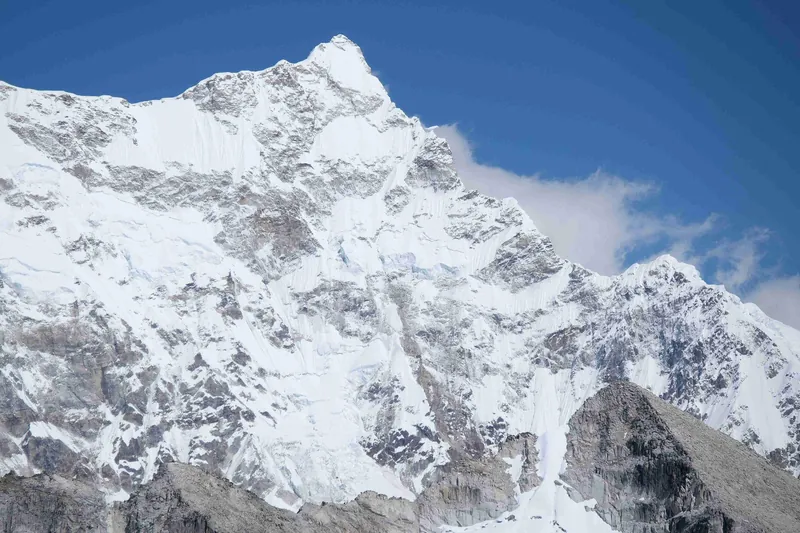
Gangkhar Puensum at a Glance
| Mountain | Gangkhar Puensum |
| Elevation | Approximately 7,570 metres |
| Significance | Highest peak in Bhutan |
| Known for | Widely recognised as the world's highest unclimbed mountain |
| Mountain range | Himalayas |
| Can tourists climb it? | No |
| Can you trek in the surrounding Himalayan region? | Yes, through organised trekking routes |
Why Has Gangkhar Puensum Never Been Climbed?
There were attempts to climb Gangkhar Puensum during the 1980s, but none reached the summit.
Bhutan later stopped permitting mountaineering on its high peaks.
The decision reflects the spiritual significance traditionally attached to the mountains as well as Bhutan's broader approach to protecting its landscapes.
As a result, Gangkhar Puensum remains unclimbed.
This creates an interesting distinction for travellers.
You cannot come to Bhutan to conquer its highest mountain, but you can trek through landscapes shaped by the same Himalayan range, passing glacial valleys, yak herder settlements, alpine lakes and remote communities along the way.
Can You Trek to Gangkhar Puensum?
You cannot trek to the summit of Gangkhar Puensum, but trekking routes in north central Bhutan can bring experienced trekkers into the remote landscapes surrounding the mountain.
These are demanding journeys rather than ordinary sightseeing excursions.
Routes in this part of Bhutan can involve long days of walking, high mountain passes, camping and significant altitude.
For most visitors, however, you do not need to travel anywhere near Bhutan's highest mountain to experience spectacular Himalayan scenery.
Several more accessible Bhutan trekking routes provide views of major peaks and take you through beautiful alpine landscapes.
Mountains of Bhutan
Bhutan's landscape changes dramatically from south to north.
The southern areas lie at relatively low elevations, while northern Bhutan rises into the Greater Himalayas and contains peaks exceeding 7,000 metres.
This enormous change in altitude within a relatively small country creates very different environments.
You can travel through subtropical vegetation, temperate forests, rhododendron woodland, alpine meadows and high mountain landscapes during a single journey across Bhutan.
Among the Himalayan peaks travellers may encounter or hear about are:
Gangkhar Puensum
Bhutan's highest mountain at approximately 7,570 metres and the country's most famous unclimbed peak.
Jomolhari
One of Bhutan's most recognisable mountains and a major feature of the Jomolhari trekking region. Its snow covered summit rises prominently above the north western landscape and can be seen from several trekking routes.
Jitchu Drake
Another striking Himalayan peak visible around the Jomolhari region. It is particularly dramatic from high altitude camps and passes in north western Bhutan.
Masang Gang
A major peak in northern Bhutan associated with the remote mountain landscapes around Jigme Dorji National Park.
You do not need to remember every mountain name before arriving.
What matters more is understanding how deeply the mountains shape Bhutan's climate, rivers, settlements, spiritual beliefs and way of life.
Why Trek in Bhutan?
Bhutan offers something quite different from trekking destinations built around reaching a summit.
Here, the journey itself is the experience.
A trekking day might take you through pine forest before emerging beside a glacial lake. The next morning you may cross a mountain pass marked by prayer flags before descending towards a yak herder camp.
Some routes pass monasteries and sacred lakes. Others cross enormous stretches of wilderness with very little permanent settlement.
There are also far fewer trekkers than on many of Asia's famous Himalayan trails.
This makes Bhutan particularly appealing if you value solitude, landscapes and cultural experiences more than busy trekking hubs.
Explore our Bhutan trekking and hiking tours if you are deciding which route suits you.
Best Treks in Bhutan
Bhutan has treks ranging from relatively short introductory routes to demanding expeditions lasting several weeks.
Here are some of the best known.
1. Druk Path Trek
Best for: First time trekking in Bhutan
Difficulty: Moderate
Landscape: Forests, alpine lakes and mountain ridges
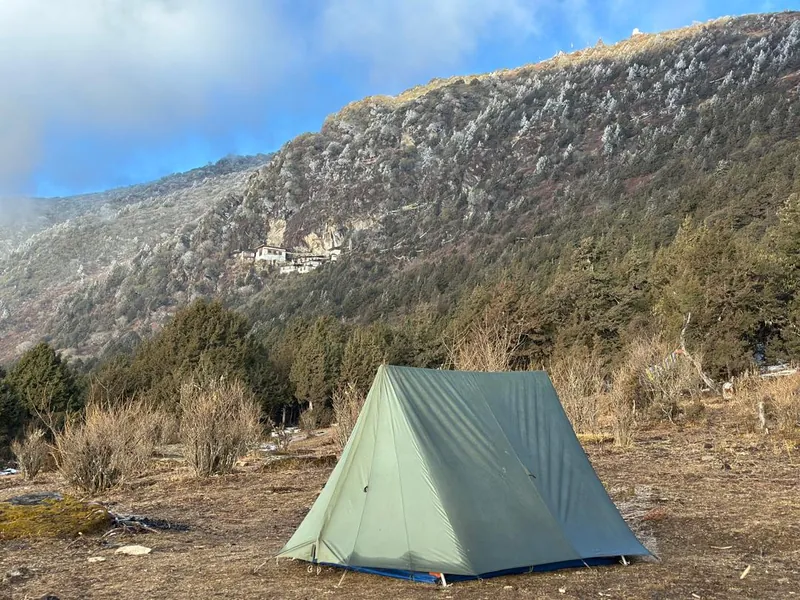
The Druk Path is one of the most accessible ways to experience trekking in Bhutan.
The route connects the Paro and Thimphu regions through forests, high ridges and alpine lakes.
You can expect changing mountain scenery, campsites surrounded by nature and, when conditions are clear, distant Himalayan views.
It works particularly well if you want to combine trekking with a broader cultural journey through Paro, Thimphu and Punakha.
2. Jomolhari Trek
Best for: Himalayan mountain scenery
Difficulty: Challenging
Landscape: Glacial valleys, high passes and yak country
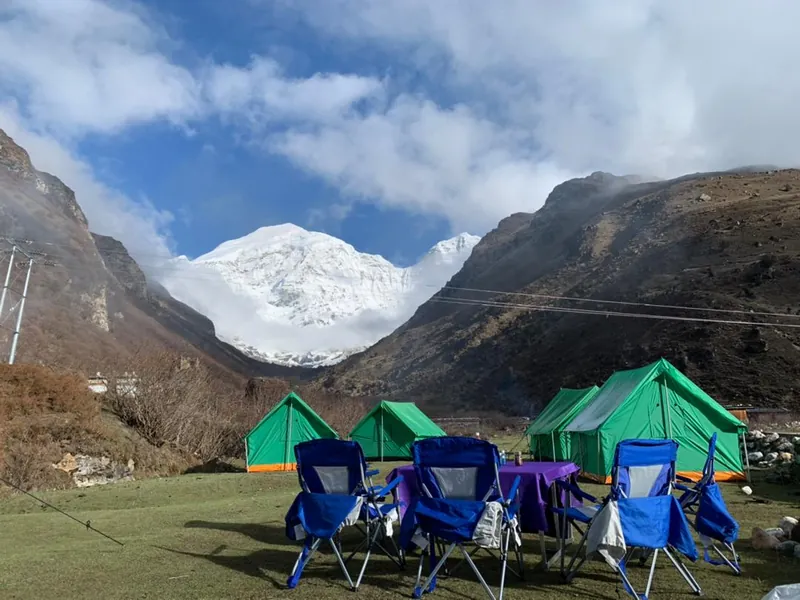
The Jomolhari Trek is one of Bhutan's classic high altitude journeys.
The trail takes you towards the spectacular landscape around Mount Jomolhari, through remote settlements, valleys and high mountain terrain.
It is a significant step up from a short hike or introductory trek because of the altitude and number of days spent walking.
For travellers who want the feeling of being deep in the Himalayas without committing to a trek as long as the Snowman route, Jomolhari is one of the strongest choices.
Check out the Jomolhari Loop Trek.
3. Snowman Trek
Best for: Highly experienced trekkers
Difficulty: Extremely challenging
Landscape: Remote Himalayan wilderness
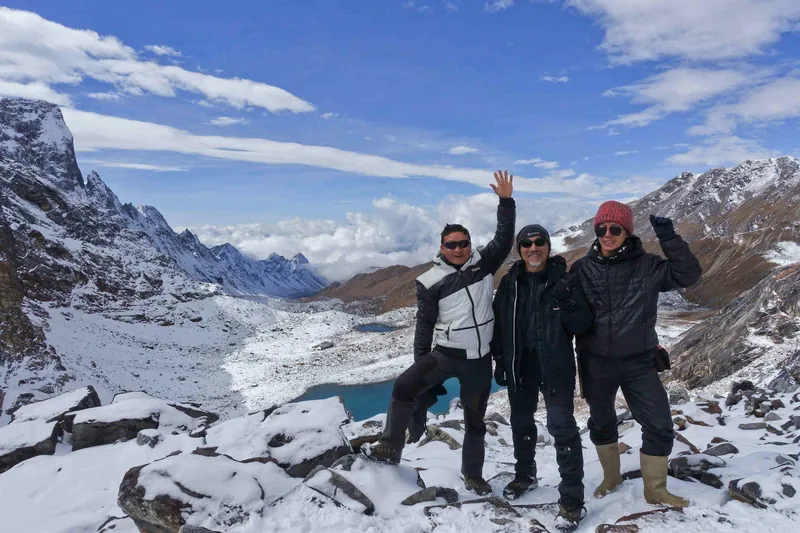
The Snowman Trek is Bhutan's legendary trekking journey.
It crosses numerous high mountain passes through some of the most remote areas of northern Bhutan and normally takes several weeks to complete.
Altitude, distance, rapidly changing weather and the remoteness of the terrain make it suitable only for experienced and well prepared trekkers.
The appeal is not simply physical difficulty.
You travel through landscapes that very few visitors experience, including isolated settlements, glacial valleys and vast stretches of high Himalayan wilderness.
Explore the Lunana Snowman Trek.
4. Dagala Thousand Lakes Trek
Best for: Alpine lakes and quieter trails
Difficulty: Moderate to challenging
Landscape: Lakes, meadows and high ridges
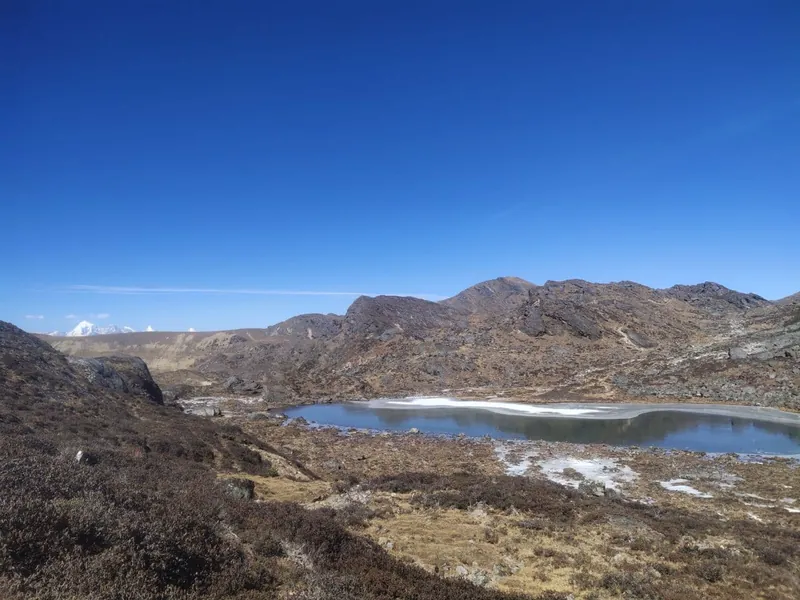
The Dagala Thousand Lakes Trek leads through an alpine landscape dotted with lakes and open mountain terrain.
Despite its name, you should not expect literally a thousand lakes. The name reflects the abundance of high altitude lakes across the region.
On clear days, the higher ridges can provide extensive Himalayan views.
It is a good choice if you want something quieter than Bhutan's more famous trekking routes.
Check out the Dagala Thousand Lakes Trek.
5. Bumdra Trek
Best for: A short Bhutan trek with dramatic mountain scenery
Difficulty: Moderate
Landscape: Forests, ridgelines, alpine camps and views towards Paro
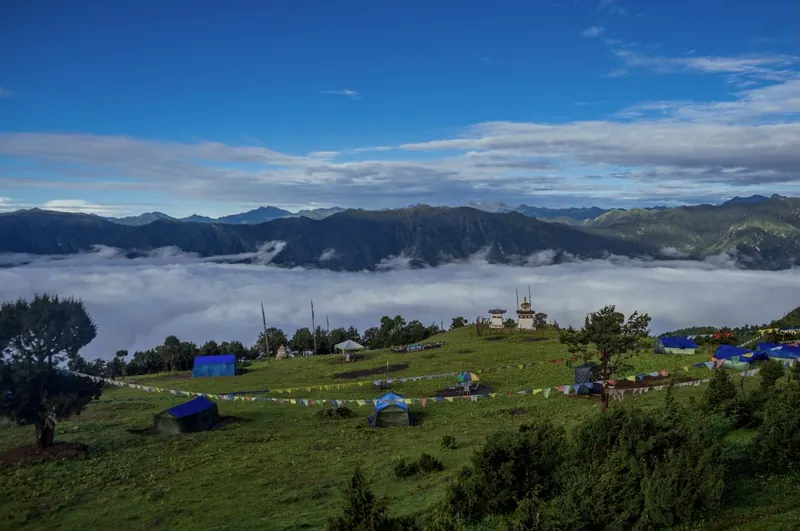
The Bumdra Trek is one of the best choices if you want a shorter trekking experience without committing to a long high altitude route.
The trail usually begins above the Paro Valley and climbs through forest before reaching higher ridgelines and open camping areas with wide mountain views.
One of the highlights is the sense of transition. You move from wooded trails into more exposed alpine landscapes, then continue towards the area above Tiger's Nest.
This makes Bumdra especially appealing for travellers who want to combine trekking with one of Bhutan's most famous cultural landmarks.
Depending on the itinerary, the trek can be completed over a few days and works well within a broader Bhutan journey that also includes Paro, Thimphu and Punakha.
Best for: First time trekkers, photography, shorter itineraries and travellers who want to combine trekking with Tiger's Nest.
Check out the Bumdra Trek.
Which Bhutan Trek Should You Choose?
The best trek depends on your fitness, previous trekking experience, available time and interest in high altitude walking.
| If you want... | Consider... |
| A first Bhutan trek | Druk Path |
| Major Himalayan scenery | Jomolhari |
| A serious expedition | Snowman Trek |
| Alpine lakes | Dagala Thousand Lakes |
| Culture with easier walking | Gangtey Nature Trail |
| Shorter walking experiences | Day hikes around Paro, Thimphu or Phobjikha |
If you have never trekked at altitude before, do not select a route based only on photographs.
Talk to your travel specialist about the highest sleeping elevation, number of walking hours each day, terrain and acclimatisation.
Best Time for Trekking in Bhutan
For many of Bhutan's popular trekking routes, spring and autumn offer the best conditions.
Spring: March to May
Spring brings warmer daytime temperatures and flowering forests.
Rhododendrons are one of the highlights, particularly along routes passing through forested mountain areas.
Higher elevations can still be cold, especially at night.
Autumn: Late September to November
Autumn is one of the most popular periods for trekking.
After the summer rains, clearer skies can bring excellent Himalayan visibility, making this an especially attractive season for mountain photography.
Temperatures become colder later in the season, particularly at higher camps.
Winter: December to February
Some lower elevation treks and hikes remain possible during winter.
Skies can be remarkably clear, but overnight temperatures can become very cold.
High altitude routes may not be suitable.
Summer: June to August
Summer coincides with Bhutan's wetter monsoon period.
Trails can be muddy and clouds may obscure mountain views, making this a less popular period for many trekking routes.
The right season still depends on the particular trek.
Read our guide to the best trekking seasons in Bhutan before choosing your dates.
Wildlife and Nature Along Bhutan's Trails
Trekking allows you to experience environments that are difficult to appreciate from the road.
Depending on your route and season, you may walk through forests filled with rhododendrons, conifers and alpine plants before reaching high altitude meadows.
Bhutan also supports an extraordinary range of wildlife.
Species found within the country's protected landscapes include takins, red pandas, Himalayan black bears, blue sheep and snow leopards.
Birdlife is another highlight.
You may encounter Himalayan monals, blood pheasants and many other mountain species along trekking routes.
Wildlife sightings can never be guaranteed, particularly for elusive animals such as snow leopards.
Think of wildlife as a possibility rather than the purpose of the trek.
Glacial Lakes and Sacred Landscapes
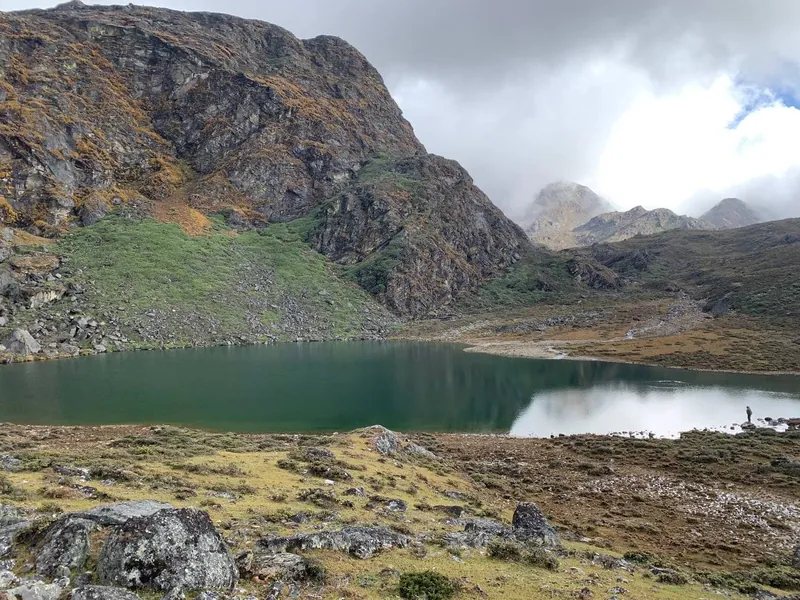
Some of Bhutan's most beautiful trekking landscapes contain alpine and glacial lakes.
These are not always viewed simply as natural attractions.
Mountains, lakes, caves and forests can hold spiritual significance within Bhutanese Buddhism and local belief systems.
Your guide may explain stories connected to a lake or mountain as you walk.
This cultural relationship with the landscape is one of the reasons trekking in Bhutan feels different from a trip focused purely on physical achievement.
What Is Trekking in Bhutan Like?
Most multiday Bhutan treks involve camping.
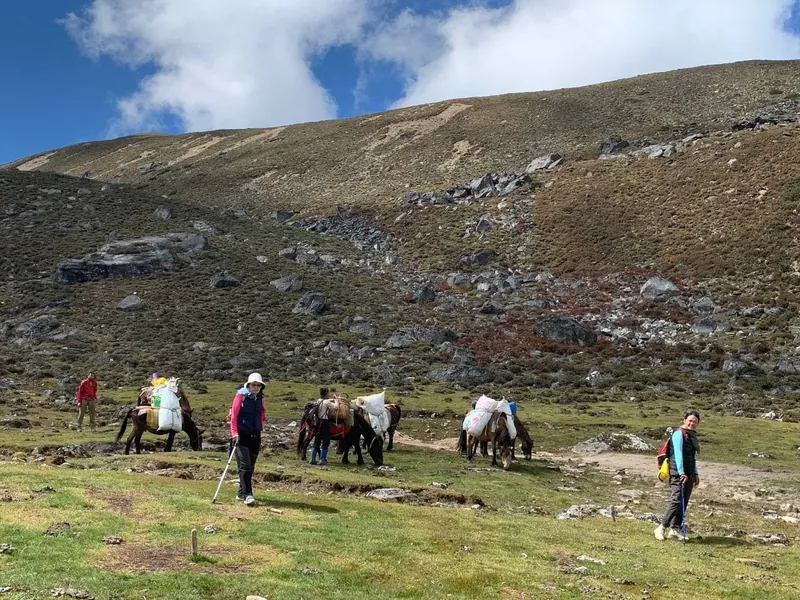
The level of support differs by route and operator, but trekking arrangements commonly include a guide and a support team responsible for camp logistics and meals.
Pack animals may be used to transport equipment on suitable routes.
This means you normally carry a day pack containing the things you need while walking rather than carrying all your camping equipment yourself.
Conditions become considerably simpler as you travel into remote regions.
Do not expect hot showers, permanent lodges or phone connectivity every evening.
That remoteness is part of the experience.
What to Pack for Trekking in Bhutan
Your exact packing list should be based on the route, season and altitude.
Ask what your trekking package already provides before buying or bringing bulky technical equipment.
Useful personal items commonly include:
- Comfortable, broken in trekking boots
- Waterproof jacket and trousers
- Warm insulating layers
- Thermal base layers for higher routes
- Trekking socks
- Warm hat and gloves
- Sun protection
- Sunglasses
- Head torch
- Personal medication
- Blister treatment
- Reusable water bottle
- Small day pack
- Trekking poles if you normally use them
For high altitude routes, a warm sleeping system is particularly important.
Confirm the sleeping bag temperature rating and what camping equipment is included in your tour.
Altitude and Acclimatisation
Altitude deserves more attention than physical fitness alone.
Someone who exercises regularly can still experience altitude symptoms.
Many Bhutan trekking itineraries therefore include time at lower elevations before heading towards the highest parts of the route.
Walk at a comfortable pace, drink sufficient water and tell your guide immediately if you develop symptoms such as persistent headache, unusual fatigue, dizziness or nausea.
Do not hide symptoms because you are worried about delaying the group.
A safe trek is more important than completing every planned stage.
Frequently Asked Questions About Bhutan's Mountains and Trekking
What is Bhutan's highest peak?
Gangkhar Puensum is Bhutan's highest peak at approximately 7,570 metres above sea level.
It is also widely recognised as the highest unclimbed mountain in the world.
What is the highest mountain in Bhutan called?
The highest mountain in Bhutan is Gangkhar Puensum, also written as Gangkar Puensum in some sources.
It rises in the northern Himalayas.
How high is Gangkhar Puensum?
Gangkhar Puensum is approximately 7,570 metres or 24,836 feet above sea level.
Is Gangkhar Puensum the highest unclimbed mountain in the world?
Yes. Gangkhar Puensum is widely recognised as the world's highest mountain that has never been successfully summited.
Its unclimbed status is closely connected with Bhutan's restrictions on mountaineering and the cultural importance attached to its high mountains.
Can you climb Gangkhar Puensum?
No.
Mountaineering is not permitted in Bhutan, so travellers cannot attempt to summit Gangkhar Puensum.
Trekking, however, remains possible across many parts of Bhutan's Himalayan landscape.
Can you trek to Bhutan's highest mountain?
You cannot trek to the summit.
Remote trekking routes can take experienced walkers through landscapes around Bhutan's high northern mountains, but these are demanding high altitude journeys.
Most visitors choose established routes such as Jomolhari, Druk Path, Dagala Thousand Lakes or Snowman Trek instead.
Does Bhutan have Mount Everest?
No.
Mount Everest lies on the border between Nepal and Tibet.
Bhutan has its own section of the Himalayas, with Gangkhar Puensum as its highest peak.
Are the Himalayas in Bhutan?
Yes.
Northern Bhutan lies within the Himalayas and contains numerous high peaks, glaciers, alpine valleys and mountain passes.
What is the most famous mountain in Bhutan?
Gangkhar Puensum is particularly famous because it is Bhutan's highest peak and the world's highest unclimbed mountain.
Jomolhari is another well known Bhutanese mountain, especially among trekkers.
What is the highest trekking altitude in Bhutan?
It depends on the route.
Some of Bhutan's hardest trekking routes cross passes above 5,000 metres, while easier cultural treks remain much lower.
Always look at the highest sleeping altitude and highest pass when comparing trekking itineraries.
What is the hardest trek in Bhutan?
The Snowman Trek is generally regarded as Bhutan's most demanding trekking route.
It takes several weeks and involves repeated high altitude passes, remote camps, long walking days and unpredictable Himalayan weather.
What is the best trek in Bhutan for beginners?
The Druk Path is one of the most popular choices for travellers looking for an introduction to multiday trekking in Bhutan.
If you prefer something gentler, consider shorter cultural treks or day hikes.
Do I need previous trekking experience for Bhutan?
Not for every route.
Bhutan offers everything from short valley walks to extremely demanding high altitude expeditions.
Choose a trek according to your fitness, experience and comfort with altitude rather than choosing purely by duration.
Experience Bhutan's Mountains on Foot
Bhutan's highest peaks are not mountains to conquer.
That is part of what makes the Himalayan landscape here so fascinating.
Gangkhar Puensum remains unclimbed at 7,570 metres, while the valleys and trails below offer travellers another way to experience Bhutan's mountains.
You can walk between sacred lakes on the Druk Path, approach the dramatic landscape around Jomolhari, cross high passes on the Snowman Trek or follow gentler trails through Bumthang's villages and forests.
The right trek is not necessarily the hardest one.
It is the route that gives you enough time to appreciate the landscape, walk safely at altitude and enjoy the places and people you encounter along the way.
Explore our Bhutan trekking and hiking tours or speak with our Bhutan Travel Specialists to find a route suited to your fitness, available time and preferred travel season.
Ready to Experience Bhutan?
Talk to our Bhutan specialists — we've helped over 22,940+ travellers plan their perfect trip.
