 Druk Asia
Our Awards


Our Reviews




13 Interesting Facts About Bhutan That Make It Unlike Anywhere Else

Bhutan is often described as one of the world's most unusual travel destinations, and once you start learning about the country, it is easy to understand why.
This small Himalayan kingdom measures development through Gross National Happiness, protects its forests through its Constitution, has a capital without traffic lights and is home to what is widely regarded as the world's highest unclimbed mountain.
Some of Bhutan's most interesting characteristics are immediately visible when you arrive. Others only begin to make sense after you have spent several days travelling through the country.
Here are 13 interesting facts about Bhutan that will help you understand what makes the Kingdom different before your first visit.
Bhutan Facts at a Glance
| Fact | What makes it interesting |
| Gross National Happiness | Bhutan looks beyond GDP when measuring development |
| Forests are constitutionally protected | At least 60% of Bhutan must remain under forest cover |
| Bhutan is carbon negative | Its forests absorb more carbon dioxide than the country emits |
| Thimphu has no traffic lights | Traffic police still direct vehicles at a famous city centre junction |
| Traditional dress remains part of daily life | Gho and kira are still widely worn |
| Gangkhar Puensum remains unclimbed | Bhutan's highest mountain has never recorded a successful summit |
| Television arrived only in 1999 | Bhutan was one of the world's last countries to introduce television |
| Chillies are treated like a vegetable | Ema datshi is one of Bhutan's most recognisable dishes |
| Paro Airport has a challenging approach | Pilots require specialised training to operate there |
| Tiger's Nest sits on a cliff | Bhutan's iconic monastery is reached on foot |
| Bhutan became a democracy in 2008 | The transition was initiated by the monarchy |
| Traditional architecture remains highly visible | Dzongs, temples and homes retain distinctive Bhutanese design |
| Tourism is deliberately managed | Visitors contribute a Sustainable Development Fee |
1. Bhutan Measures Development Through Gross National Happiness
Perhaps no idea is more closely associated with Bhutan than Gross National Happiness, commonly abbreviated to GNH.
The concept is associated with Bhutan's Fourth King, Jigme Singye Wangchuck, and reflects the idea that a country's progress should not be measured purely by economic growth.
Bhutan's approach considers areas such as psychological wellbeing, health, education, culture, environmental resilience, community vitality, good governance, living standards and how people use their time.
This does not mean that every Bhutanese person is automatically happy or that Bhutan officially claims to have the happiest population in the world.
Gross National Happiness is better understood as a development philosophy that asks a broader question: what conditions help people and communities live well?
What you may notice as a traveller
GNH can initially feel like an abstract idea.
As you travel, however, you may begin to see how themes such as cultural preservation, environmental protection and community life influence Bhutan's approach to development.
2. Bhutan's Constitution Protects Its Forests
Bhutan takes forest conservation unusually seriously.
Its Constitution requires a minimum of 60% of the country's total land area to remain under forest cover for all time.
Bhutan currently exceeds that constitutional requirement, with forests covering a large majority of the country.
This is something you notice almost immediately when travelling overland.
Roads wind through thick forests, valleys remain heavily wooded and even the approaches to towns can feel remarkably green.
Bhutan's location within the Eastern Himalayas also makes it part of an exceptionally rich biodiversity region.
What this means for travellers
Nature is not something you have to travel far to find in Bhutan.
Even a classic first time route through Paro, Thimphu and Punakha takes you through forests, mountain passes and river valleys.
Travel further towards Gangtey, Bumthang or eastern Bhutan, and the landscapes become even more varied.
3. Bhutan Is Carbon Negative
Bhutan is widely known for being carbon negative, meaning its forests absorb more carbon dioxide than the country emits.
Its extensive forest cover, relatively small population and commitment to environmental conservation have all contributed to this unusual position.
Environmental protection is also closely connected to Bhutan's broader development philosophy.
For travellers, this is one reason Bhutan feels so different from many rapidly developing destinations.
Forested mountains still dominate the landscape and large areas remain relatively undeveloped.
That does not mean Bhutan is untouched by modern environmental challenges. Climate change, waste management, urban development and changing lifestyles all create pressures of their own.
But conservation remains a major national priority.
4. Thimphu Has No Traffic Lights
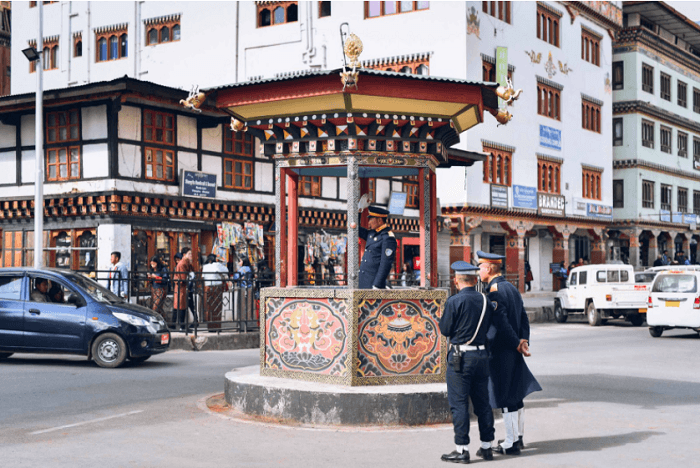
One of the quirkiest facts about Bhutan is that Thimphu has no conventional traffic lights.
At a well known intersection in the centre of the capital, traffic police direct vehicles using hand gestures from a decorative booth.
It has become something of a Thimphu landmark in its own right.
You may hear the story that traffic lights were once introduced and subsequently removed because residents preferred human traffic police.
Regardless of the stories surrounding it, the traffic police remain one of the capital's most recognisable sights.
Where to see it
Your guide can point out the traffic police booth in central Thimphu while you are exploring the city.
Just don't assume the absence of traffic lights means Bhutan has no traffic. Thimphu's roads can become busy, particularly during peak periods.
5. Bhutan Has Its Own Code of Etiquette: Driglam Namzha
One of the most interesting aspects of Bhutanese culture is Driglam Namzha, the country's traditional code of etiquette and conduct.
Its origins are associated with Zhabdrung Ngawang Namgyal, who unified Bhutan in the 17th century. Driglam Namzha encompasses appropriate conduct of the body, speech and mind, with an emphasis on qualities such as respect, discipline, courtesy and harmony.
You can see aspects of it throughout everyday and formal life in Bhutan.
It influences how Bhutanese people dress for schools, government offices, dzongs and formal occasions, as well as traditional etiquette, ceremonial practices and forms of respectful behaviour.
It is also closely associated with Bhutan's distinctive national dress. Men wear the gho, while women wear the kira, with additional formal scarves such as the kabney and rachu worn in particular settings.
Driglam Namzha does not mean that Bhutanese people wear traditional clothing at all times. In towns such as Thimphu and Paro, you will also see people wearing contemporary clothing in everyday life.
What does Driglam Namzha mean for travellers?
Visitors are not expected to follow Bhutan's national dress requirements or understand its many traditional protocols.
However, you will encounter some of the same principles of respectful behaviour when visiting dzongs, monasteries, temples and festivals.
Your guide will explain when to remove your shoes or hat, where photography is permitted and how to behave inside sacred spaces.
Understanding Driglam Namzha helps explain something you will quickly notice in Bhutan: tradition is not reserved for museums and festivals. It continues to shape contemporary Bhutanese life.
6. Bhutan Is Home to the World's Highest Unclimbed Mountain
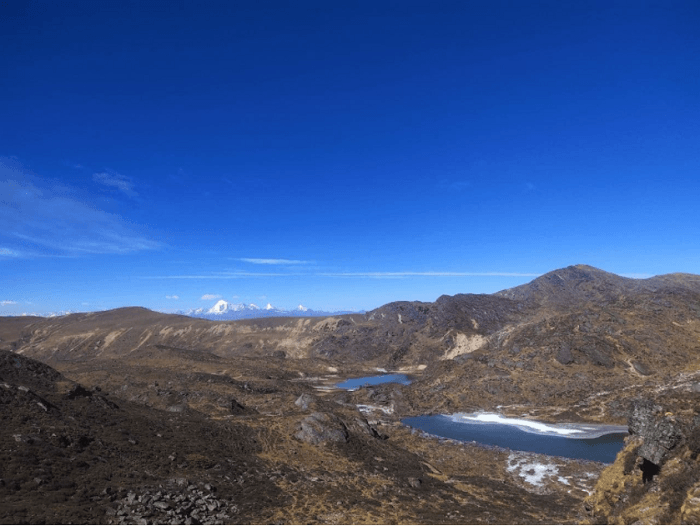
Bhutan's highest mountain, Gangkhar Puensum, rises to more than 7,500 metres and is widely regarded as the world's highest unclimbed mountain.
Bhutan prohibited climbing peaks above 6,000 metres in the 1990s out of respect for local spiritual beliefs, and mountaineering was subsequently prohibited altogether.
Mountains in Bhutan are traditionally regarded as sacred landscapes and the abodes of deities and protective spirits.
As a result, Bhutan offers a very different Himalayan experience from neighbouring Nepal.
You come here to walk among the mountains rather than conquer their summits.
Trekking in Bhutan
You can still experience extraordinary Himalayan scenery on routes such as the Jomolhari Trek, Druk Path Trek, Dagala Thousand Lakes Trek and the formidable Snowman Trek.
The restored Trans Bhutan Trail also allows travellers to explore sections of an ancient route that once connected communities across the country.
7. Television and the Internet Arrived in Bhutan Only in 1999
Bhutan was one of the last countries in the world to introduce television.
Television broadcasting and internet access were officially introduced in 1999, during celebrations marking the Silver Jubilee of the Fourth King's coronation.
Mobile telecommunications followed several years later.
The story is often used to portray Bhutan as a country isolated from modern life, but today's reality is considerably more interesting.
Bhutanese people use smartphones, social media and digital services just like people elsewhere, while traditional practices remain highly visible.
For travellers, this coexistence between rapid modernisation and cultural continuity is one of the most fascinating aspects of contemporary Bhutan.
8. Chillies Are More Than a Seasoning in Bhutan
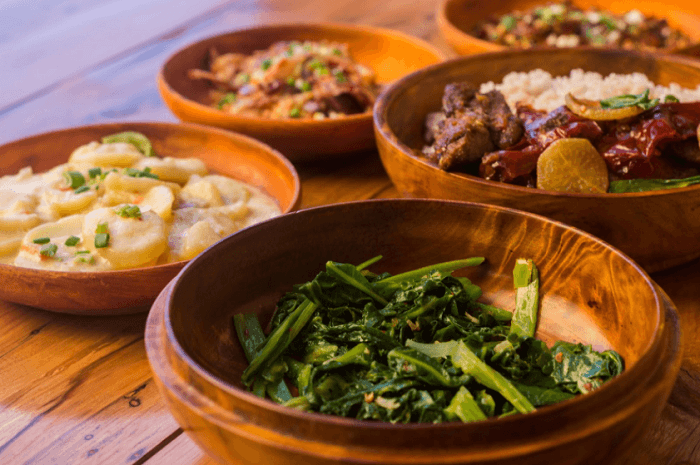
If you think chilli is something sprinkled onto food for extra heat, Bhutanese cuisine may surprise you.
Here, chillies are frequently treated as a main ingredient rather than simply a seasoning.
The country's best known dish is ema datshi, made with chillies and cheese.
Variations include kewa datshi with potatoes and shamu datshi with mushrooms.
Another distinctive local flavour is suja, Bhutanese butter tea, traditionally made with tea, butter and salt.
You may also encounter zaw, roasted rice that is commonly served as a snack.

DrukAsia Tip
If you do not eat very spicy food, tell your guide early in the trip.
Restaurants serving travellers can usually adjust dishes or provide milder alternatives, so you do not need to spend your entire holiday battling Bhutanese chillies.
9. Landing at Paro Is One of the World's Most Unusual Airport Approaches
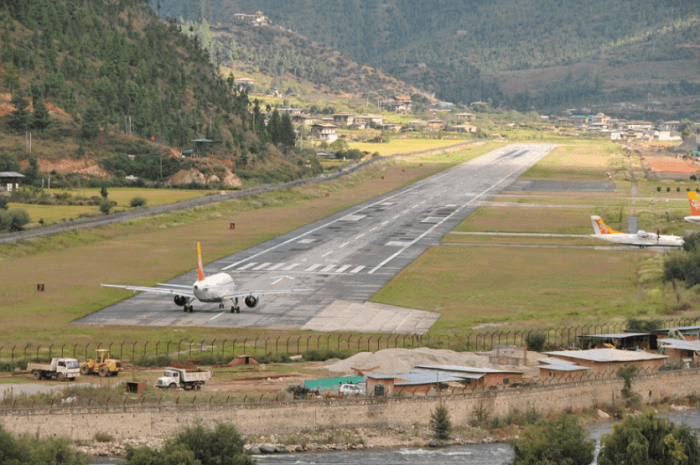
Bhutan's main international gateway, Paro International Airport, sits in a deep valley surrounded by mountains.
The approach requires pilots to navigate mountainous terrain before lining up with the runway, making operations at Paro highly specialised.
Only pilots who meet the required training and certification standards can operate flights into the airport.
Calling Paro Airport one of the world's "most dangerous airports" is misleading.
A better description is that it has one of the world's most challenging and spectacular commercial airport approaches.
For passengers, it can also be one of the most memorable parts of travelling to Bhutan.
DrukAsia Tip
Choose a window seat if you can.
On a clear day, the approach into Bhutan offers beautiful views of the mountains and valleys before the aircraft descends into Paro.
10. Tiger's Nest Monastery Is Built Into a Cliff
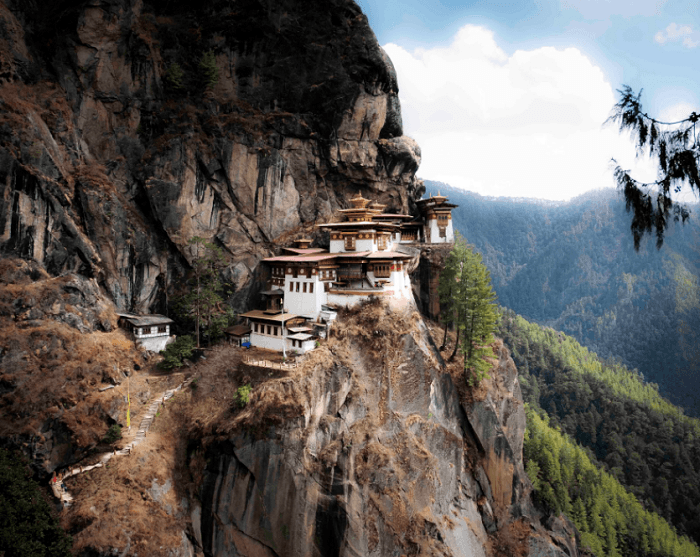
Few images represent Bhutan as instantly as Tiger's Nest Monastery, or Paro Taktsang.
The monastery complex appears to cling to a cliff approximately 900 metres above the Paro Valley.
According to Buddhist tradition, Guru Rinpoche arrived at the site in the eighth century on the back of a tigress and meditated in a cave here.
The monastery complex seen today was established centuries later.
Reaching Tiger's Nest requires a hike, which makes the journey part of the experience.
DrukAsia Tip
If possible, plan your Tiger's Nest hike towards the end of your Bhutan trip.
By then, you will have had more time to adjust to the altitude and can tackle the climb at a comfortable pace.
11. Bhutan Became a Parliamentary Democracy in 2008
Bhutan's transition to democracy is unusual because the move was initiated by the monarchy rather than forced upon it by a popular uprising.
The country's first parliamentary elections took place in 2008, the same year Bhutan adopted its Constitution.
Bhutan today is a democratic constitutional monarchy.
The King remains an important national figure, while elected institutions form the country's democratic system of government.
The transition represents an important chapter in Bhutan's modern history and helps explain the relationship between the monarchy, government and society that travellers encounter today.
12. Bhutanese Architecture Has a Distinctive Identity
You do not have to enter a museum to see Bhutanese artistic traditions.
They are built into the landscape.
Traditional Bhutanese architecture is immediately recognisable through features such as painted timberwork, carved windows, whitewashed walls and elaborate decorative details.
The country's enormous dzongs are among the most impressive examples.
These fortress complexes traditionally combined religious and administrative functions and continue to dominate places such as Punakha, Paro and Trongsa. Even newer buildings often incorporate elements of traditional Bhutanese design.
Look more closely and you will begin noticing the work of Bhutan's traditional arts and crafts, known collectively as Zorig Chusum, in windows, paintings, carvings and decorative details.

13. Bhutan Deliberately Manages Tourism
Bhutan has never pursued mass tourism in the same way as many destinations.
International visitors are required to pay a Sustainable Development Fee, or SDF, with the revenue supporting Bhutan's development priorities.
The tourism system has changed considerably over the years, so you may still encounter outdated references online to Bhutan's former Minimum Daily Package or compulsory fixed daily tariff.
That system no longer applies.
Today, travellers have considerably more choice over hotels, itineraries and travel styles while Bhutan continues to use the SDF as part of its approach to managing tourism.
For most travellers, exploring Bhutan with a licensed Bhutanese guide and local tour operator like Druk Asia also makes the journey much easier, particularly when visiting cultural attractions and travelling beyond the main towns.
Bonus Fact: Bhutan Is Known as Druk Yul
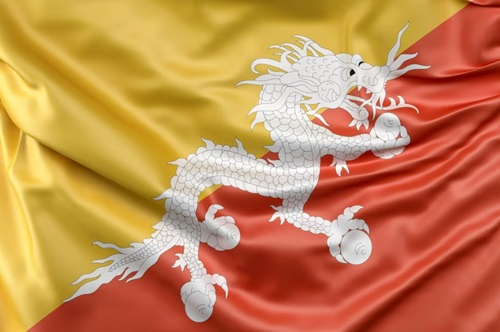
Bhutan is the name most international travellers know, but Bhutanese people call their country Druk Yul, commonly translated as the Land of the Thunder Dragon.
The dragon also appears prominently on Bhutan's national flag.
The name is connected with the Drukpa Kagyu school of Buddhism, which has played a central role in Bhutan's religious and political history.
Once you know this, you will start noticing the word Druk everywhere in Bhutan, from institutions and businesses to the country's national airline, Drukair.
Frequently Asked Questions About Bhutan
Where is Bhutan?
Bhutan is a small landlocked country in the Eastern Himalayas, bordered by China to the north and India to the south, east and west. Its landscape ranges from subtropical areas in the south to high Himalayan mountains in the north.
What is Bhutan most famous for?
Bhutan is particularly famous for Gross National Happiness, Tiger's Nest Monastery, Buddhist culture, Himalayan landscapes, environmental conservation and its distinctive traditional architecture. It is also known for deliberately managing tourism rather than pursuing high visitor numbers.
Is Bhutan really the happiest country in the world?
Bhutan should not simply be described as the world's happiest country. Its international association with happiness comes primarily from Gross National Happiness, its development philosophy that considers wellbeing alongside economic progress. This is different from claiming that every Bhutanese person is happier than people elsewhere.
Is Bhutan really carbon negative?
Bhutan is widely recognised as a carbon negative country, with its extensive forests absorbing more carbon dioxide than the country emits. Its Constitution also requires at least 60% of Bhutan's land area to remain under forest cover for all time.
Does Bhutan really have no traffic lights?
Bhutan is famous for having no conventional traffic lights, including in its capital, Thimphu. Traffic police manually direct vehicles at a prominent junction in the city centre.
Why is Bhutan called the Land of the Thunder Dragon?
Bhutanese people call their country Druk Yul, commonly translated as the Land of the Thunder Dragon. The dragon, or Druk, is an important national symbol and appears on Bhutan's flag.
Is Bhutan difficult to visit?
Bhutan is easier to visit than many people assume. You will need to arrange the appropriate visa or entry permit, pay the applicable Sustainable Development Fee and plan your flights and accommodation. Travelling with an experienced Bhutan tour operator can take care of these arrangements while allowing you to focus on the journey itself.
Discover Bhutan for Yourself
Bhutan's unusual facts are fascinating, but they only tell part of the story.
What surprises many travellers is how naturally these different elements come together once you arrive.
You can walk through a centuries old monastery in the morning, drink coffee in a contemporary café in Thimphu that afternoon and watch young Bhutanese dressed in traditional gho and kira checking their phones on the way home.
Bhutan is neither frozen in the past nor completely untouched by modern life.
That balance between tradition and change, spirituality and everyday life, conservation and development is what makes the country so interesting to experience in person.
If you are planning your first journey, start with our Bhutan travel guide to understand visas, flights, the Sustainable Development Fee, the best time to visit and how many days you should spend in Bhutan.
You can also explore our Bhutan tour packages or contact a Druk Asia travel specialist to create a private itinerary around the places and experiences that interest you most.
Want to Find Out More About Travelling to Bhutan?
Thinking of visiting Bhutan? Let our friendly team of Travel Specialists guide you every step of the way. During peak travel periods — such as festival seasons — flights can get fully booked several months in advance. You can reserve your ticket with us at no cost, giving you peace of mind while you plan the rest of your adventure.
Send Us a Message
Share your plans and one of our Bhutan Travel Specialists will be in touch.
