
Our Awards





Our Reviews




First King of Bhutan: Ugyen Wangchuck and the Birth of a Dynasty

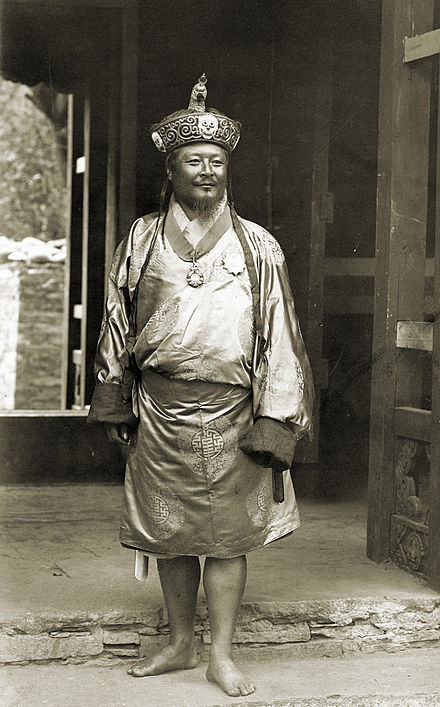
Ugyen Wangchuck was the First King of Bhutan and founder of the Wangchuck dynasty. Crowned on 17 December 1907 at Punakha Dzong, he established Bhutan's hereditary monarchy after decades of political rivalry and regional conflict.
His reign, from 1907 to 1926, marked a turning point in Bhutanese history. By consolidating political authority and strengthening national unity, Ugyen Wangchuck laid the foundations for the monarchy that continues to shape Bhutan today.
The anniversary of his coronation is celebrated annually as Bhutan's National Day.
Quick Facts About Bhutan's First King
| Fact | Details |
| Full name | Ugyen Wangchuck |
| Royal title | First Druk Gyalpo (Dragon King) |
| Born | 1862 |
| Reign | 1907–1926 |
| Coronation | 17 December 1907 |
| Coronation venue | Punakha Dzong |
| Father | Jigme Namgyel |
| Successor | Jigme Wangchuck |
| Known for | Establishing Bhutan's hereditary monarchy |
Table of Contents
How Did Ugyen Wangchuck Become Bhutan's First King?
Why Was the Wangchuck Dynasty Established?
What Were His Major Achievements?
Why Is 17 December Bhutan's National Day?
1. Who Was Ugyen Wangchuck?
Ugyen Wangchuck was born in 1862 into a powerful Bhutanese family closely associated with Trongsa, an important political and administrative centre in central Bhutan.
His father, Jigme Namgyel, was an influential leader who played a significant role in Bhutan's political affairs during the nineteenth century.
Before Bhutan became a hereditary monarchy, the country was governed through a dual system of religious and secular authority established by Zhabdrung Ngawang Namgyal in the seventeenth century.
Over time, competition among regional governors, known as penlops and dzongpons, led to political instability.
Ugyen Wangchuck gradually emerged as a prominent leader, strengthening his authority through alliances, diplomacy and military victories.
His leadership helped bring an end to decades of regional rivalry and paved the way for a more unified system of government.
For a broader understanding of the events leading to his reign, explore our guide to the modern history of Bhutan.
2. How Did Ugyen Wangchuck Become Bhutan's First King?
On 17 December 1907, Ugyen Wangchuck was unanimously elected Bhutan's first hereditary King during a historic assembly at Punakha Dzong.
The assembly brought together representatives of the monastic community, government officials and regional leaders.
His election represented a major change in Bhutan's political system. Instead of continuing with a structure in which power was contested among regional authorities, Bhutan established a hereditary monarchy under the Wangchuck family.
Ugyen Wangchuck became the First Druk Gyalpo, or Dragon King.
The coronation marked the beginning of the Wangchuck dynasty, which has since produced five kings.
Learn more about the royal succession and achievements of the five Kings of Bhutan.
3. Why Was the Wangchuck Dynasty Established?
The Wangchuck dynasty was established to bring greater political stability and continuity to Bhutan.
Before 1907, regional political rivalries had frequently weakened central authority.
The creation of a hereditary monarchy provided a clearer system of leadership and helped consolidate power under a central government.
This allowed Bhutan to enter a period of greater political stability while maintaining its Buddhist traditions and cultural institutions.
The establishment of the monarchy also strengthened Bhutan's ability to manage its internal affairs and external relationships.
Today, the Wangchuck dynasty continues under King Jigme Khesar Namgyel Wangchuck, Bhutan's Fifth King, although the country has been governed as a constitutional democratic monarchy since 2008.
4. What Were the Major Achievements of Bhutan's First King?
Ugyen Wangchuck's most significant contribution was the establishment of hereditary monarchy.
His reign was also associated with several important developments.
Strengthening National Unity
He consolidated political authority and helped reduce the regional rivalries that had affected Bhutan during the nineteenth century.
Establishing Political Stability
The hereditary monarchy provided continuity of leadership and created a foundation for future administrative development.
Preserving Bhutan's Sovereignty
Ugyen Wangchuck navigated relations with neighbouring powers during a period of considerable geopolitical change in the Himalayan region.
Developing Diplomatic Relations
He maintained diplomatic relations with British India while protecting Bhutan's internal autonomy.
Supporting Early Modern Education
The early foundations of modern schooling in Bhutan emerged during his reign, including educational initiatives in Haa and Bumthang.
These developments helped prepare Bhutan for the larger social and economic reforms introduced by subsequent kings.
5. The Treaty of Punakha in 1910
One of the most important diplomatic developments during Ugyen Wangchuck's reign was the signing of the Treaty of Punakha in 1910.
The treaty revised Bhutan's earlier agreement with British India.
Under the arrangement, British India agreed not to interfere in Bhutan's internal administration, while Bhutan agreed to consult the British government regarding its external relations.
The treaty also increased the annual subsidy provided to Bhutan.
It helped establish a more stable diplomatic relationship between Bhutan and British India during a period of political uncertainty in the wider Himalayan region.
The agreement later formed part of the historical background to Bhutan's relationship with independent India.
6. Why Is 17 December Bhutan's National Day?
Bhutan celebrates National Day on 17 December to commemorate the coronation of its First King in 1907.
The occasion is one of the country's most important annual celebrations.
National Day ceremonies typically include royal addresses, cultural performances and gatherings attended by Bhutanese citizens from different parts of the country.
The celebration commemorates the establishment of the monarchy and reflects on Bhutan's sovereignty, unity and national development.
For travellers visiting Bhutan in December, National Day offers an opportunity to learn more about the country's royal heritage and national traditions.
7. Where Can You Explore the First King's Royal Heritage?
Several of Bhutan's most important historical landmarks are closely associated with the First King and the Wangchuck dynasty.
Punakha Dzong
Punakha Dzong is where Ugyen Wangchuck was crowned Bhutan's first hereditary monarch in 1907.
Situated at the confluence of the Pho Chhu and Mo Chhu rivers, the fortress remains an important religious and historical landmark.
Its role in Bhutan's royal history makes it a particularly meaningful destination for visitors interested in the monarchy.
Trongsa Dzong
Trongsa Dzong was an important political centre for the Wangchuck family before the establishment of hereditary monarchy.
The position of Trongsa Penlop played a central role in the rise of the dynasty.
The fortress remains one of Bhutan's most impressive examples of traditional architecture.
Royal Heritage Museum, Trongsa
Located in the historic Ta Dzong watchtower, the Royal Heritage Museum explores the history of Bhutan's monarchy and the Wangchuck dynasty.
Visitors can discover royal artefacts, historical displays and exhibits explaining the country's political development.
For more places to include in your itinerary, explore Druk Asia's guide to Bhutan's cultural landmarks.
Frequently Asked Questions About Bhutan's First King
Who was the First King of Bhutan?
Ugyen Wangchuck was Bhutan's first hereditary King. He was crowned on 17 December 1907 and ruled until 1926.
When was Bhutan's monarchy established?
Bhutan's hereditary monarchy was established on 17 December 1907, when Ugyen Wangchuck became the First Druk Gyalpo.
Where was Bhutan's First King crowned?
Ugyen Wangchuck was crowned at Punakha Dzong, one of Bhutan's most historically significant fortresses.
Why was Ugyen Wangchuck important?
He helped consolidate political authority, reduce regional instability and establish the Wangchuck dynasty.
Who was the father of Bhutan's First King?
His father was Jigme Namgyel, an influential political and military leader associated with Trongsa.
Who succeeded Ugyen Wangchuck?
His son, Jigme Wangchuck, succeeded him in 1926 and became Bhutan's Second King.
Discover Bhutan's Royal Heritage with Druk Asia
Bhutan's royal history is closely connected to its ancient fortresses, monasteries and cultural traditions.
From Punakha Dzong, where the monarchy was established, to Trongsa Dzong, the ancestral political centre of the Wangchuck dynasty, visitors can explore landmarks that shaped the kingdom's history.
Discover more about the history of Bhutan's five kings or explore our Bhutan cultural tours to experience the country's royal heritage with knowledgeable local guides.
Want to Find Out More About Travelling to Bhutan?
Thinking of visiting Bhutan? Let our friendly team of Travel Specialists guide you every step of the way. During peak travel periods — such as festival seasons — flights can get fully booked several months in advance. You can reserve your ticket with us at no cost, giving you peace of mind while you plan the rest of your adventure.
Send Us a Message
Share your plans and one of our Bhutan Travel Specialists will be in touch.
