 Druk Asia
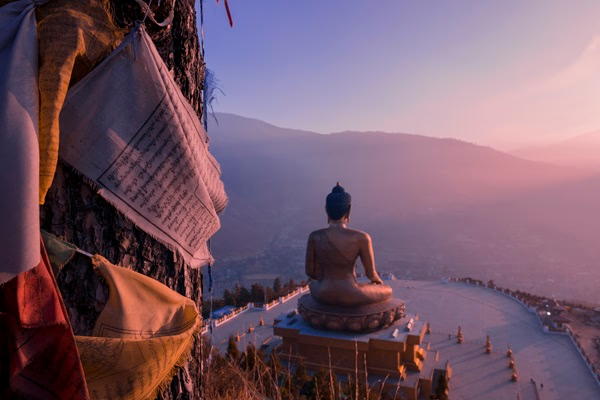
Buddhism in Bhutan is more than just a religion. It is an intrinsic part of the nation’s identity and culture. Bhutan, often referred to as the last great Himalayan kingdom, has a profound connection with Buddhism, which shapes its society, politics, and everyday life, deeply rooted in Bhutan's religious history.
The primary form of Buddhism practised in Bhutan is Vajrayana Buddhism, also known as Tantric Buddhism, which is distinct from the Theravada and Mahayana traditions.
Historical Roots Of Buddhism In Bhutan
The Arrival Of Buddhism In Bhutan
The introduction of Buddhism to Bhutan is attributed to the 8th-century Indian saint Guru Padmasambhava, also known as Guru Rinpoche. He is revered for establishing the foundation of Bhutanese Buddhism by subduing local deities and converting them into protectors of the Dharma.
Monks played a crucial role in bringing Buddhism to local communities, traveling from village to village with portable shrines displaying images of the Buddha, Bodhisattvas, and important lamas.
Guru Rinpoche arrived in Bhutan at the invitation of King Sindhu Raja and is said to have subdued eight classes of demons, thereby facilitating the construction of monasteries and the spread of Buddhism throughout the region.
His influence is evident in the numerous temples and monasteries dedicated to him across the country, including the iconic Paro Taktsang (Tiger’s Nest Monastery).
Evolution Of Bhutan Religion Over The Centuries
Over the centuries, Buddhism in Bhutan evolved uniquely, absorbing elements of the pre-existing Bon religion and local customs, eventually becoming the official religion under the Drukpa sect of Kagyupa.
This blend created a distinct form of Vajrayana Buddhism that emphasises rituals, sacred arts, and the role of spiritual leaders, or lamas, in guiding the spiritual and communal life of the Bhutanese people.
Religious institutions played a crucial role in this development, combining civil and spiritual governance through figures such as the Shabdrung and the Jey Kempo. The Nyingma sect, founded by Guru Rinpoche, became one of the oldest and most influential schools of Tibetan Buddhism in Bhutan.
Key Aspects Of Buddhism In Bhutan
The Role Of Monasteries And Monastic Life In Mahayana Buddhism
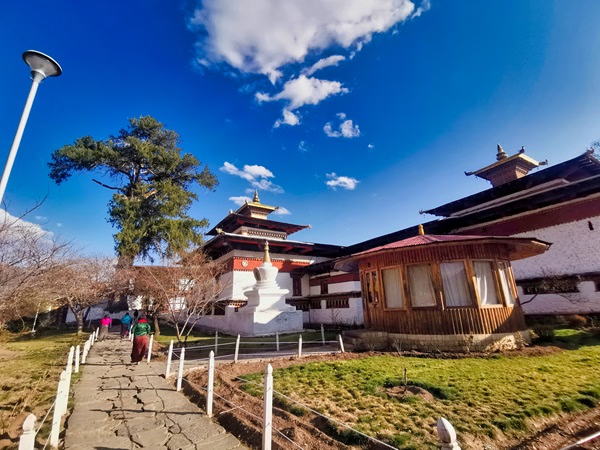
Monasteries, known as ‘gompas,’ are the heart of Bhutan Buddhism. Buddhist temples, such as Kyichu Lhakhang and Kurje Lhakhang, were constructed by Tibetan King Songtsen Gampo and are significant sites for spiritual practices. They serve as religious, educational, and cultural centers.
Young monks receive rigorous training in Buddhist philosophy, meditation, and rituals. The monastic music from Bhutan is often described as having 'great virility' and is considered to be more melodious than that of their Tibetan monotone counterparts.
The monastic community plays a crucial role in preserving and transmitting Buddhist teachings and practices.
Festivals And Rituals In Bhutan Religion
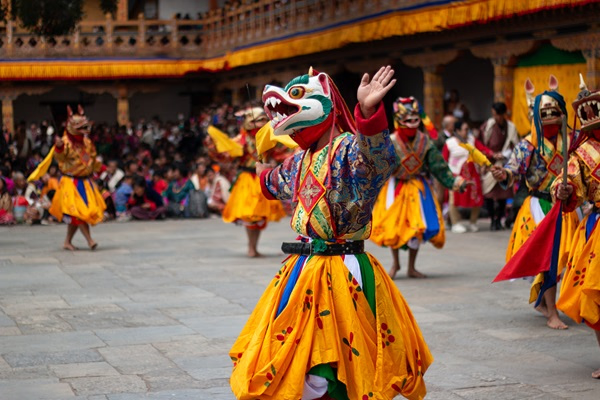
Bhutan is renowned for its vibrant religious festivals, or ‘tsechus,’ which are held annually in various regions. Mahayana Buddhism, with its various branches practiced in Bhutan, plays a significant role in these festivals, highlighting its integration into Bhutanese culture and daily life.
These festivals commemorate significant events in the life of Guru Rinpoche and other Buddhist saints. The tsechus feature masked dances, music, and rituals performed by monks and laypeople, offering a glimpse into the spiritual and cultural life of Bhutan.
Influence Of Buddhism On Bhutanese Society
Social And Political Structure
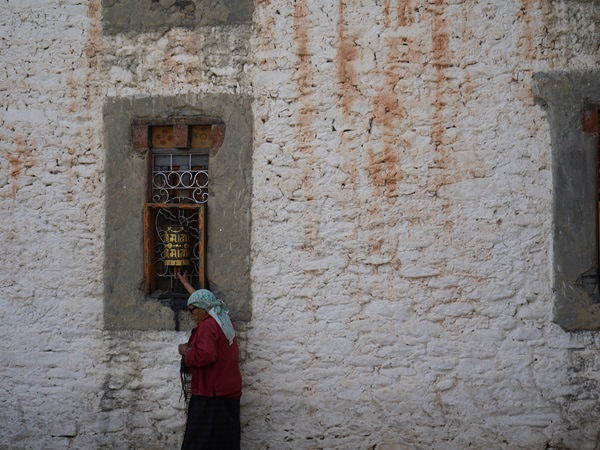
Bhutan Buddhism profoundly influences the country’s social and political structure. The concept of Gross National Happiness (GNH), which guides Bhutan’s development policies, is rooted in Buddhist principles of well-being and compassion.
The Bhutanese monarchy and government actively promote and protect the Buddhist heritage, ensuring it remains central to the nation’s identity.
Daily Life And Practices In Buddhist Teachings
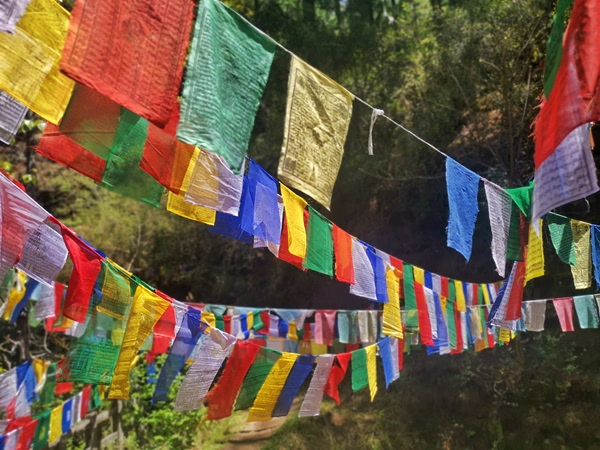
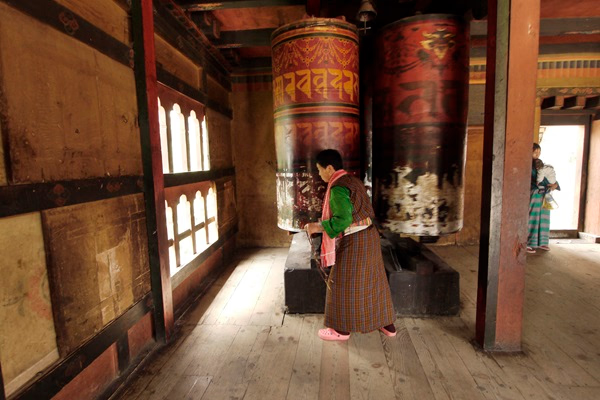
For the average Bhutanese, Buddhism is woven into the fabric of daily life. Prayer flags fluttering in the wind, stupas dotting the landscape, and the constant hum of prayer wheels are everyday reminders of the pervasive spiritual presence.
Rituals, offerings, and pilgrimages are integral parts of life, reflecting the deep-rooted religious devotion.
Prominent Buddhist Sites In Bhutan
Paro Taktsang (Tiger’s Nest Monastery)
Paro Taktsang, or the Tiger’s Nest Monastery, is one of the most iconic symbols of Bhutan Buddhism. Perched on a cliffside, this sacred site is where Guru Rinpoche is believed to have meditated in the 8th century.
The monastery is a pilgrimage destination for both Bhutanese and international visitors, offering breathtaking views and a profound spiritual experience.
Punakha Dzong
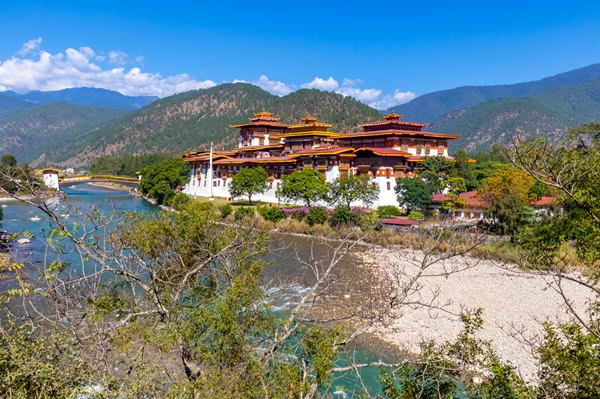
Punakha Dzong, a majestic fortress-monastery, holds great historical and religious significance.
It served as the administrative centre and the seat of the Druk Desi (the secular head) and the Je Khenpo (the religious head) in the past. The dzong is an architectural masterpiece and a symbol of Bhutan’s rich religious heritage.
Bumthang Valley
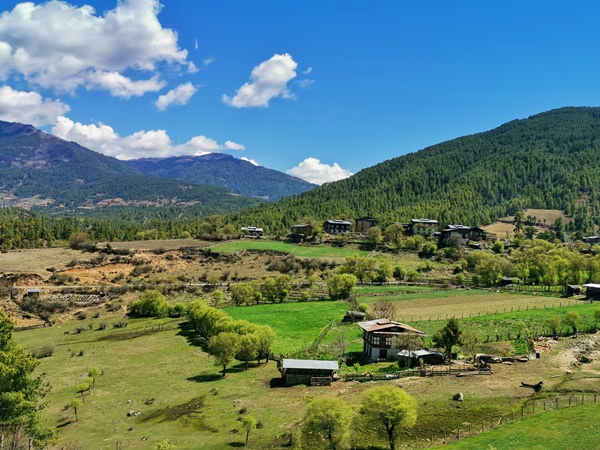
Bumthang Valley, often referred to as the spiritual heartland of Bhutan, is home to several ancient monasteries and sacred sites. Jambay Lhakhang, one of the oldest temples, and Kurjey Lhakhang, where Guru Rinpoche left his body imprint, are among the revered sites that attract pilgrims and tourists alike.
Conclusion About Buddhism In Bhutan
Buddhism in Bhutan is not merely a religion. It is the lifeblood of the nation, influencing every aspect of Bhutanese life. From the ancient monasteries to the vibrant festivals, the essence of Bhutan Buddhism is reflected in the country’s spiritual, cultural, and social fabric.
As Bhutan continues to evolve, its commitment to preserving and nurturing this rich religious heritage ensures that the teachings of Buddhism will continue to guide and inspire future generations. The profound spirituality and serene beauty of Bhutan stand as a testament to the enduring legacy of its Buddhist tradition.
Ready to experience the profound spirituality and serene beauty of Bhutan? Let Druk Asia guide you on a journey through the heart of Bhutanese Buddhism. Book your Bhutan adventure with Druk Asia today for an unforgettable journey into the soul of Bhutan.
Frequently Asked Questions About Buddhism In Bhutan
Can Visitors Participate In Or Observe Buddhist Rituals And Ceremonies In Bhutan?
Yes, visitors are often welcome to observe, and sometimes even participate in, Buddhist rituals and ceremonies in Bhutan. However, it is important to be respectful and follow any guidelines or instructions provided by the local communities or monastery authorities.
What Are Some Of The Most Important Buddhist Sites To Visit In Bhutan?
Bhutan is home to many significant Buddhist sites, including the Tiger's Nest Monastery (Paro Taktsang), Punakha Dzong, and the Memorial Chorten in Thimphu. These sites offer insight into the country's rich religious heritage and provide opportunities for meditation and reflection.
How Is Buddhism Taught And Passed Down Through Generations In Bhutan?
Buddhism in Bhutan is passed down through both formal education in monasteries and informal teachings within families. Monastic schools provide rigorous training for monks, while lay people learn through community involvement, festivals, and family traditions.
What Role Do Monks And Nuns Play In Bhutanese Society?
Monks and nuns hold significant roles in Bhutanese society. They are respected spiritual leaders who conduct religious ceremonies, offer guidance, and educate the community in Buddhist teachings. Their presence is integral to maintaining the spiritual and cultural continuity of Bhutan.
How Does The Bhutanese Government Support And Promote Buddhism?
The Bhutanese government actively supports and promotes Buddhism through policies and funding for the preservation of religious sites, support for monastic education, and the promotion of festivals and cultural practices.
The government also integrates Buddhist principles into its policies, such as Gross National Happiness, which reflects Buddhist values of well-being and balance.
