 Druk Asia
Samdrup Jongkhar Dzong
Samdrup Jongkhar Dzong: The Eastern Gateway to Bhutan’s Spiritual Legacy
Tucked away in the far southeastern corner of Bhutan, Samdrup Jongkhar Dzong stands as a proud sentinel near the border with Assam, India. Though lesser-known compared to the grand dzongs of western Bhutan, this administrative and monastic fortress carries immense cultural and strategic significance, especially for the eastern regions of the country. Its presence not only embodies the unique Bhutanese tradition of dzong architecture but also serves as a vital hub for governance and spiritual practice in this part of the kingdom.
A Recent Addition with Deep Cultural Roots
Unlike many of Bhutan’s ancient dzongs that date back to the 17th century, Samdrup Jongkhar Dzong is a relatively recent construction. It was officially inaugurated in 2010, making it one of the newest dzongs in the country. Despite its modern origins, the design faithfully reflects the traditional Bhutanese style—massive whitewashed walls, intricate wooden cornices, and golden roofs that gleam under the subtropical sun. The dzong houses both administrative offices and monastic quarters, seamlessly integrating civil and religious functions, as is customary in Bhutanese governance.
Strategic Location and Purpose
Samdrup Jongkhar Dzong occupies a key geographical location, positioned just a short distance from the Indo-Bhutanese border. As such, it acts as a gateway to the eastern dzongkhags (districts) and plays a crucial role in administrative coordination. Its presence has helped streamline governance and promote development in the region, especially in facilitating cross-border trade and security cooperation. At the same time, it functions as a centre for spiritual activities, hosting ceremonies and rituals that uphold the religious heritage of the area.
Architectural Features and Layout
Though more compact than Bhutan’s larger dzongs, Samdrup Jongkhar Dzong maintains the core elements of traditional fortress-monasteries. The main courtyard is flanked by tall walls and monastic quarters, while the central utse (tower) rises above the complex, housing sacred relics and prayer halls. The use of locally sourced materials and craftsmanship ensures that the dzong harmonises with its surrounding landscape. The subtropical climate and lush vegetation around the dzong give it a distinctly different character compared to its Himalayan counterparts, offering visitors a unique perspective of Bhutanese architecture adapted to a different environment.
A Growing Centre of Culture and Connectivity
As eastern Bhutan continues to develop, Samdrup Jongkhar Dzong is increasingly becoming a focal point for cultural preservation and community engagement. Festivals, local rituals, and community gatherings are often held within its walls, reinforcing a sense of identity and spiritual continuity. For travellers entering Bhutan by land from Assam, the dzong is often the first significant cultural landmark encountered, offering a warm introduction to the nation’s spiritual and architectural heritage.
Visiting Samdrup Jongkhar Dzong
While tourism in eastern Bhutan is still emerging compared to the more established routes in the west, visiting Samdrup Jongkhar Dzong offers an off-the-beaten-path experience. The town itself is a blend of Bhutanese charm and bustling border town activity, with local markets, handicraft stalls, and a friendly, multicultural atmosphere. The dzong is typically open to the public, and visitors can observe monastic life and appreciate the quiet dignity of its halls and courtyards.
Why It Matters
Samdrup Jongkhar Dzong may not boast the centuries-old legends of Punakha or Trongsa, but it represents something equally vital—a living, evolving symbol of Bhutanese identity in a rapidly changing world. Its establishment strengthens governance in the east, supports spiritual life, and signals Bhutan’s commitment to preserving tradition even as it steps into the modern era. For anyone looking to explore Bhutan beyond the usual trails, this dzong offers a meaningful and enriching stop along the journey.
Popular Bhutan Tour Packages
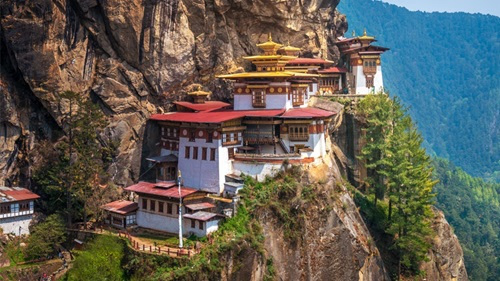
Top attractions, cultural experiences, and adventure activities.
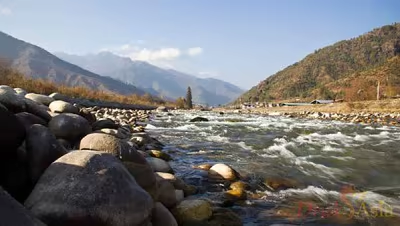
Thimphu to Paro — with Punakha, Bumthang, and Gangtey.
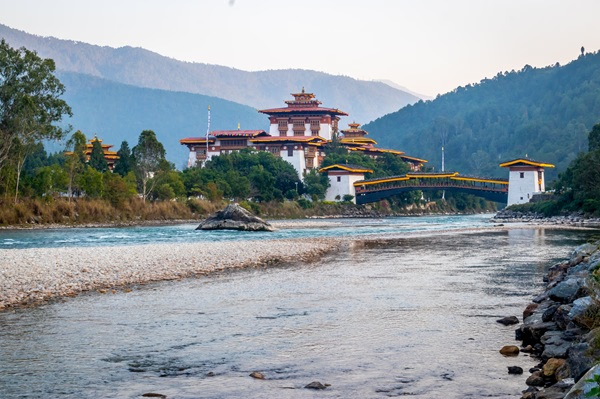
Breathtaking landscapes, indulgent stays, and wellness.
Popular Bhutan Trekking Packages
Views of Taktsang Monastery from above on a short trek.
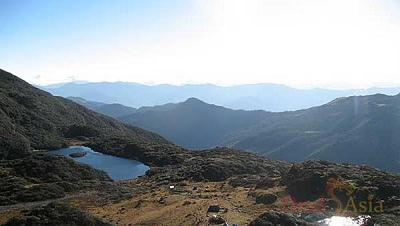
From Ta Dzong, Paro to the Takin Sanctuary, Thimphu.
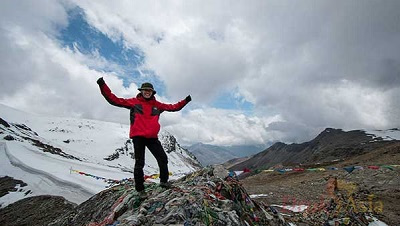
Bhutan's most beloved trek and the majesty of Mount Jomolhari.
Bhutan is calling — our Travel Specialists are ready to help you plan the perfect adventure.
Send an Enquiry