 Druk Asia
Our Awards




Our Reviews




40 Best Places to Visit in Bhutan and Things to Do

Table of Contents
Best Places to Visit in Bhutan at a Glance
Places to Visit Around Thimphu
Places to Visit in Phobjikha Valley
How Many Days Do You Need in Bhutan?
Bhutan may be a small Himalayan kingdom, but there is far more to experience here than most first time visitors expect.
You can hike to monasteries built into cliffs, walk through ancient dzongs, cross valleys filled with prayer flags, watch traditional archery, meet artisans, attend colourful festivals and travel through landscapes that change dramatically from one valley to the next.
If you are wondering what to see in Bhutan, the places you choose will depend largely on how many days you have.
For a first trip of around 5 to 7 days, focus on Paro, Thimphu and Punakha.
With 10 days or more, you can travel deeper into central Bhutan towards Trongsa, Phobjikha Valley and Bumthang.
The best approach is not to squeeze as many places as possible into your Bhutan itinerary. Road journeys can take time, and some of Bhutan's most memorable moments happen when you slow down.
Here are 40 of the best places to visit and things to do in Bhutan.
Best Places to Visit in Bhutan at a Glance
If this is your first trip, these are the destinations we usually suggest considering first.
Paro: Best for Tiger's Nest, historic temples, scenic valleys and your introduction to Bhutan.
Thimphu: Best for understanding contemporary Bhutan alongside its traditional culture.
Punakha: Best for dzongs, rice terraces, villages, rivers and warmer valley scenery.
Phobjikha Valley: Best for nature, peaceful landscapes, walking and black necked cranes.
Haa Valley: Best for quieter countryside, hiking and a more rural side of western Bhutan.
Bumthang: Best for Buddhist heritage, spiritual sites and travellers with more time.
Trongsa: Best for Bhutanese history, dramatic architecture and journeys into central Bhutan.
If you are still deciding when to travel, start with our guide to the best time to visit Bhutan.
Places to Visit in Thimphu
Bhutan's capital is often the best introduction to the country.
Thimphu combines monasteries, traditional architecture and national institutions with cafés, markets, galleries and a surprisingly lively creative scene.
You can comfortably spend one or two days exploring the city.
1. Buddha Dordenma
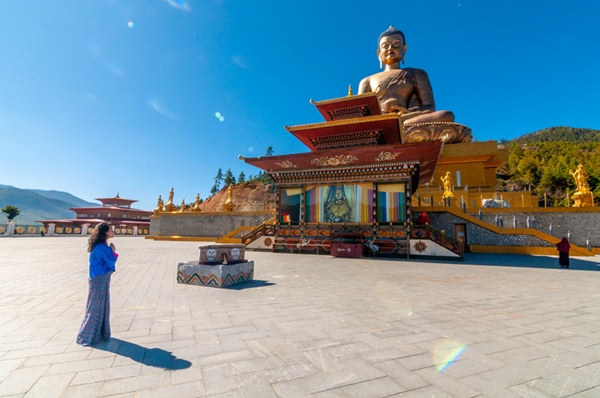
Looking across the Thimphu Valley from Kuenselphodrang, the Buddha Dordenma is one of Bhutan's most recognisable landmarks.
The gilded bronze statue stands 51.5 metres tall and contains thousands of smaller Buddha statues within it.
Go inside to see the richly decorated meditation halls, but also spend time outside. The surrounding area gives you some of the best panoramic views over Thimphu.
Best for: First time visitors, photography, Buddhist culture and panoramic views.
2. Tashichho Dzong
Tashichho Dzong is one of Bhutan's most important buildings and one of the finest examples of traditional Bhutanese architecture.
It serves as an important centre of government and religion and is particularly beautiful in the late afternoon when the light falls across its whitewashed walls.
Parts of the complex are open to visitors at designated times.
Best for: Architecture, history and culture.
3. National Memorial Chorten
The National Memorial Chorten gives you an opportunity to see Bhutanese Buddhism as part of everyday life rather than simply as a sightseeing attraction.
Bhutanese visitors come here throughout the day to pray, spin prayer wheels and walk clockwise around the chorten.
Take your time here and follow the local custom of walking clockwise.
Best for: Spirituality, people watching and understanding everyday Bhutanese culture.
4. Motithang Takin Preserve
Meet Bhutan's unusual national animal, the takin.
The animal is closely connected to a Bhutanese legend involving the Buddhist saint Drukpa Kunley and looks like a curious combination of several different animals.
The preserve makes an easy addition to a Thimphu sightseeing day.
Best for: Families, wildlife and first time visitors.
5. Royal Textile Academy
Bhutan's traditional textiles are remarkably intricate, and the Royal Textile Academy gives you a much deeper appreciation of the work behind them.
You can learn about weaving techniques, regional patterns and the cultural importance of the kira and gho.
It is particularly worthwhile if you are interested in fashion, design, craftsmanship or Bhutanese heritage.
Best for: Textiles, art, design and culture.
6. Simply Bhutan
Simply Bhutan is an interactive cultural museum where you can learn about traditional Bhutanese homes, clothing, food and everyday customs.
Depending on the activities available during your visit, you may also get to try traditional games or experience aspects of Bhutanese village life.
It is a good introduction to Bhutanese culture, particularly during the first few days of your trip.
Best for: Families and first time visitors.
7. Jungshi Handmade Paper Factory
Traditional Bhutanese paper, known as deh sho, has been produced for generations using techniques passed down through Bhutanese communities.
At Jungshi Handmade Paper Factory, you can see how the paper is made and browse notebooks, cards and other locally produced items.
Best for: Traditional crafts, souvenirs and cultural experiences.
8. Kaja Throm
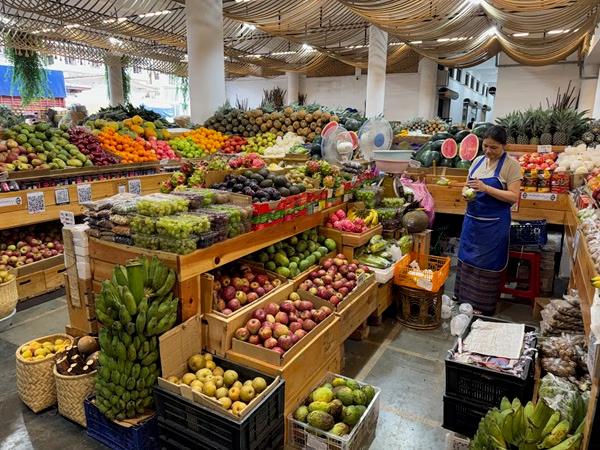
For a look at everyday Bhutanese food and local produce, spend some time wandering through Kaja Throm.
You will see fresh vegetables, chillies, grains, cheeses and other ingredients used in Bhutanese kitchens.
Rather than rushing through, ask your guide to explain unfamiliar ingredients and how they are used.
Best for: Food lovers and local life.
Places to Visit Around Thimphu
9. Dochula Pass
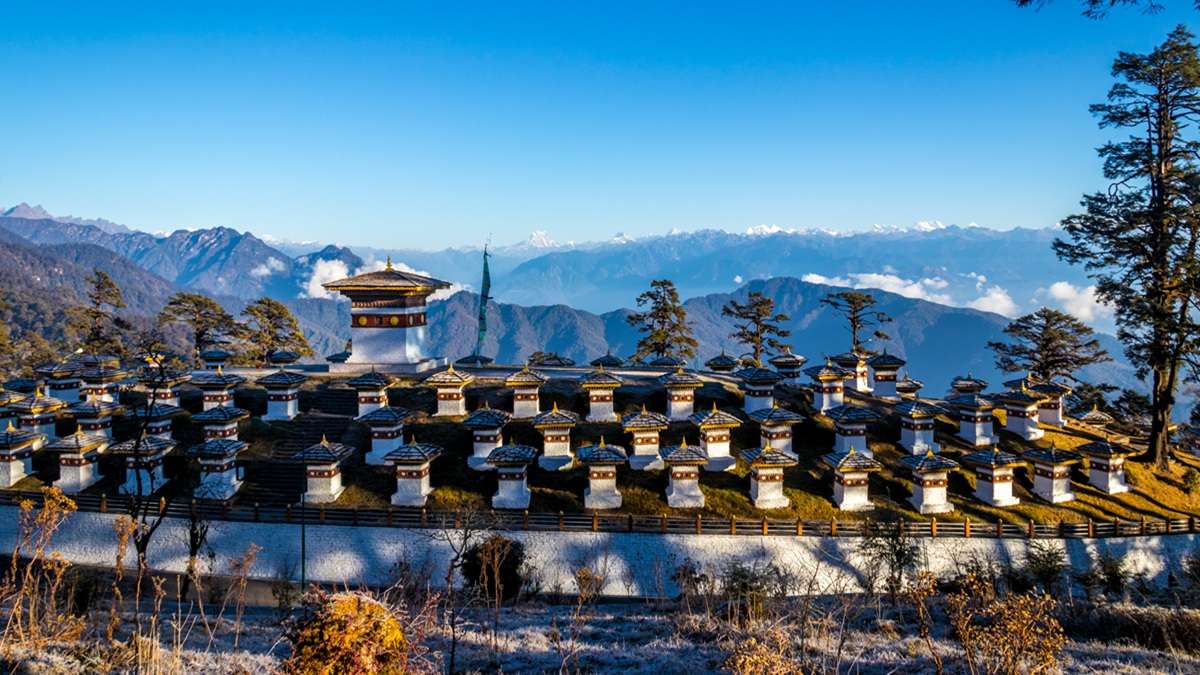
The journey between Thimphu and Punakha crosses Dochula Pass at approximately 3,100 metres.
Its most recognisable feature is the group of 108 chortens known as the Druk Wangyal Chortens.
On a clear day, the pass can also provide magnificent views towards Bhutan's Himalayan peaks.
Dochula is not simply a quick photo stop. Walk amongst the chortens and visit the nearby temple if time permits.
The annual Druk Wangyel Tshechu is also held here each December.
Best for: Mountain scenery, photography and cultural heritage.
Places to Visit in Punakha
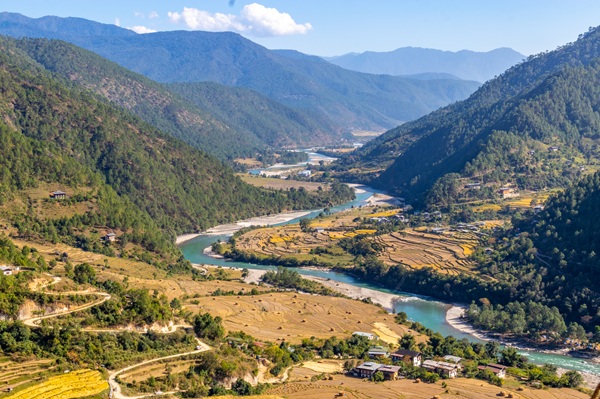
Punakha sits at a lower elevation than Thimphu and Paro, giving the valley a noticeably warmer and more subtropical feel.
Rice terraces, rivers, traditional villages and one of Bhutan's most beautiful dzongs make it an essential part of most first time itineraries.
10. Punakha Dzong
If you visit only one dzong in Bhutan, Punakha Dzong should be high on your list.
Known as the Palace of Great Happiness, the fortress sits dramatically at the confluence of the Pho Chhu and Mo Chhu rivers.
It has played an important role in Bhutan's political and religious history and continues to serve as an important monastic and administrative centre.
The setting is particularly beautiful when jacaranda trees around the dzong flower in spring.
Best for: Architecture, history, photography and first time visitors.
11. Punakha Suspension Bridge
Spanning the Pho Chhu, the Punakha Suspension Bridge is one of Bhutan's most photographed bridges.
Prayer flags stretch across the structure while the river flows through the valley below.
It can be combined easily with a visit to Punakha Dzong.
Best for: Photography, families and easy walking.
12. Chimi Lhakhang
Chimi Lhakhang is associated with Drukpa Kunley, the unconventional Buddhist teacher commonly known as the Divine Madman.
The temple has become particularly well known for fertility blessings.
The walk towards the temple takes you through fields and the village of Sopsokha, where you will notice the distinctive phallic imagery associated with Drukpa Kunley's teachings.
Best for: Culture, village walks and Bhutanese folklore.
13. Khamsum Yulley Namgyal Chorten
For one of the best short hikes around Punakha, walk up through rice fields towards Khamsum Yulley Namgyal Chorten.
The climb rewards you with beautiful views over the Punakha Valley and surrounding countryside.
It works particularly well for travellers who want to include hiking in their Bhutan trip without committing to a full trek.
Best for: Short hikes, photography and valley views.
14. Sangchhen Dorji Lhuendrup Nunnery
Set above the Punakha and Wangdue valleys, this peaceful nunnery offers beautiful views and insight into the lives of Buddhist nuns studying and practising here.
The setting is quieter than many of Bhutan's more famous attractions.
Best for: Spirituality, architecture and peaceful sightseeing.
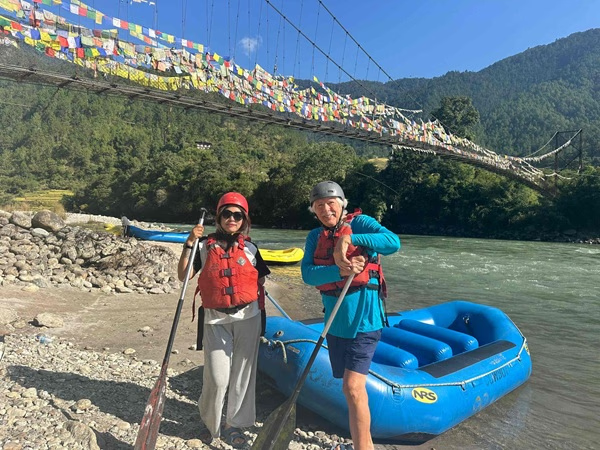
15. White Water Rafting in Punakha
Punakha gives adventurous travellers the opportunity to experience Bhutan from a completely different perspective.
Rafting trips can be arranged on the Pho Chhu or Mo Chhu, with routes varying according to river conditions and experience level.
Your operator can advise which option is suitable during your visit.
Best for: Adventure, groups and families with older children.
Places to Visit in Paro
Paro is where many international journeys into Bhutan begin.
Do not treat it simply as your arrival and departure point. The valley contains some of Bhutan's most important temples, monasteries and historical sites.
16. Paro Taktsang, Tiger's Nest Monastery
No list of the best places to visit in Bhutan would be complete without Paro Taktsang.
Better known as Tiger's Nest Monastery, this sacred complex clings to a cliff high above the Paro Valley.
According to Buddhist tradition, Guru Rinpoche reached this site on the back of a tigress and meditated in a cave here.
Most travellers require several hours for the return hike, depending on fitness, pace and the amount of time spent at the monastery.
We normally recommend keeping Tiger's Nest towards the later part of your trip so you have had time to adjust to Bhutan's altitude.
Start in the morning, wear proper walking shoes and allow yourself plenty of time.
Best for: First time visitors, hiking, spirituality and photography.
17. Rinpung Dzong
Also known as Paro Dzong, Rinpung Dzong overlooks the Paro Valley and is one of the valley's most impressive architectural landmarks.
It remains both an administrative and monastic centre.
Paro Tshechu, one of Bhutan's best known religious festivals, takes place in and around the dzong each spring.
Best for: Architecture, festivals and history.
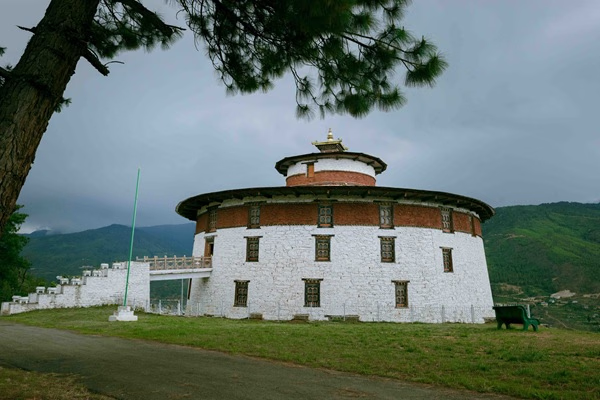
18. National Museum of Bhutan
Housed above Paro Dzong in the historic Ta Dzong, the National Museum introduces visitors to Bhutanese history, religion, art and cultural heritage.
It is particularly useful early in your journey because it provides context for many of the temples, paintings and religious objects you will encounter later.
Best for: History, art and first time visitors.
19. Kyichu Lhakhang
Kyichu Lhakhang is one of Bhutan's oldest and most sacred temples.
Tradition connects its foundation with the Tibetan king Songtsen Gampo and a network of temples built across the Himalayan region during the seventh century.
The temple is much smaller than Bhutan's great dzongs, but its quiet atmosphere makes it one of Paro's most rewarding spiritual stops.
Best for: Buddhist heritage and spirituality.
20. Traditional Bhutanese Farmhouse Experience
Spend part of an afternoon or evening at a traditional farmhouse to experience another side of Bhutanese life.
Depending on the visit, you might explore a traditional house, enjoy Bhutanese food, try archery or learn more about rural customs from your hosts.
Best for: Families, culture and meaningful local experiences.
21. Traditional Hot Stone Bath
A Bhutanese hot stone bath is a wonderful way to relax after several days of walking and sightseeing.
Traditionally, river stones are heated over a fire and placed into a chamber connected to a wooden bath.
Many farmhouses and selected hotels can arrange the experience.
Best for: Wellness, couples and post hike relaxation.
22. Chele La
The road towards Chele La climbs through forests above the Paro Valley before reaching a high mountain pass between Paro and Haa.
On clear days you may see spectacular mountain scenery from the pass.
Conditions can change quickly at this elevation, so warm layers are useful even when temperatures in Paro feel comfortable.
Best for: Mountain scenery, road trips and photography.
Places to Visit in Haa Valley
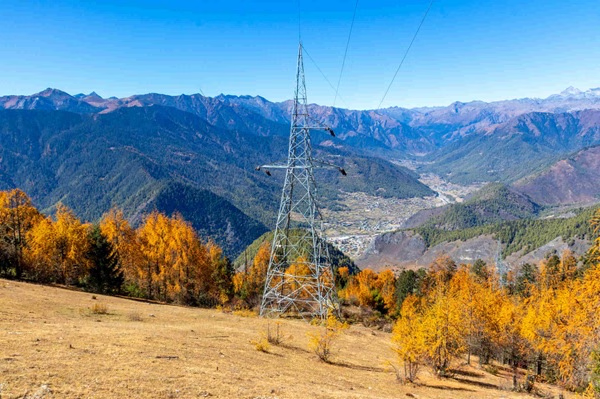
Haa receives fewer visitors than Paro, Thimphu and Punakha, making it an appealing addition for travellers who prefer quieter places and countryside.
23. Haa Valley
Traditional houses, fields, forested mountains and small villages give Haa a completely different atmosphere from Bhutan's busier western valleys.
Spend time walking rather than simply driving through.
Best for: Nature, rural Bhutan, photography and slower travel.
24. Lhakhang Karpo
Lhakhang Karpo, meaning White Temple, is one of the valley's most important religious sites.
It forms part of the traditional spiritual landscape of Haa and can be visited as part of a wider exploration of the valley.
Best for: Buddhist culture and heritage.
25. Hiking in Haa
Haa offers excellent walking opportunities through forests, villages and mountain landscapes.
Routes can range from relaxed valley walks to more demanding trails.
Ask your guide to recommend a route based on your fitness level and the conditions during your visit.
Best for: Hiking, nature and travellers looking beyond the classic route.
Places to Visit in Phobjikha Valley
Phobjikha is one of Bhutan's most beautiful high altitude valleys.
Its broad landscape, forested slopes and important wetland ecosystem make it particularly attractive for nature lovers.
26. Gangtey Goemba
Gangtey Goemba sits prominently above Phobjikha Valley and is one of the most important monasteries associated with the Pema Lingpa tradition.
The monastery's elevated position gives you wonderful views over the valley.
Best for: Buddhist heritage, architecture and landscapes.
27. Gangtey Nature Trail
The Gangtey Nature Trail is one of our favourite gentle walks in Bhutan.
The trail leads through forests, villages and open sections of Phobjikha Valley and can usually be completed comfortably in a couple of hours.
It provides a good alternative for travellers who enjoy walking but do not want a demanding trek.
Best for: Easy hiking, nature and families.
28. Black Necked Crane Centre
Phobjikha is one of Bhutan's most important winter habitats for black necked cranes.
A visit to the conservation centre helps you understand the birds, their migration and the work being done to protect the surrounding ecosystem.
Crane season is generally associated with the colder months.
Best for: Wildlife, birdwatching and conservation.
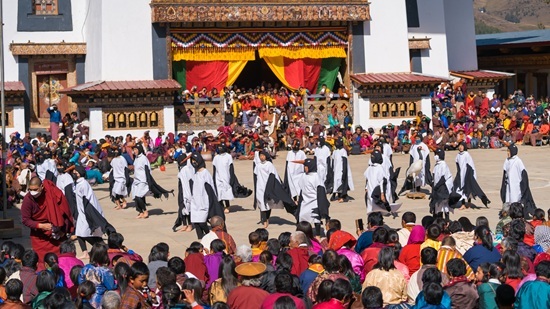
29. Black Necked Crane Festival
The annual Black Necked Crane Festival takes place on 11 November and celebrates the return of these remarkable birds to Phobjikha.
Local performances, songs and dances combine cultural celebration with conservation awareness.
If you are interested in attending, check the latest Bhutan festival calendar before confirming your itinerary.
Best for: Festivals, wildlife and cultural experiences.
Places to Visit in Bumthang
Bumthang is often described as Bhutan's spiritual heartland.
It takes longer to reach than the western valleys, but travellers who have ten days or more in Bhutan should seriously consider adding it.
The region is made up of several valleys filled with monasteries, villages, farmland and important sacred sites.
30. Kurjey Lhakhang
Kurjey Lhakhang is one of Bumthang's most sacred temple complexes.
Its religious significance is closely associated with Guru Rinpoche and the introduction of Buddhism to the region.
Best for: Spirituality, history and Buddhist heritage.
31. Jambay Lhakhang
Jambay Lhakhang is traditionally believed to date back to the seventh century and is regarded as one of Bhutan's oldest temples.
It is particularly famous for Jambay Lhakhang Drup, one of Bumthang's important annual festivals.
Best for: Ancient temples, festivals and spirituality.
32. Jakar Dzong
Overlooking the Chokhor Valley, Jakar Dzong is commonly known as the Fortress of the White Bird.
Its position on a ridge makes it a prominent landmark above Jakar.
Best for: Architecture, history and panoramic views.
33. Mebar Tsho
Despite its English name, the Burning Lake is actually a sacred pool along the Tang Chhu.
The site is associated with the treasure revealer Pema Lingpa and remains an important place of pilgrimage.
Prayer flags and the rocky river setting give the area a particularly atmospheric feel.
Treat the site respectfully and follow your guide's advice near the water.
Best for: Spiritual heritage and photography.
34. Bumthang Swiss Farm and Brewery
Bumthang also has some wonderfully unexpected experiences.
The Swiss Farm area is known for locally produced cheese, while the nearby brewery produces Red Panda beer.
It provides a fun contrast after visiting Bumthang's ancient temples.
Best for: Food, local products and something different.
35. Yathra Weaving in Chumey
Chumey Valley is particularly well known for yathra, a colourful woollen textile traditionally woven in Bumthang.
Stop at a weaving centre or local workshop to see how these intricate textiles are produced.
Purchasing directly from local producers is also a meaningful way to support Bhutanese craftsmanship.
Best for: Textiles, crafts and souvenirs.
Places to Visit in Trongsa
Trongsa occupies an important place in Bhutan's history and makes a natural stop when travelling between western and central Bhutan.
36. Trongsa Dzong
Trongsa Dzong rises dramatically above the Mangde Chhu gorge and is one of Bhutan's most impressive fortresses.
Its position historically gave Trongsa enormous strategic importance over routes connecting eastern and western Bhutan.
The Wangchuck dynasty also has deep historical connections with Trongsa.
Best for: Bhutanese history and architecture.
37. Ta Dzong Museum
Above Trongsa Dzong sits the historic watchtower known as Ta Dzong.
Today it houses a museum exploring Bhutan's monarchy, religious history and cultural heritage.
Visit it together with Trongsa Dzong for a much fuller understanding of the region.
Best for: History and culture.
Best Things to Do in Bhutan
Some of the most memorable parts of Bhutan are experiences rather than individual tourist attractions.
38. Attend a Bhutanese Tshechu
A tshechu is one of the most memorable cultural experiences you can have in Bhutan.
These religious festivals feature sacred masked dances, music, rituals and large community gatherings.
Famous examples include Paro Tshechu and Thimphu Tshechu, but festivals take place throughout Bhutan at different times of the year.
Dates follow the Bhutanese lunar calendar, so they change each year.
Check our latest Bhutan festival calendar before planning your trip.
39. Experience Bhutanese Food, Archery and Traditional Dress
Leave room in your itinerary for experiences that help you connect with everyday Bhutanese culture.
Try ema datshi, Bhutan's famous chilli and cheese dish, together with other local dishes such as kewa datshi, shamu datshi and seasonal vegetables.
You can also try Bhutan's national sport, archery.
Many travellers enjoy trying on the traditional gho or kira during their journey too. If this is arranged respectfully with guidance from your host or guide, it can be a fun introduction to Bhutanese dress and customs.
40. Go Hiking or Trekking in Bhutan
You do not need to attempt the legendary Snowman Trek to enjoy Bhutan on foot.
Walking options range from the Tiger's Nest hike and short valley trails to multi day Himalayan treks.
Popular trekking routes include the Druk Path Trek, Jomolhari Trek, Dagala Thousand Lakes Trek and Snowman Trek.
Spring and autumn generally offer some of the best trekking conditions, although the right season depends on the trail.
Explore our Bhutan trekking tours if hiking is one of your main reasons for visiting.
How Many Days Do You Need in Bhutan?
For most first time visitors, 7 to 10 days is an excellent amount of time for Bhutan.
A shorter five day journey can introduce you to Paro, Thimphu and Punakha.
With seven days, you can travel at a more comfortable pace or include Phobjikha Valley.
Around ten days allows you to consider central Bhutan, including Trongsa and Bumthang.
With more time, your trip can become much more immersive, adding trekking, remote valleys, specialist cultural experiences or less visited parts of the country.
Take a look at our Bhutan tour packages for itinerary ideas.
Which Places Should First Time Visitors Prioritise?
If you are visiting Bhutan for the first time, we would prioritise Paro, Thimphu and Punakha.
Together they give you an excellent introduction to Bhutan's Buddhist heritage, architecture, landscapes, food and contemporary culture.
Add Phobjikha Valley if you enjoy nature and slower travel.
Add Bumthang if you have more time and are particularly interested in spirituality, history and traditional Bhutanese culture.
Planning Your Bhutan Trip
A good Bhutan itinerary is not about ticking off the largest possible number of attractions.
Distances can look short on a map, but mountain roads mean travel between valleys takes time. Building some breathing room into your itinerary gives you more opportunities to walk through villages, stop for photographs, speak with your guide and enjoy unexpected discoveries.
Your ideal route will also depend on the season.
Spring is excellent for flowers, hiking and festivals, while autumn is popular for clear skies, trekking and major cultural events. Winter brings quieter sightseeing and black necked cranes to Phobjikha, while summer transforms the valleys into lush green landscapes.
Read our complete guide to the best time to visit Bhutan before deciding on your travel dates.
Frequently Asked Questions About Places to Visit in Bhutan
What are the best places to visit in Bhutan?
For most first time visitors, the best places to visit in Bhutan are Paro, Thimphu and Punakha. Tiger's Nest Monastery, Punakha Dzong, Buddha Dordenma and Dochula Pass are among the country's most recognisable attractions. Travellers with more time can add Phobjikha Valley, Haa, Trongsa and Bumthang.
What is the number one tourist attraction in Bhutan?
Paro Taktsang, better known as Tiger's Nest Monastery, is Bhutan's most famous tourist attraction. The monastery is built into a cliff above the Paro Valley and is reached by a scenic hike through pine forest.
What should I not miss in Bhutan?
For a first visit, try to include Tiger's Nest Monastery, Punakha Dzong, Buddha Dordenma, Dochula Pass and at least one experience involving Bhutanese food, village life or a cultural festival.
Is 5 days enough for Bhutan?
Five days can work for a short introduction to Bhutan, particularly if you focus on Paro, Thimphu and Punakha. A seven to ten day journey gives you more time to travel at a comfortable pace and include places such as Phobjikha Valley or Bumthang.
Is 7 days enough for Bhutan?
Yes. Seven days is a good length for a first trip to Bhutan. A typical itinerary can include Paro, Thimphu and Punakha, with the possibility of adding Phobjikha depending on your preferred pace.
How many days should I spend in Bhutan?
We generally recommend around seven to ten days for a first visit. Five days works for a shorter western Bhutan itinerary, while ten days or more allows you to explore central Bhutan and spend more time in each destination.
What is the most beautiful part of Bhutan?
Bhutan has very different landscapes across the country. Punakha is known for its rivers and rice terraces, Phobjikha for its wide glacial valley, Paro for forested mountains and traditional architecture, and Bumthang for peaceful valleys filled with temples and farmland.
What are the best things to do in Bhutan besides sightseeing?
Some of the best experiences include hiking, attending a tshechu, trying Bhutanese food, practising archery, taking a traditional hot stone bath, visiting a farmhouse, walking through local markets and spending time in Bhutan's villages.
What is the best time to visit Bhutan?
March to May and September to November are generally the most popular periods for sightseeing, festivals and outdoor activities. Winter is excellent for quieter travel, clear skies and black necked cranes, while summer brings lush green landscapes.
Read our full best time to visit Bhutan guide for a month by month comparison.
Explore Bhutan With Druk Asia
Bhutan rewards travellers who give it time.
Tiger's Nest and Punakha Dzong may be the photographs you recognise before arriving, but it is often the quieter moments you remember most: walking through a village, sharing tea with your guide, hearing monks chanting inside a monastery or watching prayer flags move in the mountain wind.
Druk Asia has specialised in Bhutan travel for more than a decade, helping travellers plan cultural journeys, festival trips, trekking adventures, luxury holidays and personalised itineraries.
Explore our Bhutan tour packages or speak with our Bhutan Travel Specialists to create an itinerary around the places and experiences that interest you most.
Want to Find Out More About Travelling to Bhutan?
Thinking of visiting Bhutan? Let our friendly team of Travel Specialists guide you every step of the way. During peak travel periods — such as festival seasons — flights can get fully booked several months in advance. You can reserve your ticket with us at no cost, giving you peace of mind while you plan the rest of your adventure.
Send Us a Message
Share your plans and one of our Bhutan Travel Specialists will be in touch.
