 Druk Asia
Our Awards




Our Reviews




13 Traditional Arts And Crafts Of Bhutan (Zorig Chusum)

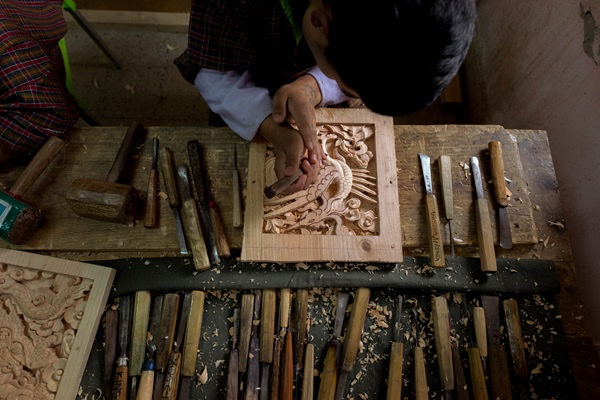
Walk through a dzong in Bhutan and you will see elaborate woodwork around its windows, colourful paintings covering temple walls and carefully sculpted religious figures. Visit a local market and you might find handwoven textiles, bamboo baskets, wooden bowls and traditional handmade paper.
Many of these skills belong to Zorig Chusum, Bhutan's 13 traditional arts and crafts.
These are not simply crafts preserved for display. They remain part of Bhutanese architecture, religion, clothing and everyday life, with generations of artisans continuing to learn and practise traditional techniques.
For travellers, discovering Zorig Chusum offers another way to understand Bhutan. Once you know what to look for, you will begin noticing these crafts almost everywhere you travel.
What Is Zorig Chusum?
Zorig Chusum refers to the 13 traditional arts and crafts of Bhutan. The term broadly translates to the 13 arts or crafts, encompassing skills that have shaped Bhutan's material and artistic heritage for centuries.
While many of these traditions are considerably older, they were formally organised into the system recognised today as Zorig Chusum.
The crafts encompass everything from carpentry and masonry to painting, weaving, metalwork and traditional papermaking.
They are especially visible in Bhutan's dzongs, monasteries, temples, traditional houses, religious objects, textiles and handicrafts.
Today, these skills continue to be taught to younger generations at institutions such as the Institute of Zorig Chusum in Thimphu, helping traditional craftsmanship remain part of contemporary Bhutanese life.
The 13 Traditional Arts and Crafts of Bhutan at a Glance
The precise classification can vary slightly between Bhutanese sources, particularly for some forms of woodworking and metalwork. However, these crafts collectively represent the artistic skills most commonly associated with Zorig Chusum.
1. Shingzo: Carpentry
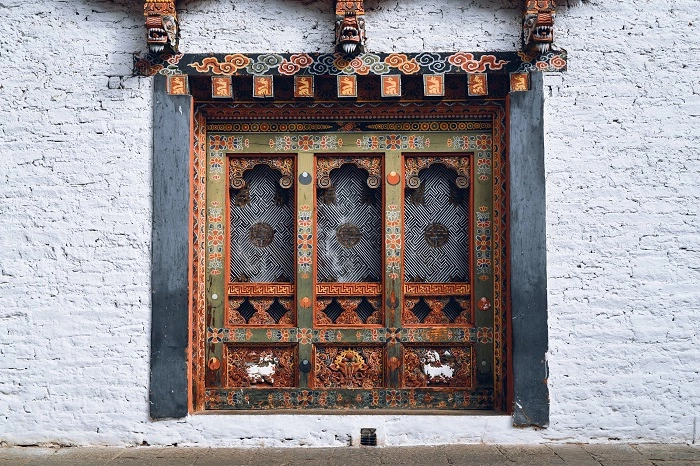
You will encounter Shingzo, the traditional art of carpentry, almost everywhere you travel in Bhutan.
Wood is an essential part of traditional Bhutanese architecture. Look closely at a dzong, monastery or traditional home and you will see timber used extensively in windows, doors, balconies, roofs, columns and decorative architectural elements.
Traditionally, skilled carpenters played an important role in constructing some of Bhutan's most impressive buildings.
One of the fascinating things about traditional Bhutanese architecture is the way different crafts work together. Carpentry provides the structure, while carving and painting transform the wood into the elaborate architectural details you see on dzongs and temples.
Where you can see Shingzo
You do not need to visit a museum to find examples. Look at the windows, balconies and roof structures of Punakha Dzong, Paro Rinpung Dzong, Trongsa Dzong and traditional Bhutanese houses as you travel.
2. Dozo: Masonry
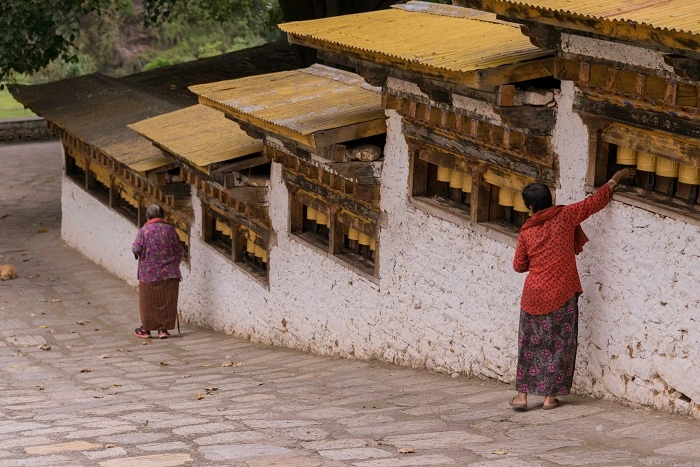
Dozo is the traditional art of working with stone, another essential element of Bhutanese architecture.
Bhutan's mountainous landscape provided generations of builders with abundant stone, which was used to construct houses, monasteries, dzongs, walls, bridges and other structures.
Some of the most impressive examples can be seen in Bhutan's great fortress monasteries. Their massive stone walls are particularly striking when you consider the challenging terrain on which many were built.
Dozo often works hand in hand with Shingzo. Stone provides strength and structure while timber forms roofs, windows, balconies and interior elements.
Where you can see Dozo
Bhutan's dzongs provide some of the most impressive examples. Trongsa Dzong, Punakha Dzong and Paro Rinpung Dzong are excellent places to observe how stonework and timber construction come together.
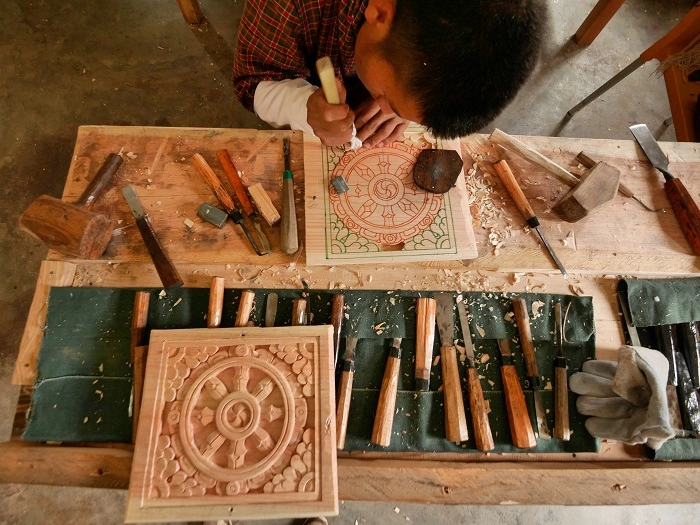
3. Parzo: Carving
Parzo is the traditional art of carving, particularly in wood, stone and slate.
You will frequently see carved details incorporated into Bhutanese architecture, furniture, religious objects and printing blocks.
Traditional woodblocks were particularly important historically because Buddhist texts, prayer flags and religious images could be reproduced from intricately carved blocks.
Stone and slate carving can also be seen on religious objects and inscriptions throughout Bhutan.
What to look for
Pay attention to carved window frames, altar decorations, religious motifs, printing blocks and wooden furniture when visiting monasteries, museums and traditional buildings.
4. Lhazo: Painting
Bhutan is extraordinarily rich in traditional painting.
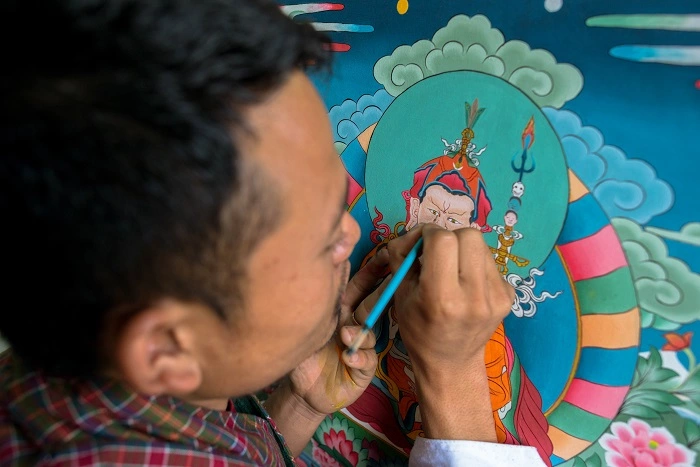
Lhazo encompasses the art of painting, including the elaborate murals and religious imagery found inside monasteries, temples and dzongs.
One of its most recognisable forms is the thangka, a religious painting traditionally created according to established Buddhist iconography.
Painting is not purely decorative. Colours, proportions, figures and symbols can carry religious meaning, particularly in sacred works.
This is why a temple wall in Bhutan can reward a much closer look. What initially appears to be a beautiful mural may contain layers of Buddhist symbolism and stories.
Where you can see Lhazo
You will encounter traditional painting inside many dzongs, lhakhangs and monasteries. The Institute of Zorig Chusum is also one of the best places in Thimphu to observe students learning traditional artistic techniques.
5. Jinzo: Clay Sculpting
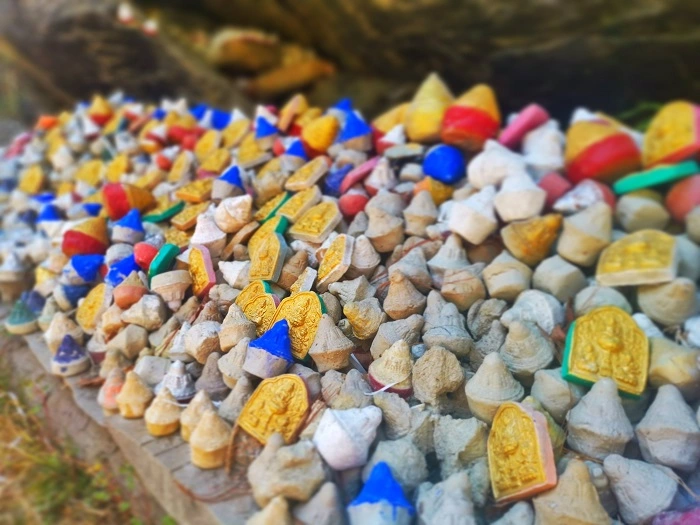
Jinzo is the art of working with clay, particularly for sculpture and decorative religious objects.
Clay has long been used to create representations of Buddhas, deities and other sacred figures found in temples and monasteries.
The craft requires considerably more than simply shaping clay. Religious figures traditionally follow established iconographic proportions and symbolism, meaning artisans must develop both technical ability and an understanding of the artistic conventions behind the figures they create.
What to look for
When visiting Bhutanese temples, take time to observe the statues, sculpted figures and decorative elements surrounding altars and religious spaces.
6. Lugzo: Bronze and Metal Casting
Lugzo is the traditional art of metal casting.
This highly specialised craft has historically been used to produce religious statues, ritual objects, bells and other metal items.
Casting an intricate religious figure requires considerable skill. Traditional techniques allow artisans to reproduce complex forms and fine details in metal.
You will see examples of metal casting in religious spaces throughout Bhutan, although the workshops where these objects are created are less commonly encountered during a standard sightseeing itinerary.
What to look for
Inside temples and monasteries, look closely at metal statues, ritual objects and other decorative religious pieces.
7. Garzo: Blacksmithing
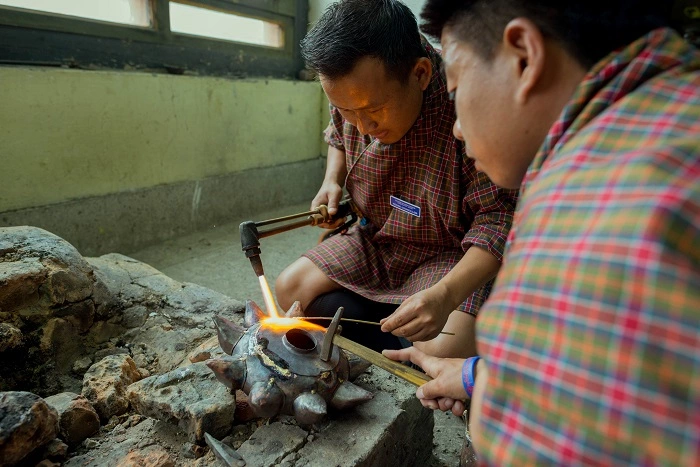
Garzo refers to traditional blacksmithing.
Unlike some of the more decorative arts of Zorig Chusum, blacksmithing historically had a highly practical role.
Blacksmiths produced tools and implements required for agriculture, construction and everyday life. Metalworking skills were also important for producing chains and structural components.
The craft demonstrates an important aspect of Zorig Chusum that can sometimes be overlooked: Bhutan's traditional arts were not created purely for decoration. Many developed because they were essential to daily life.
8. Troezo: Goldsmithing and Silversmithing
Troezo is the traditional craft of working with precious metals, particularly gold and silver.
Skilled artisans create jewellery, ritual objects, decorative pieces and ceremonial items using techniques passed down through generations.
Traditional Bhutanese jewellery can feature elaborate metalwork and may incorporate stones such as turquoise and coral.
The craft remains visible today, particularly in jewellery and religious objects.
What travellers may encounter
Look for traditional earrings, necklaces, brooches, ritual objects and silverware when visiting handicraft shops and markets.
If you are buying an expensive piece, ask about its materials and origin rather than assuming every traditional looking item has been handmade in Bhutan.
9. Tsharzo: Bamboo and Cane Weaving
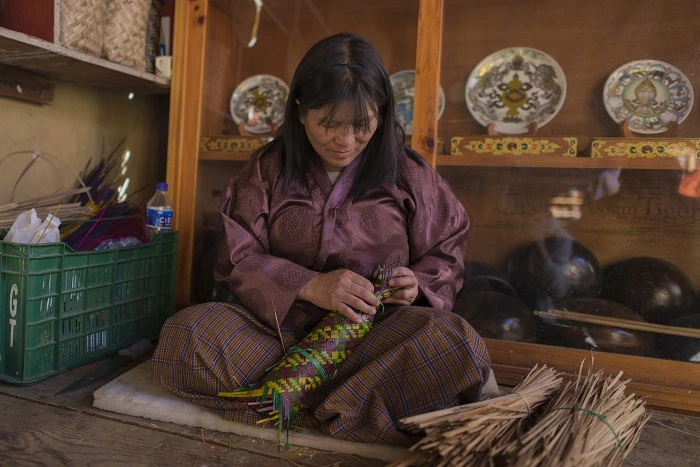
One of Bhutan's most practical and recognisable traditional crafts is Tsharzo, the art of weaving bamboo and cane.
Artisans transform strips of bamboo and cane into baskets, containers, mats and other useful household objects.
One particularly recognisable item is the bangchung, a circular woven bamboo container traditionally used for serving or carrying food.
These objects are beautiful examples of how Bhutanese craftsmanship combines function with design.
What travellers can buy
Smaller bamboo baskets and containers make practical souvenirs because they are distinctly Bhutanese and can still be used at home.
You will find different examples in handicraft shops and markets, particularly in Thimphu.
10. Thagzo: Weaving
For many travellers, Thagzo is one of the easiest Bhutanese crafts to recognise.
Bhutan has an exceptionally rich textile tradition, with weavers producing intricate fabrics from materials including cotton, wool and silk.
These textiles are used to create Bhutan's national dress: the gho for men and kira for women, as well as scarves, jackets, bags, household textiles and ceremonial clothing.
Patterns, colours and weaving techniques can vary significantly, and some textiles require an extraordinary amount of time and skill to produce.
Among the most admired Bhutanese textiles are highly intricate handwoven fabrics associated with eastern Bhutan.
Where you can experience Bhutanese weaving
The Royal Textile Academy and Textile Museum in Thimphu are excellent places to learn more about Bhutan's textile heritage.
You may also encounter weavers at workshops and homes in different parts of Bhutan.
If you are interested in textiles, tell your tour operator or guide before travelling. A weaving workshop or textile focused visit can often be incorporated into a private Bhutan itinerary.
11. Tshemzo: Tailoring, Embroidery and Appliqué
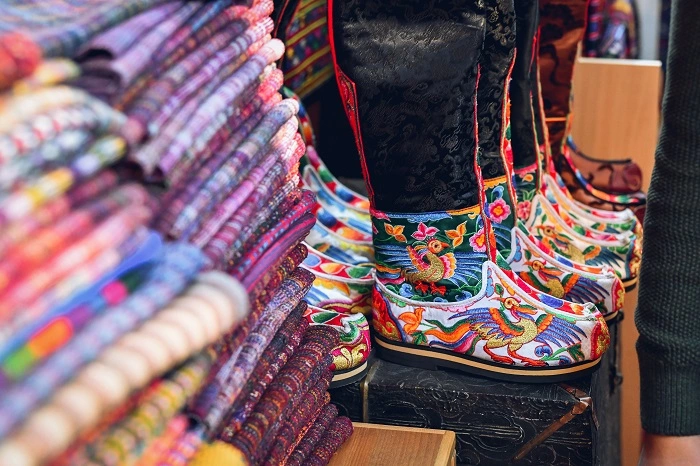
Tshemzo encompasses traditional needlework, including tailoring, embroidery and appliqué.
The craft has both practical and religious applications.
Tailoring is naturally important for producing traditional clothing, while embroidery and appliqué are used for elaborate religious works and ceremonial textiles.
Some of the most spectacular examples are the enormous religious appliqué works known as thongdrels, which may be unfurled during important Bhutanese festivals.
These giant sacred images can cover the side of an entire building and are only displayed on particular occasions.
Where you may see Tshemzo
A tshechu or religious festival can provide one of the most memorable opportunities to see traditional textiles, costumes and, at selected festivals, large thongdrels.
12. Shagzo: Woodturning
Shagzo is the traditional art of woodturning.
Using a lathe, artisans shape pieces of wood into bowls, cups, plates and other household objects.
Traditionally produced wooden vessels can be both practical and beautifully finished. Some are made from distinctive woods and burls that produce naturally attractive grain patterns.
You may see wooden bowls and cups in handicraft shops around Bhutan.
Buying wooden crafts in Bhutan
A handmade Bhutanese wooden bowl can make an excellent souvenir, particularly if you prefer something practical rather than purely decorative.
Ask where the piece was made and what type of wood was used, especially for higher priced items.
13. Dezo: Traditional Papermaking
Dezo is Bhutan's traditional art of papermaking.
Traditional Bhutanese paper is commonly associated with the bark of Daphne plants. Historically, handmade paper had important religious and administrative uses, including the production of manuscripts and sacred texts.
Today, traditional paper is also transformed into notebooks, cards, envelopes, lampshades, gift wrapping and decorative products.
It is one of the easiest traditional Bhutanese crafts to bring home because paper products are generally lightweight and easy to pack.
Where to see traditional papermaking
In Thimphu, you can visit a traditional handmade paper factory and see some of the stages involved in turning plant fibres into finished sheets.
Watching the process makes even a simple sheet of handmade paper much more meaningful.
Where to See Bhutan's Traditional Arts and Crafts
You will encounter Zorig Chusum throughout your journey, but several places offer particularly good opportunities to learn about Bhutanese craftsmanship.
Institute of Zorig Chusum, Thimphu
One of the best places to begin is the Institute of Zorig Chusum, often referred to by travellers as the traditional arts school or painting school.
The institute trains students in Bhutanese arts and crafts, helping pass specialist skills to a new generation.
During a visit, you may be able to observe students learning disciplines such as painting, carving, embroidery and sculpture. What you see depends on the academic schedule and classes taking place during your visit.
It is particularly worthwhile because you are not simply looking at completed museum pieces. You can see young Bhutanese artisans developing the skills required to continue these traditions.
Choki Traditional Art School
Another interesting cultural stop is the Choki Traditional Art School in Thimphu.
Founded in 1999, the private not for profit school provides training in traditional Bhutanese arts and crafts and has helped young Bhutanese develop specialist artistic skills.
For travellers interested in cultural preservation, it provides another perspective on how traditional craftsmanship is being passed on to younger generations.
Royal Textile Academy and Textile Museum
If weaving interests you most, make time for Bhutan's Royal Textile Academy and Textile Museum in Thimphu.
It provides useful context for understanding the complexity of Bhutanese textiles, regional weaving traditions, traditional clothing and the enormous skill involved in creating intricate fabrics.
After visiting, you may find yourself looking at the kira and gho worn around Bhutan very differently.
Bhutanese Craft Shops and Markets
Thimphu has some of the country's widest selections of handicrafts.
The authentic Bhutanese Crafts Bazaar and other craft outlets around the capital are useful places to browse textiles, bamboo products, wooden items, handmade paper and other locally produced goods.
Take your time when shopping. Similar looking products can vary greatly in workmanship, materials and origin.
Can You Buy Traditional Bhutanese Arts and Crafts?
Yes. In fact, purchasing genuine locally made handicrafts can be a meaningful way to support Bhutanese artisans and take home something connected to the places you visited.
Popular choices include:
- Handwoven textiles
- Bamboo baskets and bangchung
- Traditional handmade paper
- Wooden bowls and cups
- Carved wooden items
- Embroidery
- Traditional jewellery
- Small paintings and thangka inspired artwork
Prices can vary considerably depending on the materials, complexity of the work and amount of time required to make the item.
A highly detailed handwoven textile, for example, can take far longer to produce than a simple woven souvenir and its price will reflect that craftsmanship.
If shopping is an important part of your trip, ask your guide to recommend reputable workshops and shops selling locally made products.
You can also read our guide to what to buy in Bhutan for more ideas on Bhutanese souvenirs, local products and gifts to bring home.
Why Zorig Chusum Still Matters in Bhutan Today
The most fascinating thing about Zorig Chusum is that you do not need to search very hard to find it.
Look up at the painted beams of a monastery. Examine the windows of a traditional house. Watch someone wearing a beautifully woven kira. Notice the bamboo container used to serve food or the handmade paper sold in a small shop.
The 13 traditional arts continue to surround everyday life in Bhutan.
Institutions such as the Institute of Zorig Chusum continue to train new generations, while contemporary artisans are finding new applications for traditional techniques.
For travellers, understanding these crafts adds another layer to a Bhutan journey. A carved window is no longer simply decoration. A piece of woven fabric becomes evidence of hours or even months of skilled work. A monastery becomes a place where architecture, painting, sculpture, carving and metalwork come together.
That is what makes Zorig Chusum particularly special. Bhutan's artistic heritage is not confined to museums. It remains part of the country's living culture.
Frequently Asked Questions About Bhutan's 13 Traditional Arts and Crafts
What is Zorig Chusum?
Zorig Chusum is the collective name for Bhutan's 13 traditional arts and crafts. These include carpentry, masonry, carving, painting, clay sculpting, metal casting, blacksmithing, goldsmithing and silversmithing, bamboo and cane weaving, textile weaving, needlework, woodturning and traditional papermaking.
What are the 13 traditional arts and crafts of Bhutan?
The 13 traditional arts are commonly known as Shingzo, Dozo, Parzo, Lhazo, Jinzo, Lugzo, Garzo, Troezo, Tsharzo, Thagzo, Tshemzo, Shagzo and Dezo. Together, they are known as Zorig Chusum.
Where can I see traditional Bhutanese crafts being made?
One of the best places is the Institute of Zorig Chusum in Thimphu, where students learn traditional arts and crafts. You can also visit the Choki Traditional Art School, textile centres, traditional papermaking workshops and selected artisan workshops.
Can tourists visit the Institute of Zorig Chusum?
Visitors can include the Institute of Zorig Chusum in a Thimphu sightseeing itinerary. What you are able to observe will depend on the academic calendar, opening arrangements and classes taking place during your visit.
What traditional handicrafts should I buy in Bhutan?
Popular choices include handwoven textiles, handmade paper, bamboo baskets, wooden bowls, carvings, jewellery and paintings. Look for locally made products and ask about where an item was produced if authenticity is important to you.
Is Bhutan famous for weaving?
Yes. Weaving is one of Bhutan's most celebrated traditional crafts. Handwoven fabrics are used for national dress as well as ceremonial clothing, accessories and household textiles. Different regions of Bhutan have developed distinctive textile traditions, with eastern Bhutan particularly renowned for intricate weaving.
Can I include an arts and crafts experience in my Bhutan tour?
Yes. If traditional craftsmanship interests you, visits to art schools, weaving centres, handicraft workshops and traditional papermaking facilities can be incorporated into many private Bhutan itineraries.
Experience Bhutan's Living Culture
The best way to appreciate Zorig Chusum is not simply to read about it, but to encounter it as you travel.
You might watch young painters practising traditional techniques in Thimphu, meet a weaver working patiently at her loom, see handmade paper being produced or begin recognising the craftsmanship hidden in the windows, walls and temples you pass each day.
A private journey also gives you more flexibility to spend time on the aspects of Bhutanese culture that genuinely interest you.
Explore our Bhutan cultural tours and private Bhutan tour packages, or speak with our Bhutan travel specialists about including traditional arts, artisan workshops and cultural experiences in your itinerary.
Want to Find Out More About Travelling to Bhutan?
Thinking of visiting Bhutan? Let our friendly team of Travel Specialists guide you every step of the way. During peak travel periods — such as festival seasons — flights can get fully booked several months in advance. You can reserve your ticket with us at no cost, giving you peace of mind while you plan the rest of your adventure.
Send Us a Message
Share your plans and one of our Bhutan Travel Specialists will be in touch.
