
Our Awards


Our Reviews




Fifth King of Bhutan: 10 Facts About Jigme Khesar Namgyel Wangchuck

Jigme Khesar Namgyel Wangchuck is the Fifth King of Bhutan and the country's reigning monarch. Affectionately known as the People's King, His Majesty ascended the throne in December 2006 and was formally crowned on 6 November 2008.
As Bhutan's Fifth Druk Gyalpo, or Dragon King, His Majesty has guided the kingdom through its transition to constitutional democracy while championing social welfare, youth development and economic opportunities for future generations.
From his close relationship with ordinary Bhutanese citizens to his ambitious vision for Gelephu Mindfulness City, here are 10 fascinating facts about Bhutan's Fifth King and his role in shaping the country's future.
Quick Facts About Bhutan's Fifth King
| Fact | Details |
| Full name | Jigme Khesar Namgyel Wangchuck |
| Royal title | Fifth Druk Gyalpo (Dragon King) |
| Born | 21 February 1980 |
| Age | 46 (as of October 2026) |
| Reign | December 2006–present |
| Coronation | 6 November 2008 |
| Father | Fourth King Jigme Singye Wangchuck |
| Mother | Queen Mother Ashi Tshering Yangdon Wangchuck |
| Spouse | Her Majesty Queen Jetsun Pema Wangchuck |
| Children | Three |
| Royal dynasty | Wangchuck dynasty |
Table of Contents
Why Is He Known as the People's King?
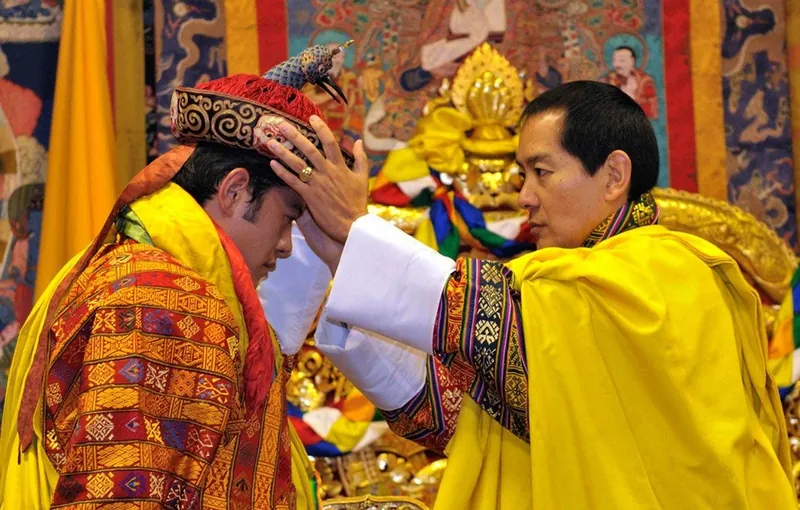
He Became King in 2006 and Was Crowned in 2008
He Helped Guide Bhutan's Transition to Democracy
He Continues Bhutan's Philosophy of Gross National Happiness
He Introduced Important Land Reform Initiatives
He Upholds the Royal Tradition of Kidu
He Established De-suung, Bhutan's Volunteer Service Programme
He Married Her Majesty Queen Jetsun Pema in 2011
He Introduced Gyalsung, Bhutan's National Service Programme
He Announced the Vision for Gelephu Mindfulness City
1. Why Is He Known as the People's King?
His Majesty King Jigme Khesar Namgyel Wangchuck is widely known as the People's King of Bhutan, a title reflecting his close relationship with Bhutanese citizens and his commitment to their well-being.
Unlike monarchs whose public roles are largely ceremonial, His Majesty regularly travels throughout Bhutan, visiting remote villages, meeting families and listening to the concerns of ordinary citizens.
These visits are especially meaningful in Bhutan, where mountainous terrain makes some rural communities difficult to access.
His Majesty is also known for engaging directly with young people, encouraging education and public service, and supporting vulnerable families through Bhutan's longstanding royal welfare tradition.
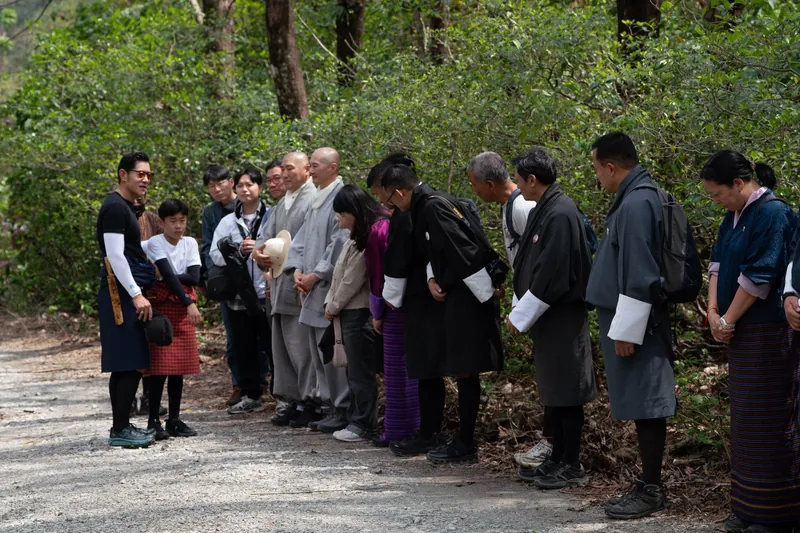
For many Bhutanese citizens, the People's King represents a monarch who places the welfare of his people at the centre of his responsibilities.
2. He Became King in 2006 and Was Crowned in 2008
King Jigme Khesar Namgyel Wangchuck became Bhutan's Fifth King in December 2006, following the abdication of his father, the Fourth King Jigme Singye Wangchuck.
His formal coronation took place on 6 November 2008, a particularly meaningful year as Bhutan celebrated 100 years of hereditary monarchy.
The Wangchuck dynasty was established in 1907 when Ugyen Wangchuck became Bhutan's first hereditary King.
His Majesty's accession marked the beginning of a new chapter in Bhutanese history, coinciding with the country's transition towards constitutional democracy.
The coronation was celebrated across Bhutan, bringing together religious leaders, international dignitaries and citizens from different parts of the kingdom.
The country's royal heritage can still be experienced at important historical landmarks, including Punakha Dzong, which has played a central role in Bhutan's religious and royal ceremonies.
Related reading: The Kings of Bhutan: History of the Wangchuck Dynasty
3. He Helped Guide Bhutan's Transition to Democracy
Bhutan officially became a constitutional democratic monarchy in 2008, during the early years of the Fifth King's reign.
The transition was initiated by the Fourth King, Jigme Singye Wangchuck, who believed that Bhutan's long-term stability should not depend entirely on the leadership of a single monarch.
His Majesty the Fifth King continued this vision, supporting the establishment of parliamentary democracy and the adoption of Bhutan's first written Constitution on 18 July 2008.
Under Bhutan's constitutional system, the country has an elected Parliament and government, while the King remains the head of state and a symbol of national unity.
What makes Bhutan's democratic transition particularly remarkable is that the move towards democracy was initiated by the monarchy itself, rather than arising from a popular uprising against royal rule.
Today, Bhutan continues to balance its constitutional democratic institutions with the longstanding cultural significance of the monarchy.
For a broader understanding of how Bhutan's government and monarchy evolved, explore our guide to the history of Bhutan's kings.
4. He Continues Bhutan's Philosophy of Gross National Happiness
Bhutan is internationally recognised for Gross National Happiness (GNH), a development philosophy that considers people's well-being alongside economic growth.
The philosophy was introduced by the Fourth King, Jigme Singye Wangchuck, and continues to influence national development under the Fifth King.
Rather than measuring progress solely through economic indicators such as Gross Domestic Product (GDP), Gross National Happiness encourages a more balanced approach to development.
The Four Pillars of Gross National Happiness
- Sustainable and equitable socio-economic development: Improving living standards while ensuring development benefits different communities.
- Environmental conservation: Protecting Bhutan's forests, biodiversity and natural environment.
- Preservation and promotion of culture: Safeguarding Bhutanese traditions, language, religion and cultural heritage.
- Good governance: Strengthening public institutions and ensuring responsible governance.
These principles help explain Bhutan's distinctive approach to tourism, environmental protection and cultural preservation.
For travellers, Gross National Happiness is more than a philosophical concept. It provides context for why Bhutan places considerable emphasis on preserving its cultural identity and natural environment as the country modernises.
5. He Introduced Important Land Reform Initiatives
Land ownership has long been an important issue in Bhutan, particularly for rural families whose livelihoods depend on agriculture.
Under His Majesty's reign, efforts have been made to improve land security and address longstanding land ownership challenges.
In March 2009, Bhutan launched the National Cadastral Resurvey, an initiative designed to improve the accuracy of land records and resolve discrepancies in land ownership.
His Majesty has also granted land to eligible citizens through royal land reform and rehabilitation initiatives.
These efforts have been particularly meaningful for households facing land shortages and economic hardship.
By helping families secure land ownership, the initiatives support greater financial stability and strengthen rural livelihoods.
They also reflect His Majesty's broader commitment to ensuring that national development reaches communities beyond Bhutan's major urban centres.
6. He Upholds the Royal Tradition of Kidu
Kidu is a Bhutanese tradition of royal welfare and assistance, through which the King provides support to citizens facing hardship.
Rooted in Bhutan's Buddhist values and the responsibilities of kingship, Kidu represents the monarch's duty to care for the well-being of the people.
The institution has existed across generations of Bhutanese monarchy and continues under the Fifth King.
What Types of Assistance Does Kidu Provide?
Kidu assistance may include:
- Educational support and scholarships for students
- Medical assistance for people facing financial difficulties
- Support for vulnerable families and individuals
- Land-related assistance and rehabilitation
- Emergency relief following disasters or other hardships
The programme is administered through established channels, including district-level Kidu officers.
Kidu is an important example of how Bhutan's monarchy combines traditional responsibilities with contemporary social welfare.
For many Bhutanese citizens, the institution reinforces the personal relationship between the King and the people.
7. He Established De-suung, Bhutan's Volunteer Service Programme
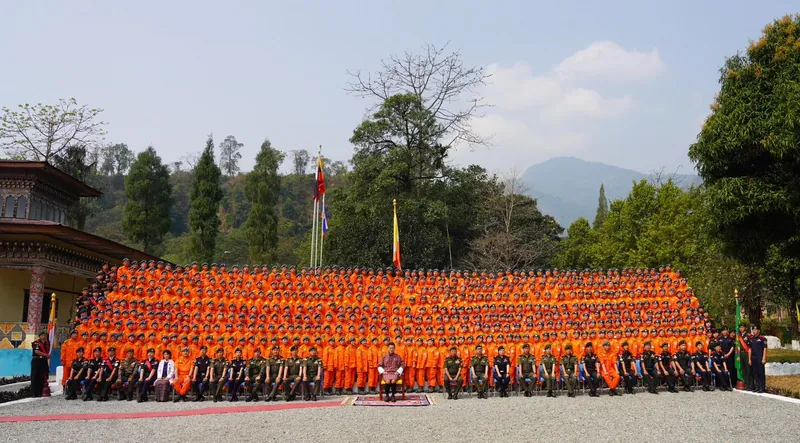
In 2011, His Majesty established De-suung, the Guardians of Peace, to encourage volunteerism, discipline and community service among Bhutanese citizens.
The programme trains volunteers, known as De-suups, to contribute to national development and assist communities during times of need.
De-suups are easily recognised by their distinctive orange uniforms and have become a familiar presence throughout Bhutan.
What Do De-suups Do?
De-suups contribute to a wide range of activities, including:
- Disaster preparedness and emergency response
- Community service and public assistance
- Public health and safety initiatives
- Environmental and development projects
- Support during national emergencies
During the COVID-19 pandemic, De-suups played an important role in supporting Bhutan's public health response.
The programme reflects His Majesty's emphasis on active citizenship and the belief that national development requires contributions from people across society.
8. He Married Her Majesty Queen Jetsun Pema in 2011
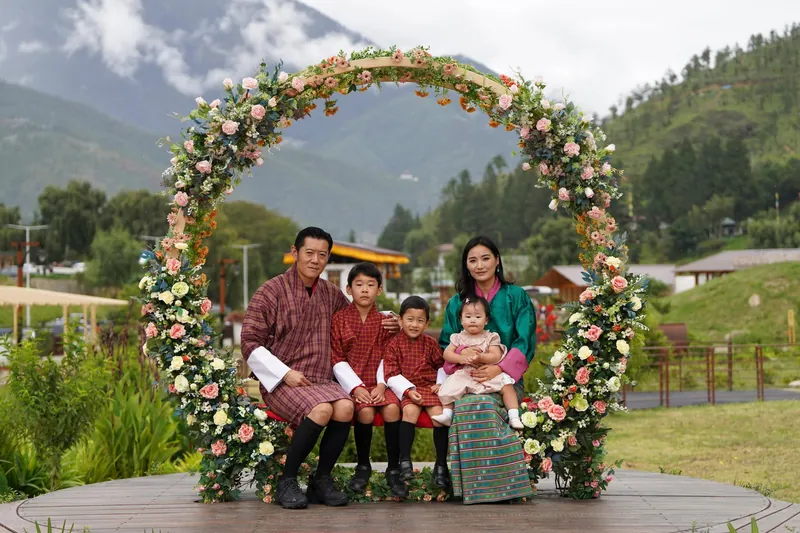
His Majesty King Jigme Khesar Namgyel Wangchuck married Her Majesty Queen Jetsun Pema Wangchuck on 13 October 2011.
The royal wedding took place at Punakha Dzong, one of Bhutan's most historically and spiritually significant landmarks.
The occasion was celebrated throughout the kingdom and attracted international attention.
Their Majesties have three children:
- His Royal Highness Gyalsey Jigme Namgyel Wangchuck, born on 5 February 2016, the Crown Prince of Bhutan.
- His Royal Highness Gyalsey Jigme Ugyen Wangchuck, born on 19 March 2020.
- Her Royal Highness Gyalsem Sonam Yangden Wangchuck, born on 9 September 2023.
The royal family occupies an important place in Bhutanese national life, and royal occasions are celebrated by communities across the country.
Her Majesty The Queen is also closely associated with initiatives supporting environmental conservation, health and social welfare.
9. He Introduced Gyalsung, Bhutan's National Service Programme
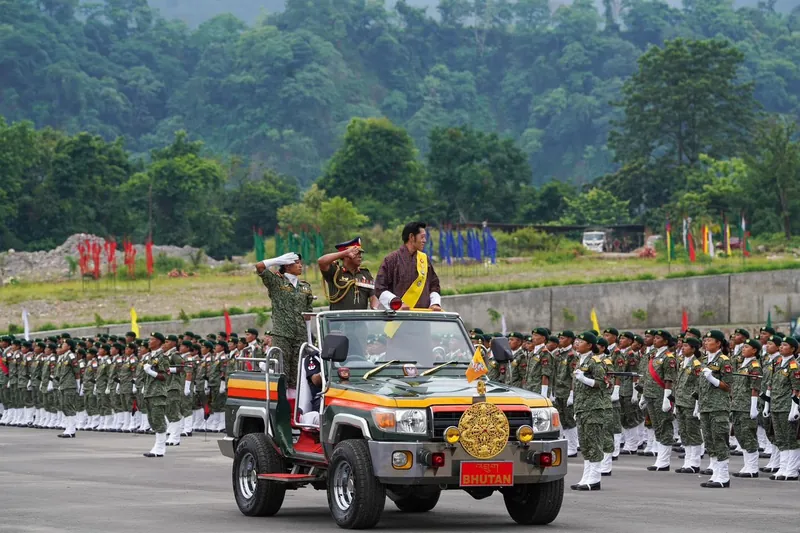
Gyalsung is Bhutan's national service programme, introduced under the leadership of His Majesty the Fifth King to prepare young Bhutanese citizens for their responsibilities towards the nation.
His Majesty announced the initiative during Bhutan's National Day celebrations on 17 December 2019.
The programme aims to develop leadership, discipline, practical skills and a strong sense of national responsibility among Bhutanese youth.
Gyalsung began training its first cohort in September 2024.
What Is the Purpose of Gyalsung?
The programme seeks to:
- Develop leadership and teamwork skills
- Encourage national service and civic responsibility
- Strengthen resilience and discipline
- Provide practical and vocational skills
- Prepare young Bhutanese for future economic and social challenges
Gyalsung has been introduced in phases. The initial cohorts, including the 2026 batch, follow a three-month training arrangement, while the full one-year integrated programme is planned to begin in 2027.
Through Gyalsung, His Majesty aims to prepare Bhutan's younger generation for a rapidly changing world while strengthening national unity.
10. He Announced the Vision for Gelephu Mindfulness City
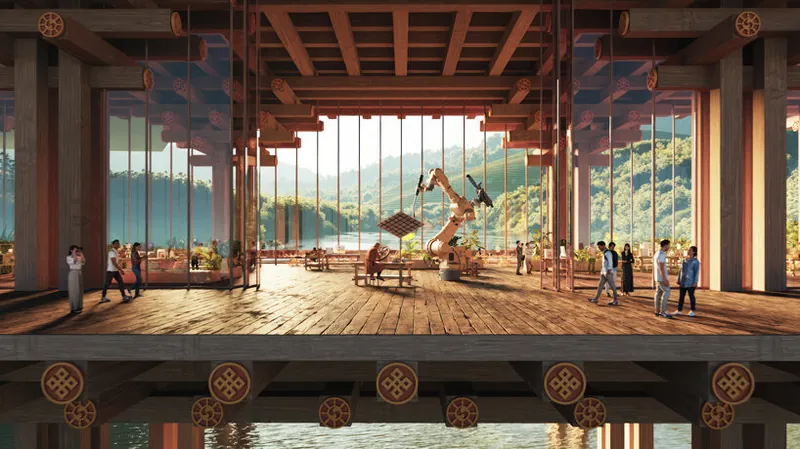
One of the most ambitious initiatives associated with His Majesty's reign is Gelephu Mindfulness City (GMC), a long-term development project in southern Bhutan.
The vision was announced during Bhutan's National Day celebrations on 17 December 2023.
Gelephu Mindfulness City is being developed as a special administrative region intended to create new economic opportunities while remaining aligned with Bhutan's cultural values and development philosophy.
What Is the Vision Behind Gelephu Mindfulness City?
The project aims to establish a centre for:
- Sustainable economic development and international investment
- Innovation and entrepreneurship
- Education, healthcare and skills development
- Environmentally responsible urban planning
- International connectivity and infrastructure
- Economic opportunities for Bhutanese citizens
The project represents an effort to diversify Bhutan's economy, create opportunities for younger generations and strengthen the country's international connections.
Unlike conventional urban development projects focused primarily on economic expansion, Gelephu Mindfulness City seeks to incorporate mindfulness, environmental sustainability and cultural values into its long-term planning.
As the project remains under development, its eventual scale and economic impact will depend on how the vision is implemented over the coming years.
Why Is Bhutan's Fifth King Important?
King Jigme Khesar Namgyel Wangchuck occupies a distinctive position in Bhutan's modern history.
His reign began during the country's transition from an absolute monarchy to a constitutional democracy, a process initiated by his father, the Fourth King.
Since then, His Majesty has supported initiatives focused on social welfare, land security, volunteerism, youth development and long-term economic opportunities.
His leadership reflects a continuing effort to balance Bhutan's cultural identity and traditional values with the demands of a modernising economy.
For Bhutanese citizens, the Fifth King represents continuity, national unity and a commitment to the country's future.
For international visitors, understanding the role of His Majesty provides valuable insight into Bhutan's political institutions, cultural traditions and the importance of the monarchy in everyday life.
Major Initiatives Introduced or Championed by Bhutan's Fifth King
Since ascending the throne in 2006, His Majesty King Jigme Khesar Namgyel Wangchuck has introduced, initiated and championed numerous programmes aimed at strengthening Bhutan's economy, improving people's lives and preparing younger generations for the future.
His Majesty's initiatives span land ownership, social welfare, education, national service, entrepreneurship, infrastructure and economic transformation.
Some of the most significant include:
| Year | Initiative | Purpose and significance |
| 2007 | Druk Holding and Investments (DHI) | Strengthening the management of state-owned investments and national assets |
| 2007 onward | Royal Land Reform | Addressing land ownership disputes and improving land security for Bhutanese households |
| 2007 | Natural Resources Development Corporation reforms | Improving access to essential construction materials such as timber, sand and stone |
| 2008 onward | National Cadastral Resurvey | Surveying land holdings and helping resolve ownership and registration issues |
| 2011 | De-suung Programme | Training volunteers in community service, disaster response and national resilience |
| 2015 | Jigme Singye Wangchuck School of Law | Establishing Bhutan's first law school and strengthening legal education |
| 2019 | Gyalsung National Service | Preparing Bhutanese youth through national service, leadership and skills development |
| 2020 | Druk Gyalpo's Relief Kidu | Supporting people affected economically by the COVID-19 pandemic |
| 2021 | De-suung Skilling Programme | Providing practical and vocational skills to improve employment opportunities |
| 2022 onward | Million Fruit Trees Plantation | Supporting rural livelihoods, agriculture and food security |
| 2023 | Gelephu Mindfulness City | Developing a new economic hub based on sustainability, innovation and Bhutanese values |
| 2024 | Diamond Strategy | Setting out a long-term vision for Bhutan's economic transformation |
| 2025 | Pelsung | Preparing young Bhutanese to participate in major national development initiatives |
| 2025 | Gelephu International Airport development | Improving future international connectivity and supporting Gelephu Mindfulness City |
| 2026 | Project 108 | A royal spiritual initiative to construct 108 Jangchub Chortens in Gelephu Mindfulness City |
The dates refer to the establishment, announcement or major launch of each initiative. Some programmes were developed by national institutions under His Majesty's guidance rather than personally established by the King.
Royal Land Reform and Kidu
Among His Majesty's earliest priorities were land reform and the continuation of Kidu, Bhutan's tradition of royal welfare and assistance.
Through nationwide land surveys, land grants and rehabilitation programmes, the Royal Government and relevant institutions have worked to address longstanding land ownership challenges.
Kidu also provides assistance to citizens facing financial hardship, educational barriers, medical difficulties and other circumstances requiring support.
De-suung and Gyalsung: Building a Generation of National Service
Two of His Majesty's most recognisable initiatives are De-suung and Gyalsung.
Established in 2011, De-suung is a volunteer service programme that promotes discipline, leadership and community responsibility. De-suups have contributed to disaster response, public health initiatives, infrastructure development and environmental projects.
Gyalsung, announced in 2019, is Bhutan's national service programme designed to prepare young citizens with practical skills, leadership training and a sense of responsibility towards their country. Its first training cohort began in September 2024.
Together, these initiatives reflect His Majesty's emphasis on preparing citizens to contribute actively to Bhutan's future.
Education, Skills and Youth Empowerment
His Majesty has also championed educational institutions and programmes designed to strengthen Bhutan's human capital.
In 2015, he established the Jigme Singye Wangchuck School of Law through a Royal Charter, creating Bhutan's first institution dedicated to legal education.
The De-suung Skilling Programme, launched in 2021, provides vocational training in areas such as technology, construction and other practical trades.
In October 2025, His Majesty launched Pelsung, a platform focused on developing the capabilities of young Bhutanese who will help build and support Gelephu Mindfulness City and other national initiatives.
Gelephu Mindfulness City: A Vision for Bhutan's Future
One of His Majesty's most ambitious initiatives is Gelephu Mindfulness City (GMC), announced during Bhutan's National Day celebrations on 17 December 2023.
Envisioned as a Special Administrative Region in southern Bhutan, GMC aims to create new economic opportunities while maintaining Bhutan's commitment to sustainability, cultural identity and Gross National Happiness.
The project is intended to attract investment and develop industries in areas such as technology, finance, education, wellness and green energy.
Major milestones have included the introduction of the Diamond Strategy in 2024 and the launch of construction of Gelephu International Airport in July 2025.
Agriculture, Rural Livelihoods and Environmental Initiatives
His Majesty has also supported programmes aimed at improving agricultural productivity and rural incomes.
The Million Fruit Trees Plantation initiative distributes fruit trees to farming communities across Bhutan, with the aim of creating long-term economic opportunities.
These initiatives complement Bhutan's broader commitments to environmental conservation and sustainable development.
Project 108: Combining Spiritual Heritage with Nation-Building
Project 108 is a royal initiative associated with Gelephu Mindfulness City.
It involves the construction of 108 Jangchub Chortens, reflecting Bhutan's Buddhist traditions and the importance of spiritual values in national development.
The project demonstrates how His Majesty's vision for Bhutan combines modern economic transformation with the preservation of the country's religious and cultural heritage.
A Vision That Connects Bhutan's Past and Future
From land reform and Kidu to Gyalsung and Gelephu Mindfulness City, these initiatives reflect the Fifth King's focus on long-term national development.
They also demonstrate how Bhutan's monarchy continues to evolve, combining traditional responsibilities towards the people with new approaches to economic growth, education and international engagement.
To understand the historical foundations of this approach, read about Bhutan's five kings and the contributions of the Fourth King, Jigme Singye Wangchuck.
Bonus: How Can Tourists Meet the King of Bhutan?
Is it possible to meet the King of Bhutan? Yes, although a personal meeting is never guaranteed. His Majesty King Jigme Khesar Namgyel Wangchuck is known for his close relationship with the Bhutanese people and occasionally attends public festivals, religious celebrations and national events where visitors may have an opportunity to see him.
Unlike a formal royal audience, which requires special arrangements, attending a public festival is one of the more accessible ways for tourists to potentially see His Majesty.
Two particularly notable occasions are the Paro Tshechu and the Royal Highland Festival in Laya.
1. Paro Tshechu – A Chance to See the King During a Sacred Festival
Location: Paro, Bhutan
When: Usually March or April
The Paro Tshechu is one of Bhutan's most celebrated religious festivals, attracting thousands of Bhutanese devotees and international visitors each year.
Held at Rinpung Dzong in Paro, the five-day festival features sacred masked dances, traditional performances and religious ceremonies. Its highlight is the unfurling of the enormous Guru Thongdrel, a sacred Buddhist tapestry displayed at dawn on the final day.
His Majesty has attended Paro Tshechu on several occasions, including the final day of the festival on 2 April 2026, when he offered prayers before the Guru Thongdrel and met people attending the celebration.
For visitors, attending Paro Tshechu offers an opportunity to experience Bhutan's living Buddhist traditions and, should His Majesty attend, potentially witness a royal appearance.

Travel tip
Consider including the final day of Paro Tshechu in your Bhutan itinerary. This is when the sacred Thongdrel is displayed and large crowds gather for blessings. Royal attendance is not guaranteed, so the festival itself should remain the main reason for visiting.
2. Royal Highland Festival – An Opportunity to See the Royal Family in Laya
Location: Laya, Gasa, Bhutan
When: Usually 23–24 October
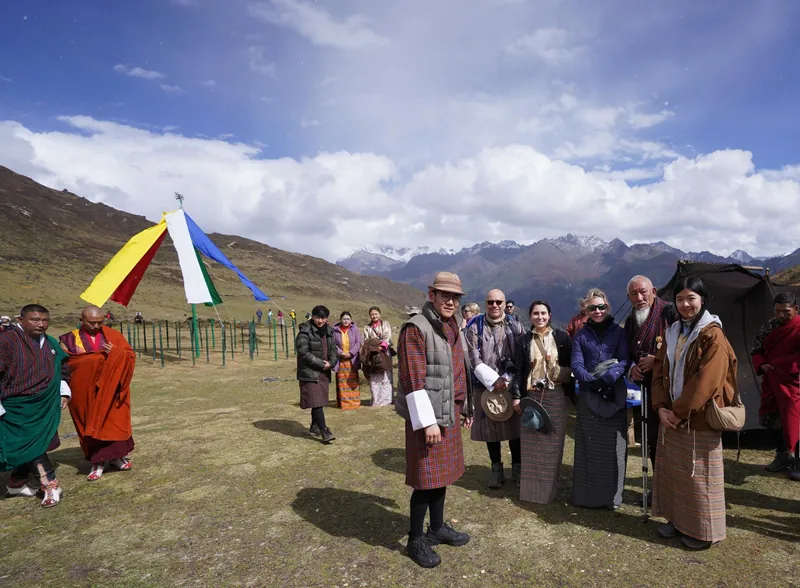
The Royal Highland Festival is an annual celebration held in Laya, a remote Himalayan village in Bhutan's Gasa district, at approximately 3,800 metres above sea level.
Initiated in 2016 under the command of His Majesty, the festival celebrates the traditions, livelihoods and cultural heritage of Bhutan's highland communities.
Visitors can experience yak and horse competitions, traditional dances, local cuisine and the distinctive culture of the Layap people.
His Majesty has attended multiple editions of the festival, often interacting with local communities and festival participants.
In October 2025, the festival was particularly memorable because His Majesty The King, Her Majesty The Queen and their three children attended together.
For adventurous travellers, the Royal Highland Festival offers an unusual opportunity to experience Bhutan's remote highland culture while potentially seeing members of the Royal Family.
Travel tip
Reaching Laya involves travelling through mountainous terrain and trekking at high altitude. Plan your journey well in advance, allow time for acclimatisation and confirm current access arrangements. Royal attendance and personal interactions cannot be guaranteed.
Can You Personally Speak to or Greet the King of Bhutan?
While visitors have occasionally had opportunities to greet His Majesty during public appearances, there is no guaranteed way for tourists to arrange a personal meeting with the King of Bhutan.
If you are fortunate enough to see His Majesty at a festival, follow the instructions of local officials and your guide, respect ceremonial protocols and avoid approaching restricted areas.
Even without a royal encounter, festivals such as Paro Tshechu and the Royal Highland Festival offer an extraordinary opportunity to understand the traditions and cultural values that make Bhutan unique.
Plan Your Bhutan Festival Tour with Druk Asia
If you are interested in attending Paro Tshechu or the Royal Highland Festival, Druk Asia can help you plan a journey around these cultural celebrations.
Our local guides can share insights into festival traditions, royal history and the etiquette expected during important national and religious occasions.
Explore our Bhutan tours or contact our travel specialists to plan your Bhutan festival experience.
Please note: Royal attendance is subject to official schedules and may change without advance notice. Druk Asia cannot guarantee an opportunity to meet or see His Majesty.
Frequently Asked Questions About Bhutan's Fifth King
Who is the current King of Bhutan?
The current King of Bhutan is His Majesty Jigme Khesar Namgyel Wangchuck, the Fifth Druk Gyalpo. He has reigned since December 2006 and was formally crowned on 6 November 2008.
Why is Bhutan's Fifth King called the People's King?
He is known as the People's King because of his close relationship with Bhutanese citizens, frequent visits to rural communities and commitment to social welfare, education and national development.
How old is Bhutan's Fifth King?
King Jigme Khesar Namgyel Wangchuck was born on 21 February 1980.
Who is the wife of Bhutan's Fifth King?
His Majesty is married to Her Majesty Queen Jetsun Pema Wangchuck. Their royal wedding took place on 13 October 2011 at Punakha Dzong.
How many children does the King of Bhutan have?
King Jigme Khesar Namgyel Wangchuck and Queen Jetsun Pema have three children: Crown Prince Jigme Namgyel Wangchuck, Prince Jigme Ugyen Wangchuck and Princess Sonam Yangden Wangchuck.
When was the Fifth King of Bhutan crowned?
His Majesty was formally crowned on 6 November 2008. He had assumed the throne in December 2006 following the abdication of his father.
What are the major achievements of Bhutan's Fifth King?
Important developments during his reign include Bhutan's transition to constitutional democracy, land reform initiatives, the continuation of royal Kidu welfare, the establishment of De-suung, the introduction of Gyalsung National Service and the vision for Gelephu Mindfulness City.
What is the difference between Bhutan's Fourth and Fifth Kings?
The Fourth King, Jigme Singye Wangchuck, introduced Gross National Happiness and initiated Bhutan's democratic transition. The Fifth King, Jigme Khesar Namgyel Wangchuck, succeeded him in 2006 and continued this transition while introducing new initiatives focused on welfare, youth development and economic opportunities.
Can tourists visit places associated with Bhutan's royal family?
Yes. Travellers can visit important historical and cultural landmarks associated with Bhutan's monarchy, including Punakha Dzong, Trongsa Dzong and selected public heritage sites in Thimphu. Royal residences and certain ceremonial areas are generally not open to tourists.
Discover Bhutan's Royal Heritage with Druk Asia
Bhutan's monarchy is closely connected to the country's history, Buddhist traditions and cultural identity. From the historic halls of Punakha Dzong to the ancient fortress of Trongsa, many of Bhutan's most remarkable landmarks tell the story of the kingdom's royal heritage.
Travelling with Druk Asia allows you to explore these destinations with experienced local guides who can explain the history, traditions and significance behind the places you visit.
Explore our Bhutan cultural tours or speak with our travel specialists to plan a personalised journey through the Land of the Thunder Dragon.
Want to Find Out More About Travelling to Bhutan?
Thinking of visiting Bhutan? Let our friendly team of Travel Specialists guide you every step of the way. During peak travel periods — such as festival seasons — flights can get fully booked several months in advance. You can reserve your ticket with us at no cost, giving you peace of mind while you plan the rest of your adventure.
Send Us a Message
Share your plans and one of our Bhutan Travel Specialists will be in touch.

