Travelling to Bhutan already feels like stepping into a calmer, more meaningful world, but choosing to stay in a monastery takes the experience far beyond conventional travel. While luxury hotels offer comfort and beautiful settings, they often sit at a distance from the country’s spiritual core. A monastery stay places you right inside Bhutan’s living Buddhist heritage, offering an authentic, humbling and deeply reflective journey that few travellers ever encounter.
More than simply a place to sleep, spending one or two nights in a monastery allows you to disconnect from modern distractions, reconnect with inner stillness, and live alongside monks whose daily lives are shaped by centuries-old rituals, discipline and devotion.
Here is everything you need to know about staying in a monastery in Bhutan.
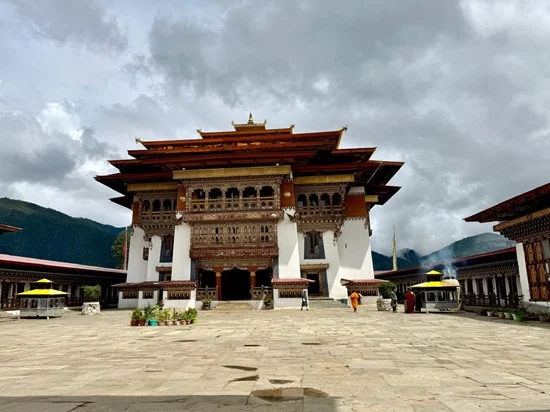
What to Expect from a Monastery Stay in Bhutan
A monastery stay in Bhutan is rooted in simplicity and mindfulness. Understanding this beforehand allows you to fully appreciate its depth and meaning.
First Of All, Can You Stay in a Monastery in Bhutan?
Staying within the main monastic quarters is generally not permitted in Bhutan out of respect for the monks’ way of life. That said, a small number of monasteries have simple guesthouses where visitors may stay for a night or two, offering a rare opportunity to experience the atmosphere of monastic life without intruding on its daily rhythms.
Simple and Basic Accommodation in Bhutan’s Monastery
Monastery guest rooms are clean but basic, often furnished with nothing more than a mattress on the floor and minimal storage. Bathrooms are usually shared, and hot water may be limited or unavailable. This intentional simplicity is not a drawback but an essential part of the experience, gently removing material distractions and encouraging presence, awareness and humility.
The Daily Monastic Rhythm: Dawn to Dusk
Life in a Bhutanese monastery follows a strict and time-honoured schedule. Days typically begin before sunrise, awakened by the deep, resonant sounds of chanting, ritual horns and cymbals echoing across the valley.
Meals are vegetarian, modest and nourishing, often shared in silence or quiet reverence. Throughout the day, you may observe meditation sessions, scriptural study, philosophical debate or lessons that can include Buddhist philosophy or astrology, depending on the monastery. Evenings usually conclude with prayers, completing a full cycle of disciplined, purposeful living.
Deep Spiritual Immersion
This is not a touristic activity but an invitation into sacred space. Guests are granted the privilege of observing rituals up close, sitting quietly during prayers, and in some cases learning directly from a resident lama. The stillness and mindfulness cultivated in this environment create space for powerful introspection that is increasingly rare in the modern world.
Important Logistics and Etiquette
Monasteries are active religious institutions, not hotels, and respect is essential at all times.
Limited Access: Not all monasteries accept guests, and stays require advance permission.
Guest Houses vs Main Grounds: Some monasteries offer separate guest houses with slightly more comfort. Get in touch with your Druk Asia Travel Specialist for more information.
Accommodation Rules: Guests are generally not allowed to stay inside monks’ living quarters or main temple areas. Couples should expect separate rooms when staying within monastery grounds, though shared rooms may be possible in guest houses.
Dietary Simplicity: Food is strictly vegetarian, simple and often repetitive, typically rice and vegetables.
Costs and Fees
Donations and Charges
Some monasteries may host guests without a fixed fee, but it is customary and deeply respectful to offer a donation or honorarium. This supports the monks, their education and the upkeep of ancient religious buildings. Where monasteries operate formal guest houses, fixed room rates apply.
Bhutan’s Sustainable Development Fee (SDF)
Staying in a monastery does not exempt travellers from Bhutan’s Sustainable Development Fee. The SDF is a mandatory daily levy for all international visitors, regardless of accommodation type, whether a luxury hotel, farmstay or monastery. This fee contributes directly to free healthcare, education and national infrastructure for the Bhutanese people.
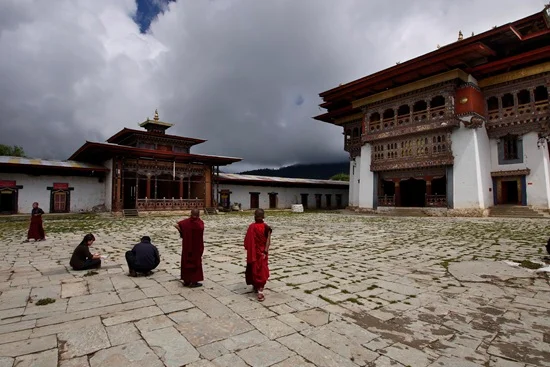
Frequently Asked Questions
How do I arrange a monastery stay in Bhutan?
Monastery stays must be pre-arranged through a licensed Bhutanese tour operator. You cannot simply arrive and request accommodation. Druk Asia specialises in handling these delicate arrangements respectfully and seamlessly.
How long should I stay in a monastery?
One to two nights is ideal, allowing you to experience both morning and evening rituals without the austerity becoming overwhelming.
Can I stay in a Bhutan monastery if I’m not a Buddhist?
Yes. Monastery stays are open to people of all faiths and backgrounds. An open mind and respect for monastic customs are the only requirements.
Can couples stay together?
Generally no, when staying within monastery grounds. Men and women are often housed separately. Shared rooms may be possible if the monastery has a separate guest house.
Is it safe to stay in a monastery in Bhutan?
Can I take photographs inside Bhutan’s monastery?
Photography is strictly prohibited inside prayer halls and during rituals. You may usually photograph architecture and landscapes outside, but always check with your tour guide and ask for permission first.
Is there Wi-Fi or electricity in Bhutan’s monastery?
Electricity is usually available, but Wi-Fi is rare. This is best approached as a digital detox, as using devices openly can disturb the peaceful atmosphere.
What should I wear when I visit or stay in a Bhutan monastery?
Dress modestly at all times. Shoulders and knees must be covered, and hats or sunglasses should be removed within monastery precincts.
Can I join the prayers in a Bhutanese monastery?
Often yes. Guests are welcome to observe quietly and may be invited to sit at the back during chanting sessions, always at the discretion of the presiding monk.
What is the best time of year to stay in Bhutan monastery?
Spring from March to May and autumn from September to November offer the most comfortable conditions. Winters can be extremely cold in mountain monasteries, and the monsoon season from June to August may affect access.
With long-standing relationships and deep local knowledge, Druk Asia is uniquely positioned to secure these rare monastery stays, ensuring they are arranged with sensitivity, respect and genuine insight into Bhutan’s spiritual traditions.