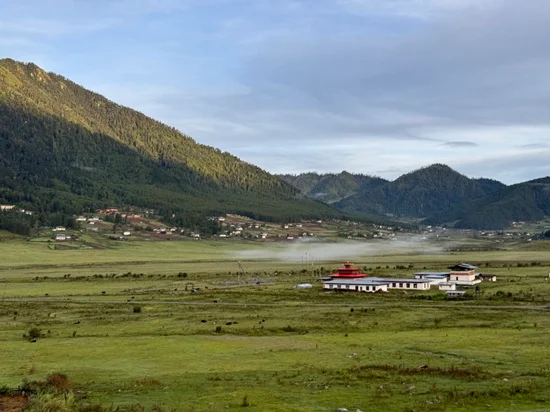
Khewang Lhakhang is a serene and little-known temple located in the tranquil upper reaches of Phobjikha Valley, one of Bhutan’s most beautiful glacial landscapes. While most visitors associate Phobjikha with the iconic Gangtey Monastery and the black-necked cranes, Khewang Lhakhang offers a quieter, more intimate encounter with the valley’s spiritual heritage. It captures the essence of rural Bhutan — humble, peaceful, and deeply connected to centuries-old religious practice.
Historical Background
Built in the traditional style that defines the spiritual architecture of the wider Gangtey-Phobjikha region, Khewang Lhakhang is believed to date back several centuries. Oral accounts from local villagers link its origins to the early spread of Buddhism in the valley and its role as a seat of community worship before Gangtey Monastery rose to prominence.
Though smaller and lesser-known, the temple has long served as a gathering place for local families, acting as a centre for blessings, seasonal rituals, and protective ceremonies for household wellbeing.
Architecture and Interior
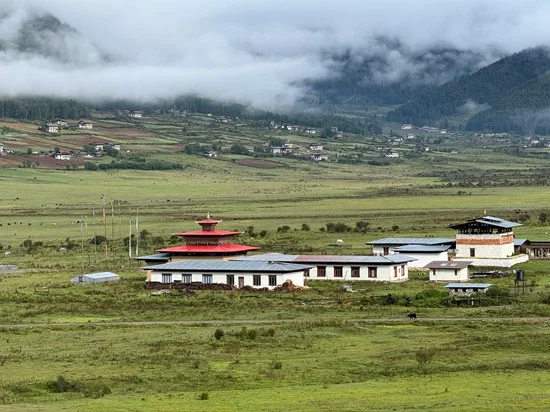
Khewang Lhakhang features the classic timber-and-rammed-earth construction common in the valley. Its architecture embodies simplicity, harmony, and the traditional craftsmanship for which the Phobjikha region is known.
Inside, you’ll find:
A main shrine dedicated to Guru Rinpoche
Butter-lamp altars offering a warm, golden glow
Age-old murals faint from weather and time
Relic statues worshipped by local families for generations
The lhakhang retains a beautifully unpolished authenticity, making it a peaceful stop for travellers who enjoy discovering Bhutan’s lesser-visited sacred spaces.
Spiritual Significance
For the people of upper Phobjikha, Khewang Lhakhang remains a vital place of worship. Daily offerings, community prayers, and protective rituals continue to take place here. The lhakhang also plays an important role during the valley’s agricultural cycle, with villagers seeking blessings for good harvests and favourable weather.
A Glimpse of Rural Life
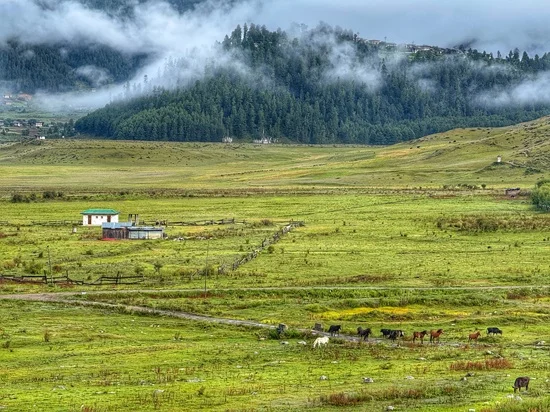
Part of the charm of visiting Khewang Lhakhang is the journey itself. Surrounded by meadows, traditional farmhouses, and pine-lined slopes, the area invites you to slow down and soak in the gentle rhythm of the valley.
Expect scenes such as:
Farmers tending to potato fields
Elderly villagers circumambulating the temple
Children running along the footpaths
Black-necked cranes grazing in winter (nearby areas of the valley)
Experiences Around Khewang Lhakhang
When you visit, combine it with a few nearby experiences:
Scenic village walks around upper Phobjikha
Photography of the valley’s sweeping landscapes and rustic homes
A visit to Gangtey Monastery, the central spiritual seat of the region
Black-necked Crane Centre (seasonal viewing from late October to February)
Nature trails leading to panoramic viewpoints
How to Get There
Khewang Lhakhang is located in Phobjikha Valley, Wangdue Phodrang District, a short detour from the main valley road. From Gangtey Monastery, it’s an easy drive or a relaxed walk through farmland and village settlements.
Best Time to Visit
Phobjikha is stunning throughout the year, but these seasons offer the best experience:
Autumn (September–November): crystal-clear skies and crane season begins
Spring (March–May): rhododendrons in bloom and mild temperatures
Winter (late October–February): black-necked cranes arrive
Why Visit Khewang Lhakhang
If you enjoy discovering quiet places rich with history and lived spirituality, Khewang Lhakhang is a perfect addition to your Phobjikha itinerary. It offers:
A peaceful alternative to popular landmarks
An authentic look at local village life
A gentle, reflective experience away from crowds
A chance to appreciate Bhutan’s spiritual simplicity