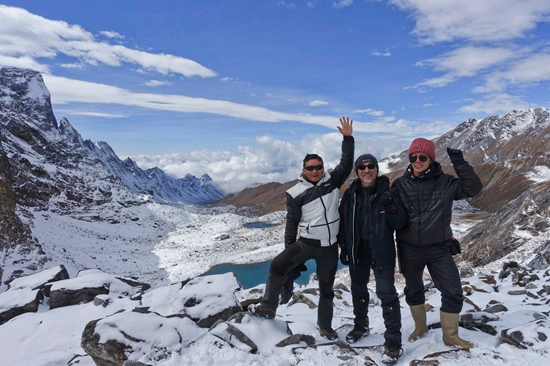
If there’s one thing Bhutan does better than almost anywhere else, it’s combining breathtaking nature with spiritual serenity. Trekking in Bhutan is about connecting with the kingdom’s soul. From alpine lakes shimmering under Himalayan skies to centuries-old trails used by yak herders and monks, Bhutan’s landscapes invite you to slow down, breathe deeply, and listen to the mountains.
Below are the five most popular treks in Bhutan that showcase the very best of the Land of the Thunder Dragon.
1. Druk Path Trek
Rank: #1 (Most Popular)
Difficulty: Moderate
Duration: 5–6 days
Distance: 40–55 km (depending on route)
Highest Point:~4,210 m (Labre La)
Route: Paro to Thimphu (Jeledzong or Gunitsawa start point)
Accommodation: Fully supported camping with pack animals
Best Seasons: Late March–May, Late September–November
Overview:
The Druk Path Trek is Bhutan’s most classic route—perfect for first-time trekkers. Linking Paro and Thimphu through mountain ridges, pine forests, and turquoise lakes, it delivers a perfect snapshot of the kingdom’s pristine wilderness. Each campsite feels like a postcard, with distant peaks glistening above the clouds and the haunting silence of the high Himalayas keeping you company.
Highlights:
Connects Paro and Thimphu through rhododendron forests, yak pastures, and alpine lakes.
Offers stunning views of Mount Gangkar Puensum, Bhutan’s tallest and the world’s highest unclimbed mountain.
Ideal for first-time trekkers who want a classic Himalayan experience without extreme altitude.
Good to Know: Expect steady climbs, cold nights above 3,800 m, and rewarding views after each pass.
Check out the full Druk Path Trek itinerary.
2. Jomolhari Trek
Rank: #2 (Very Popular)
Difficulty: Moderate to Hard
Duration: 7–9 days
Distance: 80–120 km (depending on variant)
Highest Point: ~4,890 m (Bonte La Pass)
Route: Sharna Zampa (Paro) to Jangothang, with optional loops
Accommodation: Camping throughout
Best Seasons: Late April–June, Late September–October
Overview:
Jomolhari Trek is arguably the most beautiful trek in Bhutan. The Jomolhari route takes you to the base of the revered Mount Jomolhari (7,326 m), worshipped as the abode of the mountain goddess Jomo. The journey winds through pristine valleys, thick forests, and open highlands dotted with yak herder camps. By the time you reach Jangothang Base Camp, the mighty Jomolhari towers before you—majestic and humbling.
Highlights:
Leads to the base of Mount Jomolhari (7,326 m), considered sacred by locals.
Features alpine meadows, yak herder camps, and wildlife such as blue sheep.
A favourite among trekkers for its high-altitude beauty and cultural encounters.
Good to Know: High passes and altitude require proper acclimatisation. The scenery, however, is among the most spectacular in Bhutan.
Check out the full Jomolhari Trek itinerary.
3. Bumdra Overnight Trek
Rank: #3 (Popular Short Trek)
Difficulty: Easy to Moderate
Duration: 2 days / 1 night
Distance: 15–20 km round trip
Highest Point: ~3,800–4,000 m
Route: Starts at Sang Choekhor (Paro), ends via Taktsang viewpoint
Accommodation: Tented camp at Bumdra
Best Seasons: March–May, September–November
Overview:
For travellers short on time, the Bumdra Trek offers a taste of Himalayan adventure without the lengthy commitment. Starting from Sang Choekhor near Paro, the trail climbs steadily to the Bumdra campsite perched high above the valley. At night, you’ll fall asleep under a blanket of stars, with fluttering prayer flags whispering in the wind. The next day, you descend past ancient cliffside hermitages and viewpoints overlooking Tiger’s Nest—making it one of the most rewarding short treks in Bhutan.
Highlights:
Scenic ridge walk leading to a peaceful campsite overlooking Paro Valley.
Descent via cliffside monasteries and hermitages, with views of Tiger’s Nest.
Ideal for travellers short on time who want a “Himalayan camping” experience.
Good to Know: Day one involves a long ascent; day two is a steep descent—trekking poles recommended.
Check out the full Bumdra Trek itinerary.
4. Dagala Thousand Lakes Trek
Rank: #4 (Cult Favourite)
Difficulty: Moderate
Duration: 5–6 days
Distance: 40–55 km
Highest Point: ~4,520 m
Route: Usually starts near Genekha (south of Thimphu)
Accommodation: Camping with pack animals
Best Seasons: Late April–June, Late September–October
Overview:
If you crave solitude, this is the trek for you. The Dagala Thousand Lakes trail remains one of Bhutan’s least crowded yet most photogenic routes. The journey meanders past dozens of glacial lakes, alpine meadows carpeted with wildflowers, and yak herder settlements that seem untouched by time. On clear days, you can spot peaks as far as Kanchenjunga in Nepal.
Highlights:
A pristine trail dotted with glacial lakes and wildflowers.
Offers sweeping views of the Bhutan–Tibet Himalayan range.
Less crowded than the Druk Path, perfect for solitude seekers.
Good to Know: Expect chilly nights and high-altitude ridges. Spring blooms and autumn skies are particularly stunning.
Check out the full Dagala Thousand Lakes Trek itinerary.
Rank: #5 (Most Loved Day Hike)
Difficulty: Easy
Duration: Half-day to full-day
Distance: 4–8 km
Highest Point: ~3,050 m
Route: Begins near Gangtey Monastery, follows Phobjikha Valley rim
Accommodation: Lodges and guesthouses in Phobjikha
Best Seasons: Year-round (best Oct–Nov)
Overview:
Set in the heart of Phobjikha Valley, the Gangtey Nature Trail is one of Bhutan’s most beloved walks. It’s a gentle meander through pine forests, local villages, and open valley plains where black-necked cranes gather each winter. Perfect for families, photographers, or anyone looking for a peaceful day outdoors, this trail combines Bhutan’s natural beauty with its quiet spirituality.
Highlights:
Gentle walk through pine forests, villages, and farmland.
In winter (Oct–Feb), spot endangered black-necked cranes
Suitable for all ages—great for families and photographers.
Good to Know: This trek is often paired with cultural sightseeing in Gangtey and Wangdue.
Essential Trekking Tips and Notes for Bhutan
All treks require a licensed Bhutanese guide and trekking permits.
Most multi-day routes include a support team (guide, cook, pack animals).
Nights above 3,800 m can drop below freezing—bring a sleeping bag rated to at least -10°C.
Spring (Mar–May) offers rhododendron blooms, while autumn (Sep–Nov) gives the clearest mountain views.
Allow at least one day in Paro or Thimphu to acclimatise before ascending above 3,500 m.
Ensure your travel insurance covers trekking at altitude.
1. Do I need a guide to go trekking in Bhutan?
Yes, all treks in Bhutan must be arranged through a licensed Bhutanese tour operator, and you’ll be accompanied by a certified guide. This is not only for safety and environmental protection, but also to ensure that local communities benefit directly from tourism. Your trekking team typically includes a guide, cook, and horsemen or porters who transport your gear and supplies.
2. When is the best time of year to trek in Bhutan?
The two main trekking seasons are spring (March to May) and autumn (late September to November). Spring brings blooming rhododendrons and milder temperatures, while autumn offers the clearest skies and the best mountain views. Winter treks are possible at lower altitudes, such as in Bumthang or Gangtey, but expect chilly nights.
3. Do I need to be very fit to trek in Bhutan?
Most treks require moderate fitness, but none demand mountaineering experience. The terrain can be steep and the altitude significant, so you’ll enjoy the journey much more if you do some preparation—regular walking, light jogging, or stair climbing helps. Treks like Druk Path and Bumdra are ideal for beginners, while Jomolhari or Snowman treks suit seasoned hikers.
4. What is the accommodation like on the trek?
Multi-day treks are fully supported camping experiences. You’ll sleep in spacious tents with thick mattresses, dine in a separate mess tent, and have a kitchen tent where your cook prepares hot meals using fresh ingredients. Warm tea, soups, and even popcorn or hot water bottles are common comforts! In Gangtey and Bumthang, short day hikes can end at charming local lodges.
5. How cold does it get on the trek?
It depends on altitude and season. At 3,000–4,500 metres, daytime temperatures are usually between 10–18°C in spring and autumn, but nights can drop below freezing. You’ll need layered clothing and a sleeping bag rated to at least –10°C
6. Is altitude sickness a concern in Bhutan?
It can be, especially on routes that climb above 3,500 metres. The key is to ascend gradually, drink plenty of fluids, and allow your body to adjust. Treks like the Druk Path or Dagala Thousand Lakes have built-in acclimatisation days. Your guide is trained to spot early signs of altitude sickness and will adjust the pace if necessary.
7. What kind of food is served during treks?
Expect a delightful mix of Bhutanese and Western-style meals. Breakfasts often include porridge, eggs, toast, and tea or coffee. Lunch and dinner feature rice, vegetables, meat dishes, soups, and sometimes pasta. Meals are cooked fresh at camp, and dietary preferences can usually be accommodated with advance notice.
8. Are there toilets and showers along the trek?
There are no fixed facilities on most treks, but your team sets up a private toilet tent and provides warm water for washing. In some areas near villages or campsites used by multiple groups, simple pit toilets may exist. While basic, the crew ensures everything is clean and eco-friendly.
9. Do I need travel insurance for trekking in Bhutan?
Yes, comprehensive travel insurance that covers high-altitude trekking and medical evacuation is mandatory. Bhutan is remote and rescue logistics can be challenging, so proper coverage is essential. Your tour operator may ask for proof of insurance before confirming your trek.
10. What are the most popular treks in Bhutan?
The Druk Path Trek (5–6 days) and Jomolhari Trek (7–9 days) are the most popular among international travellers. For something shorter, the Bumdra Overnight Trek is ideal. Those seeking solitude and alpine lakes love the Dagala Thousand Lakes Trek, while the Gangtey Nature Trail offers a beautiful, easy walk through the valley of cranes.
11. Can I combine trekking with cultural sightseeing?
Absolutely. Most itineraries include time in Paro, Thimphu, or Punakha before or after the trek, allowing you to visit monasteries, markets, and dzongs. Combining a trek with a festival or a homestay is a wonderful way to experience both Bhutan’s landscapes and its living traditions.
12. How do I choose the right trek for me?
It depends on your interests, fitness, and how much time you have.
Short (1–3 days): Bumdra Overnight, Gangtey Nature Trail
Medium (4–6 days): Druk Path, Dagala Thousand Lakes
Long (7+ days): Jomolhari, Laya–Gasa, Snowman
If it’s your first trek in Bhutan, start with the Druk Path—it’s scenic, well-paced, and offers a perfect introduction to high-altitude trekking.