Yoga in Bhutan isn’t a trend. It’s an experience that feels completely natural. Surrounded by pine forests, ancient monasteries and Himalayan peaks, your practice becomes something deeper than movement — it becomes connection. If you’re looking for a yoga retreat that goes beyond studio walls and into sacred valleys, Bhutan may be exactly what your soul is craving.
Why Bhutan Is Perfect for Yoga
Bhutan’s rhythm is slow, intentional and deeply spiritual. The culture already embraces mindfulness through daily rituals — spinning prayer wheels, lighting butter lamps, walking meditative circuits around monasteries.
Add yoga to this environment and it simply flows.
You’ll find:
Silence that supports deep meditation
Fresh mountain air that sharpens breathwork
Natural landscapes that encourage grounding
A culture that respects stillness and reflection
Yoga here feels unforced. It feels right.
Can I Engage a Yoga Instructor in Bhutan?
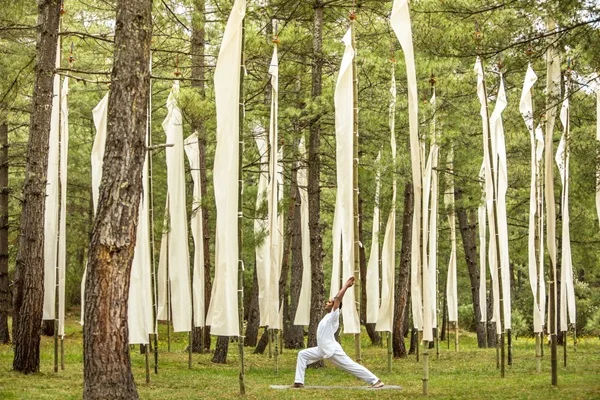
Yes, you can absolutely engage a yoga instructor in Bhutan.
Private or guided yoga sessions can be arranged as part of your journey, whether you prefer a peaceful morning practice overlooking the Himalayas or a more immersive wellness experience during your stay. These sessions are typically conducted by experienced local instructors and can be tailored to your pace and preferences.
As this is a specialised add-on, it comes at an additional cost. It’s best to inform your travel specialist in advance so arrangements can be made seamlessly as part of your itinerary.
Where are the Yoga Sessions Conducted in Bhutan?
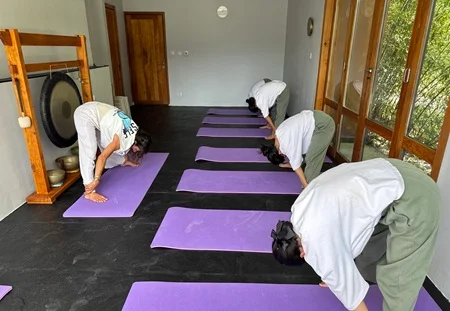
For a more coordinated session, yoga can be held in a dedicated studio in Thimphu, offering a structured and comfortable setting.
Alternatively, sessions can be arranged near peaceful landmarks such as the Memorial Chorten or Buddha Point (Kuensel Phodrang), where the surroundings add a deeper sense of calm and perspective to your practice.
Some 5-star hotels in Bhutan also offer in-house yoga sessions, often set in beautifully designed wellness spaces or open areas overlooking the mountains and valleys.
Best Places to Practise Yoga in Bhutan
Paro is where most journeys begin. It’s ideal for grounding practices and gentle flows. You can combine morning yoga with meaningful hikes, including the iconic climb to:
Tiger’s Nest Monastery
The hike itself becomes a moving meditation.
Thimphu blends tradition with comfort. Here you can enjoy structured yoga sessions alongside cultural exploration, monastery visits and quiet café moments. It’s ideal if you want a balance of practice and accessibility.
Punakha offers warmer weather and expansive valley views. Heart-opening practices feel especially powerful here, with rivers flowing gently through the valley.
Bumthang is often considered Bhutan’s spiritual heartland. Ancient temples and forest trails make it ideal for meditation-heavy retreats and deeper introspection.
Phobjikha Valley is pure nature therapy. Wide open landscapes and minimal distractions create space for silence, journalling and slower restorative sessions.
Best Time to Do Yoga in Bhutan
Spring (March–May): Comfortable temperatures, blooming landscapes and ideal hiking conditions.
Autumn (September–November): Clear skies and crisp air — perfect for outdoor meditation.
Winter (December–February): Quiet, reflective and excellent for cosy indoor retreats.
Summer (June–August): Lush and green, though with heavier rainfall — best for flexible schedules.
What a Yoga Retreat in Bhutan Typically Includes
Daily yoga sessions (morning flow + evening restorative)
Guided meditation and breathwork
Sacred monastery visits
Mindful hikes
Cultural rituals such as butter lamp offerings
Optional traditional hot stone baths
The pacing is usually intentional — less rushing, more integration.
Cultural Etiquette for Yogis in Bhutan
Bhutan is deeply spiritual, so respectful behaviour matters.
Dress modestly when visiting temples (covered shoulders and knees).
Remove shoes where required.
Ask before photographing people or sacred interiors.
Keep your voice low in monasteries.
Even if you’re there for yoga, you’re stepping into living places of worship.
What to Pack
Layered clothing (mornings can be cold)
Comfortable yoga wear
Travel mat or yoga towel (optional but recommended)
Moisturiser and lip balm (the mountain air is dry)
Proper hiking shoes
Reusable water bottle (if you’re travelling with Druk Asia, you’d be provided with one)
Altitude and sun exposure can surprise you, so pace yourself.
Frequently Asked Questions
Is Bhutan suitable for beginner yogis?
Yes. Choose retreats that cater to mixed levels and start gently due to altitude.
Can I organize my own yoga retreat in Bhutan?
Can I travel solo for a yoga retreat?
Absolutely. Bhutan is considered one of the safest countries in the world.
Do I need to be spiritual?
Not at all. Come curious and respectful — that’s enough.
Yoga in Bhutan isn’t just about flexibility. It’s about perspective. When you practise surrounded by mountains, monasteries and mindful living, something shifts. You breathe differently. You move differently. You return home differently.