 Druk Asia
Our Awards

Our Reviews




Languages of Bhutan: Dzongkha, Regional Languages and What Travellers Should Know

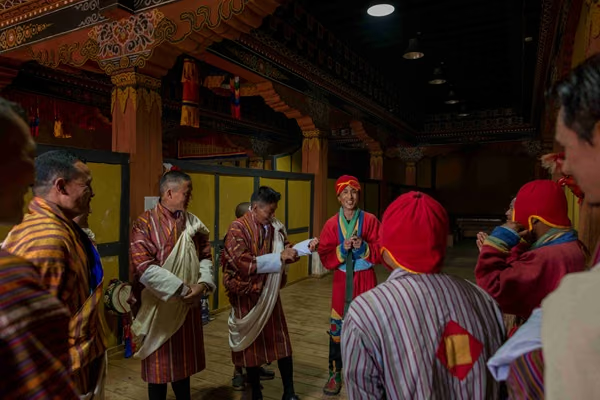
Bhutan may be a small Himalayan country, but it is remarkably diverse when it comes to language.
The national language of Bhutan is Dzongkha, but it is far from the only language you will hear during your journey.
Different valleys and regions have developed their own languages and dialects over generations, shaped in part by Bhutan's mountainous geography and historically separated communities.
As you travel from Paro and Thimphu towards central or eastern Bhutan, you may hear languages that sound completely different from Dzongkha.
For travellers, the good news is simple: English is widely used in tourism, so you do not need to learn Dzongkha before visiting Bhutan.
Still, knowing a few words can make interactions more personal.
Here is what you should know about the languages spoken in Bhutan.
Table of Contents
What Is the Official Language of Bhutan?
What Does Written Dzongkha Look Like?
What Other Languages Are Spoken in Bhutan?
Lhotshamkha in Southern Bhutan
Languages of Remote Communities
What Is the Official Language of Bhutan?
Dzongkha is the national language of Bhutan.
It is used in government, public communication, education and national institutions, and plays an important role in Bhutanese identity.
The Dzongkha Development Commission is responsible for developing and standardising the language, including dictionaries, grammar references and new terminology.
Dzongkha is especially associated with western Bhutan, including areas such as Thimphu, Paro, Punakha and Haa.
However, many Bhutanese people grow up speaking another regional language at home and learn Dzongkha and English through school and daily life.
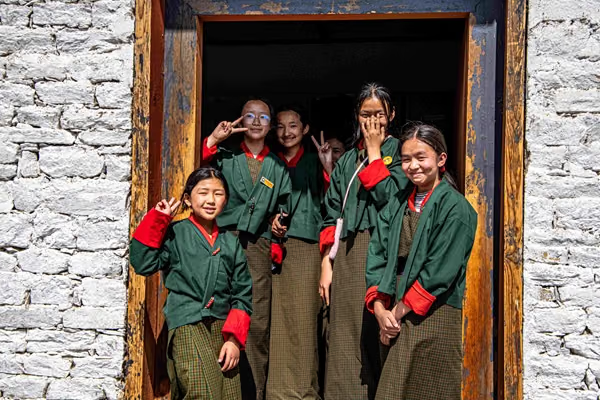
What Does Dzongkha Mean?
The name Dzongkha comes from two words:
Dzong means fortress.
Kha means language.
Dzongkha can therefore be understood as the “language of the dzongs” or fortresses.
This reflects its historical association with the great fortress monasteries that played important administrative and religious roles across Bhutan.
If you visit places such as Punakha Dzong, Paro Dzong or Tashichho Dzong in Thimphu, the name starts to make a little more sense.
Where Is Dzongkha Spoken?
Dzongkha is strongly associated with western Bhutan.
You will commonly hear it in places such as:
It is also used nationally and understood well beyond these regions.
For many Bhutanese, Dzongkha is one of several languages they use depending on where they are, who they are speaking with and the context.
This multilingual environment is one of the most interesting things about travelling through Bhutan.
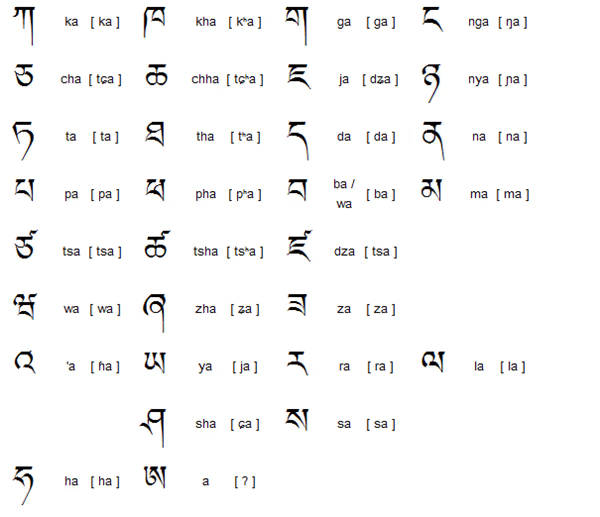
What Does Written Dzongkha Look Like?
Dzongkha is written using the Tibetan script tradition and is read from left to right.
Visitors will see the script on road signs, official buildings, temples, books and public notices throughout Bhutan.
Written Dzongkha can look quite different from the Romanised spellings travellers see in phrasebooks.
This is one reason you may come across slightly different English spellings for the same Bhutanese word or place.
For example, the greeting Kuzuzangpo la may appear with slightly different spacing or transliteration depending on the source.
The Dzongkha Development Commission continues to work on standardisation, dictionaries and language references.
Is English Spoken in Bhutan?
Yes.
English is widely spoken in Bhutan, particularly within tourism, education, government and urban areas.
Travellers will generally find communication straightforward in hotels, restaurants, airports and major attractions.
Your guide will also speak English, so language is unlikely to become a major barrier during an organised Bhutan journey.
English and Dzongkha are both important within Bhutan's education system, and bilingual ability is common among younger Bhutanese and professionals.
You may notice especially fluent English in Thimphu and Paro, but even in more rural areas your guide can help bridge any language differences.
What Other Languages Are Spoken in Bhutan?
Bhutan has many indigenous languages and regional varieties.
There is no single “Bhutanese language” spoken by everyone at home.
Instead, language often reflects geography and community.
Some of the most important language groups include:
Dzongkha in western Bhutan
Tshangla in eastern Bhutan
Lhotshamkha in southern Bhutan
Bumthangkha and related languages in central Bhutan
Smaller community languages in remote mountain valleys
This diversity means a Bhutanese person may speak three or more languages comfortably.
For example, someone may speak a regional language with family, Dzongkha in a national context and English at work.
Tshangla in Eastern Bhutan
One of the most widely spoken languages outside Dzongkha is Tshangla, also commonly called Sharchopkha.
It is strongly associated with eastern Bhutan and communities in areas such as Trashigang, Mongar, Pemagatshel and Samdrup Jongkhar.
If you travel into eastern Bhutan, you are much more likely to hear Tshangla in everyday conversation.
The Dzongkha Development Commission has even produced Tshangla, Dzongkha and English lexicons, reflecting the importance of the language within Bhutan's multilingual landscape.
Lhotshamkha in Southern Bhutan
In southern Bhutan, Lhotshamkha, which is closely related to Nepali, is widely spoken among southern Bhutanese communities.
Its presence reflects Bhutan's cultural and linguistic connections with the Himalayan region and the populations living along the country's southern belt.
Travellers passing through southern Bhutan may therefore hear a very different linguistic environment from what they encounter in Paro or Thimphu.
Languages of Central Bhutan
Central Bhutan contains several important regional languages.
One of the best known is Bumthangkha, spoken in the Bumthang region.
Other related languages and varieties are spoken across central Bhutan, including areas around Trongsa, Zhemgang and Lhuentse.
The Dzongkha Development Commission has produced a Bumthangkha, Dzongkha and English lexicon, which gives a good indication of the continuing importance of regional languages alongside Dzongkha.
If your itinerary includes Bumthang, you may notice that the language spoken casually between local people differs considerably from what you hear in western Bhutan.
Languages of Remote Communities
Bhutan's mountains have helped preserve languages spoken by relatively small communities.
Examples include languages associated with communities in places such as:
Laya
Merak and Sakteng
Parts of central Bhutan
Remote eastern valleys
Areas around the Black Mountains
Some are spoken by only a small population and are closely tied to local identity.
For travellers, this is another reminder that Bhutan is much more culturally diverse than its size suggests.
A journey into remote valleys often introduces you not only to different landscapes and clothing traditions but also to entirely different languages.
Why Does Bhutan Have So Many Languages?
Bhutan's geography explains a lot.
For centuries, high mountains, deep valleys and difficult passes separated communities from one another.
Villages that may appear relatively close on a modern map could historically have had limited contact.
Over time, communities developed their own ways of speaking, preserving distinctive languages and dialects.
This linguistic diversity survives today even though roads, schools, television and digital communication have made travel and communication much easier.
Language therefore provides a fascinating way to understand Bhutan's regional identities.
A Few Useful Dzongkha Phrases
You do not need to memorise a phrasebook before travelling to Bhutan.
Just a few simple expressions are enough to make a friendly impression.
| English | Dzongkha |
| Hello | Kuzuzangpo la |
| Thank you | Kadrinchey la |
| Yes / Okay | Laso |
| Good wishes | Tashi Delek |
The word la is commonly added to expressions as a respectful or polite form.
If you would like to learn more before your trip, see our complete guide to essential Dzongkha phrases for travellers.
Do You Need to Learn Dzongkha Before Visiting Bhutan?
No.
You can travel comfortably in Bhutan using English.
Your guide, hotel staff and people working within tourism will generally be able to communicate with you easily.
Learning a few Dzongkha words is still worthwhile, not because you need them to get around, but because they can make everyday interactions warmer.
Try saying Kuzuzangpo la when meeting someone or Kadrinchey la after receiving help.
Even a small effort is usually appreciated.
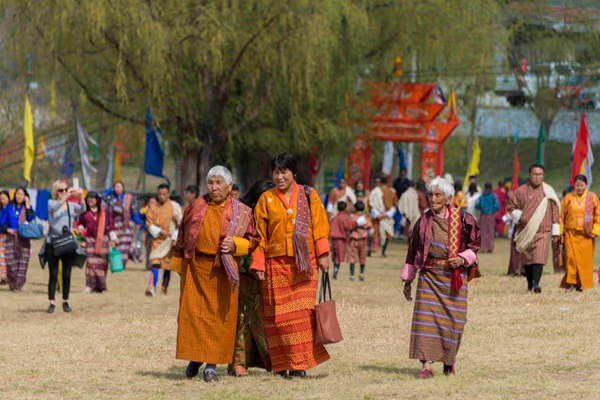
How Language Changes as You Travel Around Bhutan
One of the easiest ways to notice Bhutan's cultural diversity is simply to listen.
In Paro and Thimphu, Dzongkha is prominent.
Travel east and you may hear much more Tshangla.
Head into Bumthang and local languages become more noticeable.
Travel into isolated mountain communities and you may encounter languages spoken by relatively small populations.
This adds another dimension to a Bhutan journey.
You are not travelling through one completely uniform culture. Each region has its own food, festivals, traditions, architecture and language.
Frequently Asked Questions About Languages in Bhutan
What language is spoken in Bhutan?
Dzongkha is the national language of Bhutan, but many other languages are spoken throughout the country.
Tshangla is widely used in eastern Bhutan, Lhotshamkha is common in the south, and several regional languages are spoken across central and remote areas.
What is the official language of Bhutan?
The national language is Dzongkha.
It is used in government, education and national communication and is an important part of Bhutanese cultural identity.
Is Dzongkha the same as Tibetan?
No.
Dzongkha and Tibetan are related languages, and Dzongkha uses a Tibetan script tradition, but they are distinct languages.
They share historical and linguistic connections, but a Dzongkha speaker and a Tibetan speaker are not necessarily speaking the same language.
Is English widely spoken in Bhutan?
Yes.
English is widely used, particularly in education, tourism, business and urban areas.
Travellers can generally communicate comfortably in English during a Bhutan trip.
Do I need to speak Dzongkha to visit Bhutan?
No.
You do not need to speak Dzongkha to travel in Bhutan.
Your guide and most people working within tourism will speak English.
Learning a few words such as Kuzuzangpo la and Kadrinchey la is still a nice way to connect with people.
How many languages are spoken in Bhutan?
Bhutan is home to many indigenous languages and regional varieties.
The exact number depends on how individual languages and dialects are classified, which is why different references may give slightly different totals.
It is more useful for travellers to understand that Bhutan is highly multilingual rather than focusing on one fixed number.
What language is spoken in eastern Bhutan?
Tshangla, also called Sharchopkha, is one of the major languages spoken in eastern Bhutan.
It is commonly heard in areas such as Trashigang, Mongar, Pemagatshel and Samdrup Jongkhar.
What language is spoken in Bumthang?
Bumthangkha is one of the principal languages associated with Bumthang in central Bhutan.
Other related regional languages are also spoken across central Bhutan.
What does Dzongkha mean?
Dzongkha can be translated roughly as “language of the fortress”.
“Dzong” refers to Bhutan's traditional fortress buildings, while “kha” means language.
How do you say hello in Bhutan?
A common Dzongkha greeting is Kuzuzangpo la.
It can be used when meeting people throughout your journey.
For more useful expressions, see our Dzongkha phrase guide.
Listen to Bhutan as You Travel
Language is one of the quieter ways Bhutan reveals its diversity.
You may begin your trip hearing Dzongkha in Paro and Thimphu, then notice different sounds and expressions as you travel towards Bumthang or eastern Bhutan. You do not need to understand every word.
Listen to how people greet one another, ask your guide about local expressions and try a simple Kuzuzangpo la when you meet someone.
It is a small way to connect with the places and communities you encounter.
If you are planning your first journey, explore our Bhutan tour packages and discover how different regions, cultures and landscapes come together across Bhutan.
Want to Find Out More About Travelling to Bhutan?
Thinking of visiting Bhutan? Let our friendly team of Travel Specialists guide you every step of the way. During peak travel periods — such as festival seasons — flights can get fully booked several months in advance. You can reserve your ticket with us at no cost, giving you peace of mind while you plan the rest of your adventure.
Send Us a Message
Share your plans and one of our Bhutan Travel Specialists will be in touch.
