Festivals in the Land of the Thunder Dragon are rich and happy expressions of its ancient Buddhist culture. These festivals are held in all districts in honour of Guru Rinpoche, the saint who introduced Buddhism to Bhutan in the 8th century. Tsechus are held on auspicious days and months in the Bhutanese calendar, and last up to four days in which a series of highly stylised masked dance rituals are performed.
Festivals are also a big family and social occasions. People dress up in their finest clothes and most resplendent jewelry of coral and turquoise. They pack picnic lunches in their traditional bamboo baskets and stay all day at the festivals which are usually held in the dzongs (fortresses) or at monasteries.
Behind the scenes, the monks prepare themselves for weeks ahead of the festival, involved in deep prayer and meditation prior to the festival. The monks perform special masked dances that are inspirations of enlightened beings in history; and the Bhutanese believe that watching these mystical dances is essential to gain enlightenment.
 All Bhutanese try to attend a festival at least once in a lifetime, and for many, it is an important annual affair where they consider it a blessing to be able to watch the dances. Apart from the monks, community dancers also participate in the local festivals.
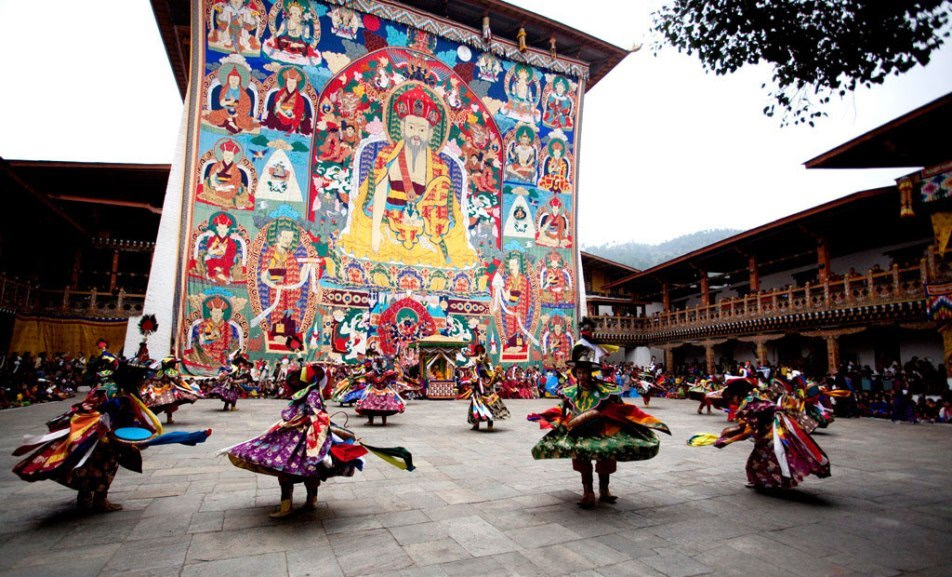
The tsechus are a rich form of the oral history tradition where the Bhutanese pass on values, mythology and spiritual beliefs through the dance dramas. Many of the tsechus culminate with a rare display of a giant silk applique thangkha (painting) depicting Guru Padmasambava or some other important Buddhist deity.
People’s deep faith and devotion make these festivals a special occasion. At the same time, it is also an opportunity to join hundreds, and even thousands, of Bhutanese in taking part in an important religious and social occasion that often exudes a carnival atmosphere.
All Bhutanese try to attend a festival at least once in a lifetime, and for many, it is an important annual affair where they consider it a blessing to be able to watch the dances. Apart from the monks, community dancers also participate in the local festivals.
The tsechus are a rich form of the oral history tradition where the Bhutanese pass on values, mythology and spiritual beliefs through the dance dramas. Many of the tsechus culminate with a rare display of a giant silk applique thangkha (painting) depicting Guru Padmasambava or some other important Buddhist deity.
People’s deep faith and devotion make these festivals a special occasion. At the same time, it is also an opportunity to join hundreds, and even thousands, of Bhutanese in taking part in an important religious and social occasion that often exudes a carnival atmosphere.
Bhutan Festival by Popularity
Paro Tshechu and Thimphu Tshechu are by far the most popular festivals in Bhutan. There are two main reasons why they are so popular. Firstly, they are located in the Western part of Bhutan, an hour drive away from Paro Airport. So it is possible for you to do a four days visit just to attend the festival. If the festival is taking place in Eastern Bhutan, you would have to visit Bhutan for a minimum of 10 days. Secondly, Paro and Thimphu Festivals take place in spring and autumn respectively, 2 of the best seasons to visit Bhutan.
We would usually recommend travelers to books at least six months before their travel dates. With the growing number of hotels in Bhutan, we can usually accommodate travelers on last minute notice but choice hotels may be limited. However, do note that experienced guides are in high demand during this period. If you do have some flexibility with your travel schedule, we would recommend going for less popular festivals.
Bhutan Festivals We Highly Recommend
There are a few festivals that we do enjoy immensely. They are typically much smaller in scale, might be a bit off the beaten track and lower in visitors attendance but definitely worth your time and provides the local intimacy that Paro Tshechu and Thimphu Tshechu being marque events do not.
Royal Highland Festival (Laya) - The Royal Highlander Festival is hosted at an elevation of 4000 meters above sea-level. An initiative by His Majesty the King, the festival was first introduced on 16th Of October in 2016 to mark the celebration of the birth of HRH the Gyalsey, it allows visitors to get first hand experience of life & culture of the highlanders from the surrounding villages.
The plateau where it is hosted allows for a panoramic view of the Himalayan ranges. Visitors stay in tents set up by the nomadic people of Lunana and Laya and roam the high plains while interacting with the highlanders. This is truly a unique experience with attendance at about 200 each year.
Punakha Tshechu - A much less attended festival, Punakha Festival retells the story of how the Bhutanese outsmart and repel the Tibetans invaders during Zhadrung’s time. Participants dress up as ancient soldiers and horsemen and reenact the various battles at the majestic Punakha Dzong towards the end of winter which is really a very pleasant weather in the valley of Punakha.
Druk Wangyel Tshechu - The Druk Wangyel Festival is a unique festival in Bhutan. Unlike other festivals at dzongs which were designed by the Zhabdrung, the founder of Bhutan, and performed by monks, the Druk Wangyel festival was curated by Dasho Karma Ura and performed by soldiers. It’s a one day event on every 13th December, to commemorate the flushing out of militia in southern Bhutan and attended by many members of the royal family and political elites.
Talo Tshechu - The Talo Tshechu is a small and intimate festival attended by the villagers of Talo and surrounding villages in the Punakha valley. It is highly accessible, only a 2 hours drive from Thimphu. And we love it for its intimacy and local feel.
What are the most popular Bhutan festivals in 2026?
Bhutan hosts dozens of festivals each year, but several stand out for their scale, cultural importance, and visitor interest. Among the most popular Bhutan festivals in 2026 are Paro Tshechu, Thimphu Tshechu, Punakha Tshechu, Jambay Lhakhang Drup, and the Black-necked Crane Festival. These events attract both locals and international travellers and feature impressive masked dances, ceremonial rituals, and vibrant cultural celebrations set against Bhutan’s dramatic Himalayan landscapes.
When is the Paro Tshechu in 2026?
The Paro Tshechu 2026 is expected to take place from 29 March to 2 April 2026 at the historic Rinpung Dzong in Paro Valley. This is one of Bhutan’s most famous festivals and draws thousands of Bhutanese pilgrims and travellers from around the world. The most sacred moment occurs on the final morning when the giant Guru Thongdrel, a massive religious tapestry believed to confer blessings and cleanse sins, is unfurled before sunrise.
When is the Thimphu Tshechu in 2026?
The Thimphu Tshechu 2026 is scheduled for 21 to 23 September 2026 in the courtyard of Tashichho Dzong in Bhutan’s capital city. As one of the largest festivals in Bhutan, Thimphu Tshechu features a wide variety of sacred masked dances performed by monks and lay dancers. Because it takes place in the capital, the festival offers visitors easy access to cultural attractions, museums, and monasteries in Thimphu.
What if you can’t catch the festival?
Preparation for the festivals starts weeks before the festival itself. If you are in Bhutan but won’t be able to catch the festival, do visit the Dzong, and you may be able to catch the monks practicing and preparing the material for the festival. This is a great photo opportunity since the materials used for prayer are colourful. This visit can be a meaningful opportunity if you have caught the festival somewhere; you have the chance to see the faces behind the masks and spend time speaking to the monks on the origin and meaning of the festival.
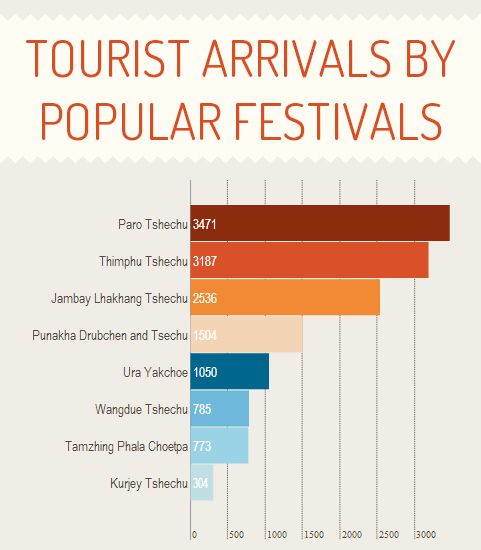
Source: Tourism Council of Bhutan
FAQs
What are Bhutan festivals (Tshechus)?
Bhutan festivals, known as Tshechus, are sacred Buddhist celebrations held at monasteries, dzongs, and temples across the country. The word tshechu refers to the tenth day of the lunar month, associated with Guru Rinpoche (Padmasambhava), the Buddhist master who introduced Vajrayana Buddhism to Bhutan in the 8th century. During these festivals, monks and local performers present elaborate masked dances (Cham dances), religious rituals, and blessings that symbolise the triumph of wisdom over ignorance. For travellers, tshechus are among the most authentic ways to experience Bhutanese culture, spirituality, and community life.
Why should I plan my Bhutan trip around a festival?
Planning your trip around a Bhutan festival in 2026 allows you to experience the country at its most vibrant and culturally rich moment. During tshechus, valleys and towns come alive with colourful costumes, sacred dances, and thousands of locals gathering in traditional dress. Festivals offer a rare opportunity to witness Bhutan’s living Buddhist traditions, interact with local communities, and photograph some of the most spectacular cultural performances in the Himalayas. For many travellers, attending a festival becomes the highlight of their Bhutan journey.
How long do Bhutan festivals usually last?
Most Bhutan festivals last three to five days, although some smaller local festivals may be shorter. Each day of the festival presents a different sequence of masked dances, religious rituals, and symbolic performances. The final day is often the most significant, when a sacred Thongdrel (giant religious scroll painting) is displayed to bless devotees and visitors.
Are Bhutan festival dates fixed every year?
Festival dates in Bhutan follow the Bhutanese lunar calendar, which is based on Buddhist astrology. Because the lunar calendar shifts each year relative to the Gregorian calendar, festival dates change annually. As a result, the Bhutan festival calendar 2026 provides estimated dates that are sometimes subject to minor adjustments.
Which Bhutan festival is best for first-time visitors?
For first-time travellers, the most recommended Bhutan festivals are Paro Tshechu, Thimphu Tshechu, and Punakha Tshechu. These festivals are held in easily accessible locations and feature large crowds, colourful performances, and impressive monastery settings. They provide an excellent introduction to Bhutanese culture and Buddhist traditions.
How early should I book a Bhutan festival trip?
Festival seasons are among the most popular times to visit Bhutan, so flights, guides, and hotels can sell out quickly. For major festivals such as Paro Tshechu or Thimphu Tshechu, travellers should ideally book their Bhutan tour four to six months in advance. Early booking ensures better flight availability, preferred hotel options, and prime seating areas at festival venues.
What should I wear to a Bhutan festival?
Bhutan festivals are religious and cultural events, so respectful attire is recommended. Visitors should wear modest clothing that covers shoulders and knees, comfortable walking shoes, and layered clothing suitable for Bhutan’s mountain climate. A light jacket or shawl is useful for early morning ceremonies when temperatures can be cool.
Can tourists attend Bhutan festivals?
Yes, tourists are welcome to attend Bhutan festivals. Tshechus are public celebrations where both locals and international visitors gather to observe sacred dances and cultural performances. Visitors are encouraged to watch respectfully, follow their guide’s instructions, and avoid obstructing religious ceremonies.
Do I need a special permit to attend a festival in Bhutan?
No special permit is required specifically for festivals. Your tour operator will be able to assist you with incorporating tshechu into your Bhutan itinerary. It is advisable for you to book a Bhutan festival tour at least six months in advance.
What happens during a Bhutan festival?
A typical Bhutan festival includes sacred Cham dances, performed by monks wearing elaborate masks and costumes that represent deities, protectors, and spiritual figures. These dances symbolise the victory of compassion and wisdom over negative forces. Festivals also include blessings from monks, religious rituals, appearances by playful masked clowns called Atsaras, and lively gatherings of local families celebrating together.
Which Bhutan festivals are unique to specific regions?
Many valleys in Bhutan celebrate their own distinctive festivals that reflect regional traditions and local legends. Examples include the Tangsibi Mani Festival in Bumthang, the Ura Yakchoe Festival, the Gangtey Tshechu in Phobjikha Valley, and the Gomphukora Festival in eastern Bhutan. These smaller festivals often provide a more intimate cultural experience.
Can I attend multiple festivals during one Bhutan trip?
Yes, there are travellers who plan itineraries that include more than one festival depending on the schedule.
Bhutan Festivals Calendar 2026
Check out Bhutan Festival Calendar 2027